1927 Nagpur Hindu–Muslim Riots: Forgotten Battle for Hindu Assertion, RSS Resilience, Islamist Provocation Unmasked

Historical Background of Nagpur (Pre-1927)
Nagpur served as the capital of British India’s Central Provinces & Berar from 1853, evolving into a key administrative, commercial, and railway hub. Its textile mill (Empress Mills) and rise as a literacy center attracted professionals and businesses, cementing its prominence in colonial-era central India.
Demographics: Hindu-Majority City with Rising Communal Awareness Although Hindus formed the majority, British “divide-and-rule” policies elevated Muslims in administrative roles, sowing communal distrust. By the 1920s, rising literacy and civic engagement among Hindus fueled growing cultural awareness while communal tensions simmered beneath urban life.
Role in Freedom Movement & Social Awakening In 1920, Nagpur hosted the influential Indian National Congress session, launching the Non-Cooperation movement locally. It also pioneered English-medium education and civic activism, with Nehru and others attending, signaling its rise as a hotbed of nationalist and reformist energies.
Early Hindu–Muslim Relations under the British Raj Communal harmony frayed early: 1923 saw a Hindu Mahasabha procession blocked near a mosque, triggering clashes. Repeated prolongation of such incidents highlighted escalating friction between communities, aggravated by music-based religious processions and competing social assertions. NavBharatTimes
Rise of Hindu Nationalism in the 1920s
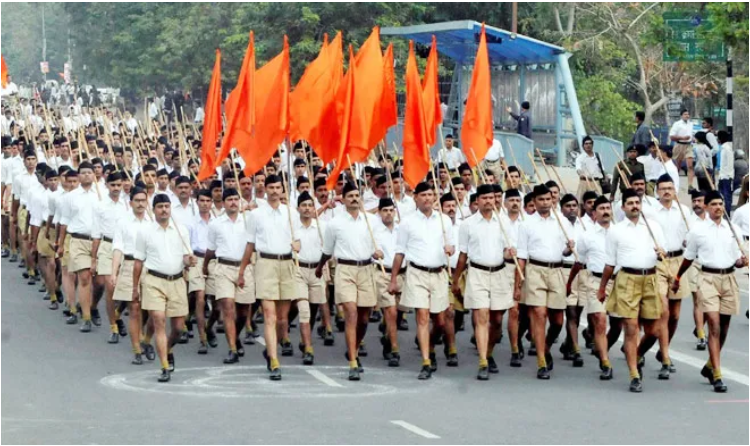
Formation and activities of the Rashtriya Swayamsevak Sangh (RSS) (Founded 1925 in Nagpur) Founded in Nagpur in 1925 by Dr. K.B. Hedgewar, the RSS began as a disciplined Hindu nationalist volunteer cadre. It quickly established shakhas (branches) across Maharashtra, focusing on unity, discipline, and cultural revival, setting the groundwork for organized Hindu nationalism in central India.
Influence of Lala Lajpat Rai, Tilak, and Hindu Mahasabha Lajpat Rai, a co‑founder of the Hindu Mahasabha, advocated for a robust Hindu identity and political organisation, influencing nationalist discourse. Tilak pioneered public festivals and home rule agitation. Together, they fostered mass-level Hindu political awakening, countering both colonial and communal dynamics in the 1920s.
Cultural assertion through Ganesh Utsav, Shivaji Jayanti, Ramlila, etc. Tilak revitalised Ganesh Utsav in the 1890s as a mass Hindu assembly disguised as a religious festival, politically assertive against colonial bans. Similarly, Shivaji Jayanti celebrated Maratha heroism, uniting Hindus culturally. Such festivals became vehicles for collective pride, activism, and countering British and communal suppression.
Muslim Response and Increasing Intolerance
Growth of Tablighi Jamaat and radical Muslim groups post-Khilafat movement Formally founded in 1926–27 by Maulana Ilyas Kandhlawi, Tablighi Jamaat aimed to “revive true Islam,” rejecting syncretism and spreading orthodox Deobandi values. Initially spiritual, it later spawned radical offshoots linked to jihadi groups like Harkat‑ul‑Mujahideen and LeT.
Objection to Hindu processions, particularly playing music near mosques Throughout the 1920s, Muslims frequently opposed Hindu processions near mosques, protesting loud music, particularly drums. Major riots, Calcutta (April & July 1926), Delhi, Allahabad, erupted due to such disputes, often resulting in significant casualties and escalating communal tensions.
Rise of pan-Islamism and attempts to suppress Hindu assertion Muslim revivalist currents, inspired by pan‑Islamic ideals and bolstered by Deobandi and Tablighi orthodoxies, sought to assert Islamic identity. They mobilized against perceived Hindu dominance via religious activism, moral policing, and resistance to public Hindu cultural expressions.
Trigger of the Riot – 7 September 1927
Ganesh Visarjan procession planned by Hindus, passing through Muslim areas On Lakshmi Puja (4 Sept 1927), a Hindu procession led by Dr. Hedgewar passed through the Mahal area near a mosque. Muslims blocked the route, triggering tensions. This procession, including loud dhol-nagada, was cited as a provocation that ignited hostilities. Opindia
Muslims objecting to music and dhol‑nagada in front of mosques Local Muslims objected to the loud music from the Ganesh Visarjan, asserting it violated mosque sanctity. The procession’s defiance, especially its dhol-nagada near the mosque during afternoon rest, transformed religious ritual into a flashpoint. DeccanDigest
Planned stone-pelting and assault by Muslim mobs, as recorded in some reports Reports from OpIndia and the New York Times cite Muslim youths chanting “Allahu Akbar”, armed with knives and javelins, pelting stones at Hindu homes and Hedgewar’s residence. Sources suggest a premeditated attack timed post-procession. Opindia
Sequence of Events During the Riot
Who attacked first? Evidence from police, witnesses, and RSS records Multiple eyewitness testimonies and RSS accounts state that Muslim youths began the violence, stone-pelting at Hedgewar’s residence and chanting slogans, while the procession passed near a mosque. RSS records describe a premeditated Muslim mobilization with knives and javelins. TOI, NDTV
Burning of Hindu shops and homes Angered rioters reportedly burned Hindu-owned shops and residences with “military precision.” The New York Times confirmed arson erupted across narrow lanes, targeting Hindu property, destroying businesses and homes during the three-day unrest. News dirt
Role of police: biased or negligent under the British Reports show police delayed intervention, arriving after violence peaked, causing civilian frustration. Some locals allege they broke into homes and showed bias, particularly persecuting poor Muslims during combing operations.
Extended Quotes from RSS Records & Biographer C.P. Bhishikar
From Keshav: Sangh Nirmata (Bhishikar, 1979):
“The Muslims hatched a conspiracy … procession was to pass … equipped with lathis, javelins, knives, daggers. … they got a thorough beating … Several rioters had their heads broken. … by the evening, they beat back the invaders. For three days … atmosphere remained tense, but not a single Hindu locality was attacked.”
“When communal rioting broke out in 1927, sixteen RSS squads moved into various neighbourhoods to provide protection.”
As per The Perfect Voice:
RSS had an intelligence network that tracked rioters’ plans to loot gold-laden Ganesh idols during Mahalakshmi Puja.
Trained cadres under Anna Sohoni were prepared to thwart a planned Muslim attack with swift resistance.
According to period press references:
British authorities delayed troop deployment until after widespread arson, generating local resentment.
RSS narratives emphasize this bias and the lack of protective policing during the early chaos. Outlook India
RSS Role in Self-Defense
First major public test of the RSS cadre under Dr. K. B. Hedgewar On 4 September 1927, during Lakshmi Puja, RSS cadres led by Hedgewar confronted an armed Muslim procession near Mahal’s mosque in Nagpur. Their disciplined defense repelled attackers equipped with lathis, javelins, and knives, marking their first major public test and signaling the RSS as a defender of Hindu resilience. TOI
How RSS volunteers protected Hindu colonies and maintained discipline Sixteen RSS squads, pre-positioned in narrow lanes around Hindu homes, mobilized swiftly to protect residents. Trained volunteers used lathis to control rioters, prevented property damage in Hindu neighbourhoods, and ensured no locality fell to arson, demonstrating organizational discipline and tactical coordination.
Beginning of Hindu unity through shakhas and defense drills By 1927, RSS shakhas in Nagpur engaged local youth in weekly drills, weapon training, and ideological sessions. These shakhas fostered unity across caste lines, promoted physical and mental preparedness, and built confidence in Hindu collective action, laying a foundation for future growth across Central India.
British Government’s Role and Biased Action
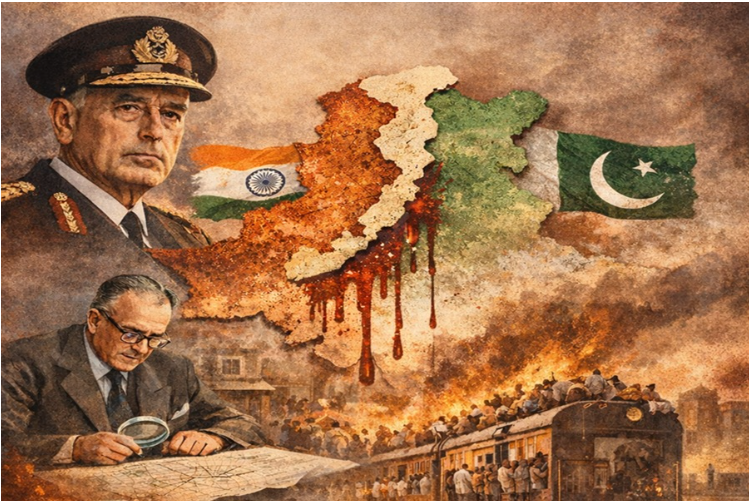
How the British tried to appease Muslims for political gain To weaken unified nationalist resistance, the British encouraged Muslim communal politics, supporting the Aligarh movement, patronizing Muslim representation on councils, and endorsing separate electorates via the 1932 Communal Award. This strategic appeasement ensured Muslim allegiance and perpetuated Hindu–Muslim divisions.
Arrests of Hindu volunteers and RSS workers, despite them being defenders After the Nagpur riots, British authorities arrested numerous RSS volunteers who had defended Hindu homes, citing “disturbing public peace.” Despite acting as protectors, they were treated as instigators, arrests fueled perceptions of official bias, and undercut Hindu morale.
Divide‑and‑rule policies that fuelled communal tensions Colonial “divide-and-rule” tactics. like the 1905 Bengal Partition, separate electorates, and political favoritism, forged communal identities. These policies cultivated mistrust and conflict, laying fertile ground for riots such as Nagpur’s in 1927.
Aftermath and Long-Term Impact
Rise in Hindu consciousness and growth of RSS branches across India Post‑1927 riots, RSS expanded rapidly: from ~100 swayamsevaks in Nagpur to 60,000 members and 500 shakhas by the late 1930s. This surge mirrored deepening Hindu identity and a collective will to mobilize culturally and socially across the country.
Strengthening of the Hindu Mahasabha and ideological shift towards assertive nationalism The riot elevated assertive Hindutva, bolstering the Hindu Mahasabha’s call for political Hindu unity. Leaders like Lajpat Rai and Savarkar gained traction, propelling a more confrontational nationalist ideology that shaped future Hindu nationalist movements.
Religious Intolerance or Political Design?
Was Muslim opposition to music merely religious? While framed as religious sanctity, RC Majumdar notes that objections to band music near mosques often masked deeper communal intent (“the eventual brunt…is merely about Hindus’ presence”), suggesting the protests were less about faith and more about asserting dominance. Opindia
Or a calculated attempt to dominate public spaces and curb Hindu cultural expression? Yes, Aligarh (1924) protests halted Ramleela, Calcutta (1926) music bans triggered violence, and multiple riots followed similar patterns of rejecting Hindu processions near mosques. Rowdy street mobilizations suggest these were pre-planned acts to restrict public Hindu festivals. Swarajya
Comparison with Other Hindu-Muslim Riots
Patterns in Pre-Independence Riots Riots often followed a familiar sequence: a perceived provocation (music at mosques, cow slaughter) leading to swift mob retaliation, arson, and communal violence. British-era records show similar disturbances across Allahabad, Delhi, Calcutta, and Nagpur throughout the 1920s. A 1994 survey lists 35 riots in 1926 alone.
Recurring Muslim Provocations: Music & Cow Slaughter RC Majumdar documents that Muslim objections to music before mosques and public cow-slaughter during Eid were consistently cited triggers. These issues repeatedly sparked riots, establishing an ongoing pattern of religious confrontation and communal provocation.
Legacy & Modern-Day Reflection
How did this riot shape RSS ideology and Hindu self‑defense? The 1927 Nagpur riot cemented RSS’s self‑defense ethos. Hedgewar’s model of disciplined, armed protection against communal aggression became a core Sangh principle. From sixteen local squads, the framework grew, influencing national expansion and cementing the RSS as a protector of Hindu society.
Call to rediscover hidden history and acknowledge Hindu pain during Islamic aggression Many argue for re-examining events like Nagpur 1927 to validate Hindu narratives of vulnerability and resistance. Restoring archival newspaper pages, eyewitness memoirs, and RSS accounts can counterbalance academic neglect, encouraging inclusive historiography that respects Hindu perspectives on self-defense and communal trauma.
.png)