Kazi Nazrul Islam: The Song That Taught a Nation to Break Its Chains
Nazrul did something rare: He wrote hymns as passionately as he composed songs for Goddess Kali.

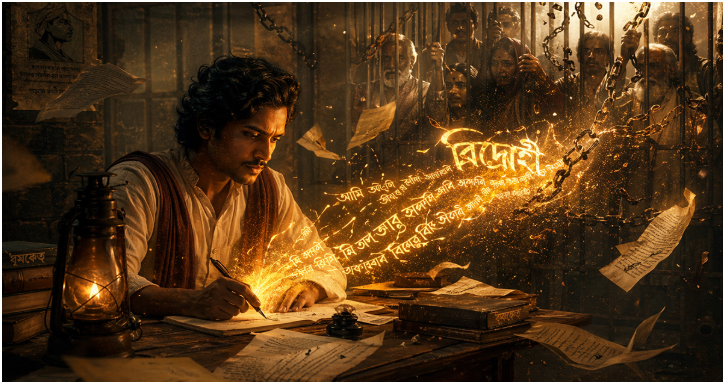
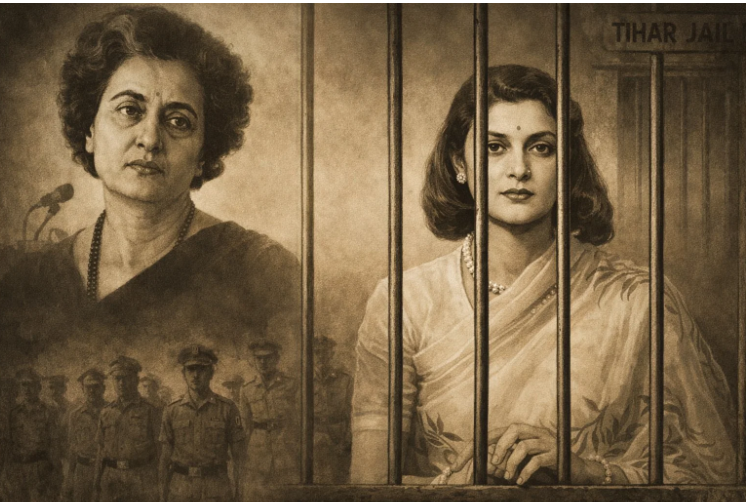
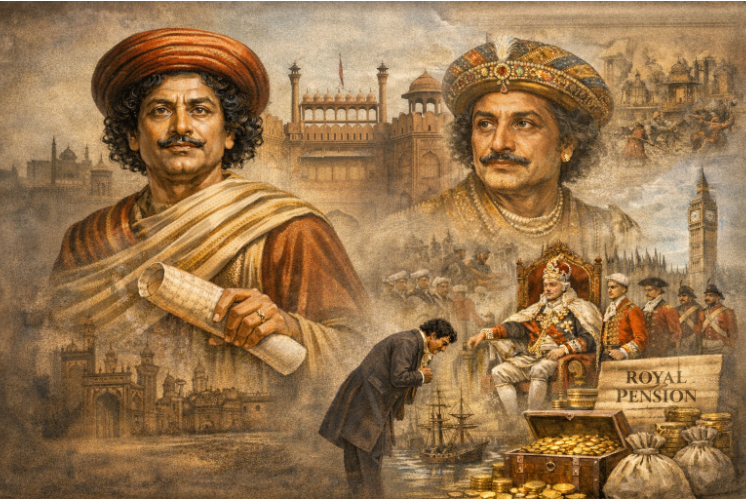
This image is AI-generated
On 25th May 1899, in the quiet village of Churulia, a child was born who would one day teach a nation how to break not with weapons, but with words. That child was Kazi Nazrul Islam.
Nazrul’s early life was shaped by struggle. From working in a village mosque to performing in travelling theatre groups and later serving in the British Indian Army during the First World War, he saw both discipline and injustice up close. And injustice stayed with him.
When Nazrul turned to writing, he did not confine himself to one form. He wrote poems, songs, essays, and political pieces, each carrying a distinct energy. His words could be devotional, drawing from all Indian traditions, or fiercely revolutionary, challenging oppression and inequality.
Nazrul did something rare: He wrote hymns as passionately as he composed songs for Goddess Kali. He gave voice to both faith and freedom, proving that rebellion's true culmination could only come through the divine. But among all his powerful creations, there was one work that captured the urgency of its time like no other. By the early 1920s, India was restless. People desired freedom, yet fear still controlled their actions. Nazrul saw that the greatest chain was not physical but psychological.
And so, he wrote to break it.
In Bhangar Gaan, “breaking” did not mean destruction of lives.
It meant destruction of fear, silence, and submission.
His words carried the rhythm of rebellion:
“We shall break all chains, all barriers,
We shall shatter the prison of fear.”
These lines were not poetry alone; they were a command to awaken. The poem spread quickly. Students whispered it in hostels, workers echoed it in gatherings, and young minds began to feel something unfamiliar—courage. For many, it was the first time they were told not to endure fear, but to destroy it.
The British understood the danger. This was not just literature. This was courage spreading. Soon, Bhangar Gaan and other writings of Nazrul were banned. Copies were seized, publications restricted, and Nazrul was marked as a dangerous voice. His growing influence and revolutionary writings led to his arrest, and he was imprisoned by the colonial government.
But prison did not silence him. When authorities tried to control his voice, Nazrul responded with a hunger strike that lasted for weeks. His body weakened, but his resolve did not. The protest shook Bengal. Even Rabindranath Tagore urged him to end the fast and preserve his life for the nation’s future. Nazrul eventually broke his fast but never his spirit. Because by then, his words had already escaped.
Though the British banned his writings and imprisoned him, they could not erase what he had created. His songs lived on in memory, in voices, in courage. They travelled where books could not. Nazrul had turned poetry into power. On his birth anniversary, we remember not just a poet but a force.
The one who wrote of one nation when the British were busy dividing us into sects, who sang of courage in times of fear, and who turned a simple song into a movement that refused to be silenced.