The Train to Death: How Partition Turned Railways into Slaughterhouses

During the 1947 Partition of India, trains, once symbols of modern progress, turned into moving chambers of horror. As millions fled across the newly drawn borders, desperate to escape communal violence, hundreds of refugee trains were attacked, derailed, and turned into blood-soaked slaughterhouses. Men, women, and children were butchered mid-journey, their lifeless bodies arriving in silent, corpse-filled coaches. In this article, we focus on the mass killings that unfolded aboard these doomed trains, exploring survivor testimonies, eyewitness accounts, and the railway routes that became death lines.
1. Human Stories & Testimonies
Sudershana Kumari Sudershana Kumari was just eight when her world in Sheikhupura, now in Pakistan, was torn apart by violence. As a Hindu girl in a rapidly Islamising region, her family was forced into hiding when mobs began hunting non-Muslims. From a rooftop, she silently witnessed her uncle and his family being butchered with spears, her baby cousin killed in front of her aunt, who screamed in vain. Her family’s belongings, faith, and even their town were turned to ash. Eventually, armed men found their hideout, and like hundreds of others, they were herded out, destined for death. But moments before execution, Sikh leader Tara Singh’s arrival with a ceasefire order saved them. Forced out of their homeland by brutal pressure and fear, Sudershana and her family became refugees. They were eventually evacuated by truck, and then by train, part of the human tide fleeing carnage.
Parvati Devi Parvati Devi’s family, like countless others, was forced to abandon their ancestral home in the North-West Frontier Province (now Khyber Pakhtunkhwa, Pakistan) under mounting pressure from local Muslim leaders and neighbours. What began as subtle isolation turned into open hostility, warnings became threats, and social ties collapsed under the weight of religious divide. Surrounded by growing unrest and fearing for their lives, her family boarded a train meant to carry them to safety. But that illusion shattered when the train was mysteriously diverted from Khushab toward Gujrat city railway station in Pakistan’s Punjab—a place they were never supposed to be.
As night fell, a single bullet pierced the darkness, striking Parvati’s mother. It was the first shot fired, but not the last. What followed was a brutal onslaught: a mob of armed Muslim men, driven by vengeance and communal hatred, descended on the train with rifles, swords, spades, and knives. The 60-odd Gorkha regiment soldiers aboard resisted valiantly, defending the passengers through the long night. But when their ammunition ran dry, the defense crumbled. Those who survived the firefight were hunted down, slaughtered ruthlessly by a Muslim mob determined to ensure no one was left alive.
Chunni Lal Bhatia
Then there’s Chunni Lal Bhatia, also a passenger on that same Gujrat-bound train. He huddled with his father through a night of violence, narrowly escaping a Pathan abducting mob at daybreak, rescued only by arriving troops. Both Parvati and Chunni were recently among survivors felicitated on Partition Remembrance Day, keeping their raw testimonies alive.
Surinder Singh
In the same train there was four-year-old Surinder Singh who was struck by five bullets, which turned out to be the best camouflage he could have hoped for. Taken for dead, he was ignored in the orgy of violence. In his words, “”I was shot five times and had fainted in the train. My left index finger and thumb were cut off by a bullet and two more bullets hit my hand. One bullet hit me in the lower lip, tearing it off. One bullet hit me near the eye, rendering it blind for months. Seeing me passed out in a pile of dead bodies, my father thought I was dead. Luckily, my aunt noticed me move my leg. I was taken out of the pile of bodies and taken to Gujranwala hospital by the Army. They attached my lip and treated my eye. My index finger and thumb could not be restored,” he said. His two-year-old brother Harbans Singh was shot dead by the rioters.
Families Torn Apart on Trains
In another chilling recollection, one survivor, whose identity is shared anonymously for protection, remembers a train being halted, then boarded by attackers who slaughtered entire families. A child’s body was tossed into a heap of corpses, and a small group of survivors emerged, stunned and bloodied, into an unimaginable silence. The horror of family after family decimated in one carriage illustrates how Partition destroyed entire lineages in a single night.
Children Who Survived Alone A compelling personal essay titled “The Daughter of a Partition Survivor Speaks” recounts how the author’s mother—orphaned during an ambush in a train coach, lived with intense survivor guilt, never quite leaving that night behind in her mind. She emerged terrified, hiding in fields with her siblings, and was nearly killed again by those who feared they carried the ‘other side’s’ blood. Her survival was marked by psychological scars that lasted a lifetime.
Eyewitness Railway Workers (Indian/Pakistani Side) Sarab, daughter of an Amritsar station worker, recounts how her father and his team would open train doors only to be met by scenes “caked shut with blood”—coaches locked tight, bodies poking out, and survivors pleading in silence. They were forced to unload victims in dump trucks and rush them to makeshift cremation grounds, with some passengers cared for in their own railway quarters. Her narrative, shared in the blog Lassi With Lavina, reveals the hidden toll these station workers took on themselves while bearing witness to unspeakable violence.
People Who Hid Among Corpses to Live A unique testimony comes from Bal K. Gupta, a ten‑year‑old freed prisoner in 1948, who boarded a train escorted by the ICRC and Pakistani guards. After crossing into India, he boarded a cramped coach in Lahore that was constantly bristling with danger; some Muslim men tried dragging women out in the night, but guards intervened and brutal assaults were averted. This story reveals a lesser-known side: refugees sometimes hid among masses of dead or under protection, trying to survive amid chaos, bureaucracy, and occasional compassion.
2. Massacre Incidents (Specific Trains)
Kamoke-Amritsar (24 September 1947) A refugee train carrying 3,000–3,500 Hindu and Sikh refugees was halted near Kamoke, Pakistan. According to West Punjab government estimates, around 408 people were killed and 587 injured, though some Indian accounts suggested nearly the entire train’s occupants died. About 600 women and girls were abducted. Mobs armed with daggers, rifles, and sticks attacked, with local police reportedly supporting the assault. One survivor, Lajwanti, recounted how soldiers disarmed men, mobs boarded the train killing men and looting or abducting women. The stationmaster hid four children in a washroom, saving them.
Lahore-Delhi “Ghost Trains” Several trains dispatched from Lahore or Amritsar, often referred to as “ghost trains,”arrived at Delhi or Mano Majra filled entirely with corpses. Khushwant Singh narrates how one such train came to Mano Majra with “over a thousand corpses”, its engine blood-stained and macabrely labeled “Gift to Pakistan.” Survivor recollections describe the engine squeaking over tracks with no living souls aboard.
Amritsar-Lahore & Between Ludhiana, Ferozepur, Bhatinda In September 1947, a refugee train from Amritsar to Lahore was stopped, burst open, and 3,000 refugees were massacred onboard; another 1,000 were injured, leaving only about 100 survivors. Other horrific derailments and hijackings occurred near Ludhiana, Ferozepur, and Bhatinda, with multiple bogies targeted, passenger segments attacked separately, and bodies later recovered by volunteers.
Patterns of Attack
Two recurring patterns emerge. One is the planned ambush or derailment, where crowds would swarm locked bogies at stoppages, rarely resisted by guards or police. In the Kamoke case, police actively prevented men from escaping and sided with attackers. The other pattern is of ghost trains arriving silently at destination stations, their compartments choked with bodies, sometimes with signs that survivors were never expected . These attacks often involved local jathas or mobs armed with melee weapons and sometimes rifles or support from rogue railway staff.
3. Major Railway Routes Destined for Death
Punjab–Delhi railway corridors In the maelstrom of 1947’s Partition, the Punjab–Delhi railway corridors became ominous death traps where refuge and slaughter coexisted on the same tracks. The infamous Lahore–Ferozepur–Delhi line, passing through key junctions like Raiwind and Wazirabad, saw systematic ambushes. At Raiwind, dozens of trains were stopped; survivors recall “hundreds of corpses of Sikhs lying all along the track,” with at least a dozen trains attacked after 15 August, one in early September claimed approximately 300 lives. Similarly, near Wazirabad, well-planned raids derailed trains and slaughtered hundreds.
Amritsar and Kamoke route
Between Amritsar and Kamoke, on the route to Delhi, massacres continued unabated. On 22 September 1947, a train carrying Muslim refugees was ambushed at Amritsar; estimates suggest up to 3,000 killed and 1,000 wounded, prompting Pakistan to halt inbound trains. Two days later, near Kamoke, a refugee train with 3,000–3,500 aboard fell victim to a massacre lasting 40 minutes, estimates vary, but deaths numbered several hundred to thousands, with abductions reported of around 600 women.
4. Failure of State, British Exit, Police Collapse & Controversial Radcliffe Line
Mountbatten’s rushed timeline & lack of protection
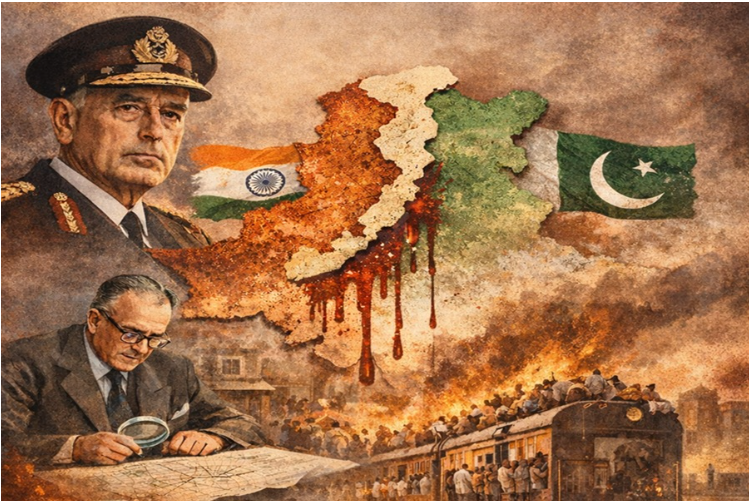
In 1947, as Britain hurriedly withdrew from India, Lord Louis Mountbatten was pressured by political urgency and limited resources to set the Partition date for August 15, well ahead of the originally planned June 1948. This shorting of timeline meant security measures fell apart, with no time to deploy forces or coordinate protection for millions on the move. Without a secure transition, trains became unguarded targets.
No military escort for refugee trains The national governments of India and Pakistan failed to assign military escorts systematically to refugee trains. Even when escorts were arranged, they were often insufficient, just a few dozen soldiers for thousands of civilians. These small detachments were easily overpowered by large, armed mobs or local militias. In Punjab, organized gangs routinely boarded moving trains, killing men, women, and children—all while state machinery watched helplessly.
British rail control officers vanished The British railway authorities and signal officers, once the backbone of order had vanished. As Mountbatten’s own advisors observed, “barracks were locked” and signal boxes abandoned, crippling communications and coordination essential for safe train operations. In the chaos, trains rerouted unpredictably, halting at isolated junctions with no protection.
Collapse of law and order at junctions
Local law enforcement collapsed into communal bias or abdication of duty. In areas like Kasur and Raiwind, Muslim police and officials either joined mobs or turned a blind eye as refugee trains were butchered. One Red Cross-supplied military escort in Gujrat reported that when his ammunition ended, local Pathans and even regular Pakistan troops seized the train, leading to the deaths of over 1,600 refugees in one night.
Less time given to draw border
Furthermore, provincial governments had no advance planning for the massive migrations. Sir Cyril Radcliffe, tasked with drawing the boundary, was given barely a month, significantly impairing any logistical foresight. Governors informed London about unrest, but the British dismissed warnings, with Mountbatten’s staff later admitting they offered “mere lip service” to evacuation planning while already finalising withdrawal dates.
5. The Numbers: Death Toll & Documentation
Number of blood trains, average deaths per train The scale of the blood-train massacres during Partition is shocking. Contemporary estimates suggest hundreds of refugee trains were targeted between August 1947 and early 1948. Each train, often carrying 3,000–4,000 passengers, could see 2,000 to 3,000 killed or abducted in a single attack. The Kamoke train massacre (24 September 1947) is one of the best-documented cases: while West Punjab authorities officially reported 408 deaths and 587 injuries, Indian reports estimated almost the entire 3,000‑plus passengers were killed, with 600 women abducted.
Similarly, the Gujrat train massacre (12 January 1948), carrying about 2,400 Hindu and Sikh refugees, resulted in 1,300–1,600 deaths—only around 750 survivors made it through. These individual cases underscore the scale: one overloaded train could see mass slaughter far exceeding thousands.
Government records (classified/unclassified) Institutional records, such as British Punjab boundary force reports and railway logbooks, remain largely classified. However, scholars like Ishtiaq Ahmed and G. D. Khosla accessed secret British documents to confirm that most trains were targeted between September and October 1947, coinciding with the peak of Partition violence.
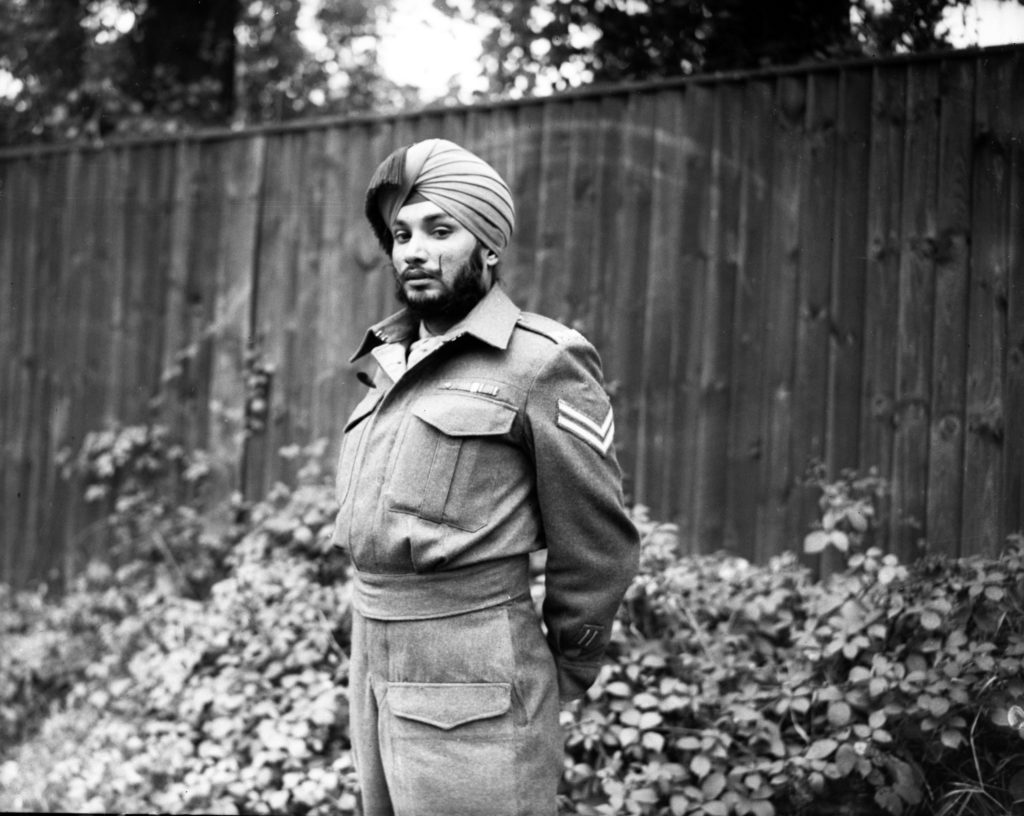
https://film.iwmcollections.org.uk/record/29350
Red Cross and refugee camp reports
The Red Cross and international humanitarian bodies played pivotal roles: the British Red Cross helped establish field hospitals and camps, spending the equivalent of nearly £1.2 million in today’s value, and ran a 400-bed hospital in Lahore. Their reports also note that infectious diseases and poor sanitation in refugee camps killed many, e.g., one camp housing 150,000 people saw 600 deaths daily in October 1947, often of people wounded during transit.
If these stories touched your heart, click below (Horrors of Partition) to hear more voices from the Partition. Join us in remembering the lives forever changed, and discover more personal stories and memories in the series.
.png)