Brigadier Sawai Bhawani Singh: The 4 Days When He Penetrated Enemy Territory and Brought Pakistani Army to Its Knees

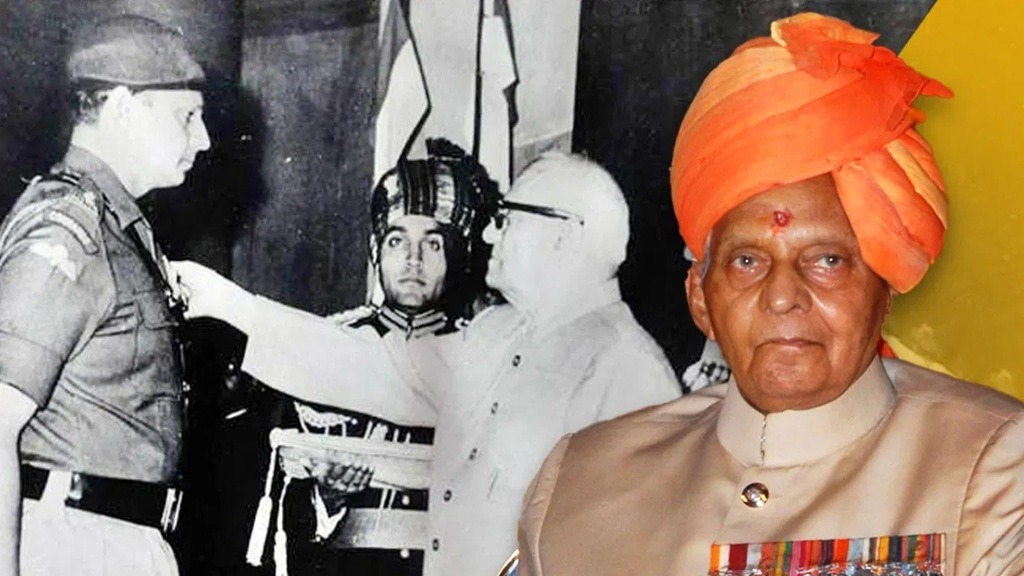
Brigadier Sawai Bhawani Singh | Image Credit: tv9hindi
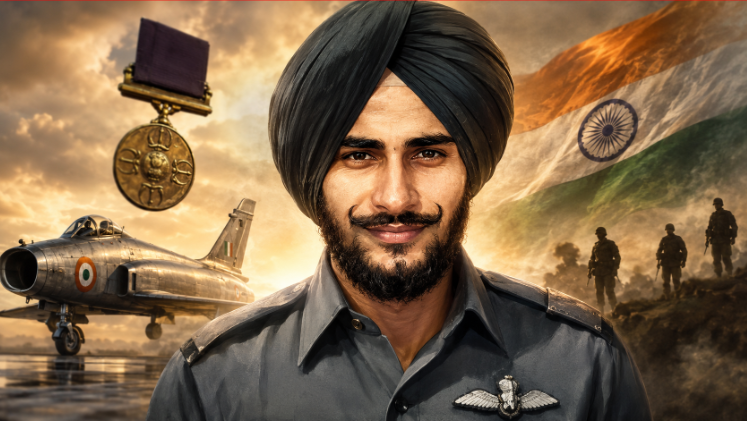
Brigadier Bhawani Singh's valor displayed in the 1971 India-Pakistan War stands as one of those chapters in Indian military history where decisive advantage was gained despite limited time, scarce resources, and extreme risks. This story centers on those four days and four nights of intense, unrelenting, and deep action within the Rajasthan-Sindh border region on the western front, which pushed back Pakistani military plans. Brigadier Sawai Bhawani Singh (22 October 1931 – 17 April 2011) was the last officially recognized Maharaja of the princely state of Jaipur. He was the warrior son of Maharaja Sawai Man Singh II of the Kachwaha dynasty and joined the Indian Army in 1951.
When the war erupted in 1971, Pakistan's objective was to pin down the Indian Army on the western border to bolster its position on the eastern front. The desert terrain of Rajasthan—with its sparse population, minimal cover, and extremely challenging communications—was deemed ideal for this plan. In this demanding landscape, the Indian Army entrusted 10 Para (Special Forces) with the mission to infiltrate enemy territory and strike. At the time, the unit was led by Lieutenant Colonel Bhawani Singh.
On the night of December 5, 1971, taking advantage of the desert's cold winds and darkness, small teams from 10 Para silently crossed the border and pushed deep into Pakistan's Sindh province. This was no conventional frontline engagement but a special forces incursion, where speed, secrecy, and sudden strikes were the greatest weapons. Despite sandy paths, water shortages, and the constant peril of capture, Bhawani Singh kept his men moving forward relentlessly, as the plan's core was to deny the enemy any time to react.
Indian commandos launched sudden assaults on Pakistani outposts, communication nodes, and supply routes in the Chachro sector and surrounding areas. These attacks were so swift and coordinated that Pakistani command was misled into believing a large Indian force was present. In truth, this was the special forces strategy: To create maximum impact with minimal numbers. In this phase, Pakistani units began abandoning their positions and withdrawing, with their supply lines severely disrupted.
The Indian Army's campaign continued in the following days. 10 Para teams pressed on, maintaining pressure in Virwah, Islamkot, Nagarparkar, and nearby areas. Bhawani Singh himself stayed at the forefront, providing direction. His strategy was clear: Strike swiftly where needed, and once the advantage was secured, hold the ground to prevent the enemy from returning. This sustained pressure forced the Pakistani Army to vacate several strongholds and retreat.

Brigadier Bhawani Singh with Para Command |Image Source: X/Jaipur Royal Family Page
Over nearly four days of action, the Indian side inflicted severe damage on the enemy's communication and logistics networks. According to available military accounts, the Pakistani side suffered significant casualties and had several soldiers taken prisoner, while the Indian detachment achieved its objectives with minimal losses. This is regarded as an extraordinary feat for special forces, given the exceptionally high risks in such operations.
Once the mission's primary goals were accomplished, Bhawani Singh ordered a timely, organized withdrawal. This phase was as critical as the assault itself, as the enemy had now become alert. Using planned routes and cover, 10 Para teams returned safely to Indian territory. This entire operation weakened the Pakistani Army's offensive capability on the western front and gave the Indian side a psychological edge.
For this exceptional leadership, personal courage, and strategic success, Bhawani Singh was awarded the Maha Vir Chakra on January 26, 1972 (Republic Day). The honor was not just for individual bravery but for those decisive 96 hours of commando action, which demonstrated that special forces, under the right leadership, can alter the course of war.
The most compelling aspect of this episode is that Bhawani Singh, recognized as the Maharaja of Jaipur, expected no special privileges on the battlefield. He stood shoulder-to-shoulder with his men, sharing the same risks. That is why this story remains a classic example in the training and military studies of Indian special forces today, where courage, speed, and strategy triumphed over numbers and resources.