Nair's Witness Forge: Jallianwala Bagh Massacre's Truth in London's Crucible

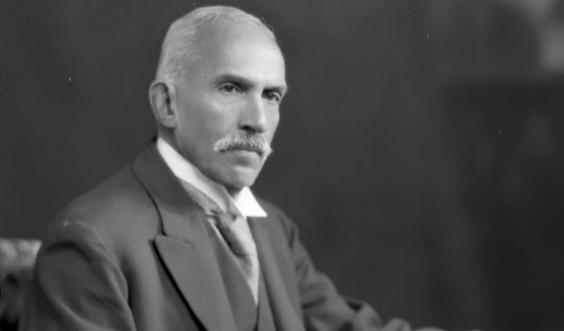
In 1919, when the horrific news of Jallianwala Bagh reached the corridors of British India. There was a person who was inside the system, and his name was Chettur Sankaran Nair. He was a very respected and distinguished jurist who was the Former President of the Indian National Congress, the Judge of the Madras High Court, and a former member of the Viceroy’s Executive Council.
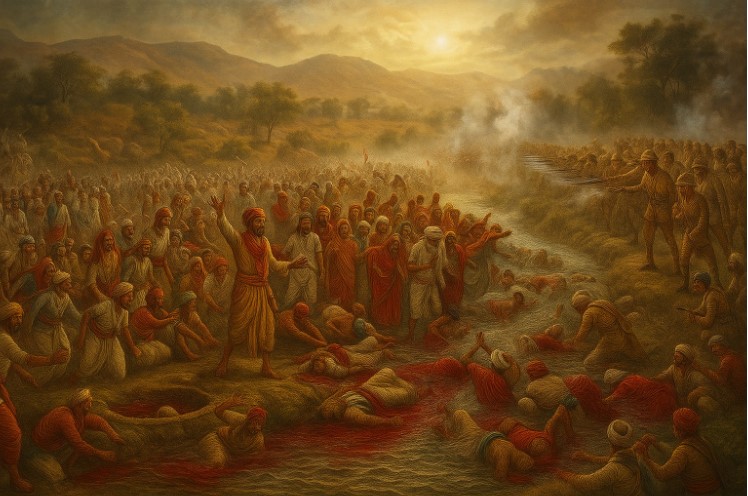
He used to believe in the law, justice, governance, and reform. But when he received the reports of the mass killing of the people in Jallianwala Bagh, and its justifications made by the British Empire, he was deeply traumatized. He was not just disturbed by the mass murder of the people but also by the justifications made by the British Empire over it. During his meeting inside the Executive Council, he objected to the justification made by the British Administration, criticised its rule and order, and also stated that this completely violated the principle of morality and legal establishment.
Due to the corruption and double standards of law and order of the British and their hearing of the Jallianwala Bagh massacre, he decided to resign from his position on the Viceroy's Executive Council, which was one of the highest positions that an Indian ever held at that time. His choice was very difficult and rare, but he made it because of the double standard behaviour of the establishment of the British Empire.
As the years passed, his disagreement didn’t stop here. In the year 1922, he wrote a book named Gandhi & Anarchy in which he harshly criticised Gandhi’s approaches and methods, in which he argued that the Non-Cooperation Movement weakened the respect for law & order, civil disobedience led to mob violence, and the political agitation without any institutional safety guaranteed created anarchy within the system. He also accused O'Dwyer, who was the former Lieutenant Governor of Punjab, of being directly responsible for the atrocities committed at the Jallianwala Bagh. He accused him of terrorising the people of the Punjab, justifying the massacre of the innocent people and martial law. In return, O’Dwyer filed a lawsuit against Nair.
The Empire was just defending the man, but also its reputation. O’Dwyer also claimed defamation. Nair stated that he had spoken about the truth of the genocide. During the period, the events were examined, including the administration of the Punjab, the imposition of martial law, and the genocide, all come under the public domain. And the jury was in favour of O’Dwyer. And Nair had two choices: Either an apology or payment of 500 pounds as a penalty.
But Nair chose to pay 500 pounds; he had a choice to apologize too, which would have reduced the chances of a penalty, ended the matter, and provided comfort. This would prove him wrong that his criticism of the repression of Punjab was completely false. So he chose the first option. Legally, he lost the battle, but in that refusal, he maintained a moral line; he didn’t allow truth to be bent down to satisfy the establishment. Because if he chose the first option, his reputation would have been attacked, and his stance would have been questioned as an Indian judge in the imperial court.
Despite all of these, Nair’s action demonstrated something more powerful: He was the first Indian Judge at the time to publicly question the Empire’s failure regarding morality in the Punjab region. He did not shout in anger. He did not incite violence. He did not seek revenge. He used the law, arguments, and conscience. And when the system ruled against him, he accepted the penalty but not the humiliation of an apology.
History often celebrates dramatic rebellion. But Sankaran Nair’s rebellion was different. It was dignified, measured, uncompromising. He showed that resistance can take the form of integrity, that truth does not require volume, and that sometimes paying £500 without apology can echo louder than any slogan. In the story of India’s freedom struggle, his name stands as a reminder: Power may win verdicts, but conscience can win history.

.jpg)