Not Just With Swords, but Sambhaji Maharaj Also Fought With Pen: The Untold Story of Warrior Who Wrote Great Text 'Buddhbhushanam'

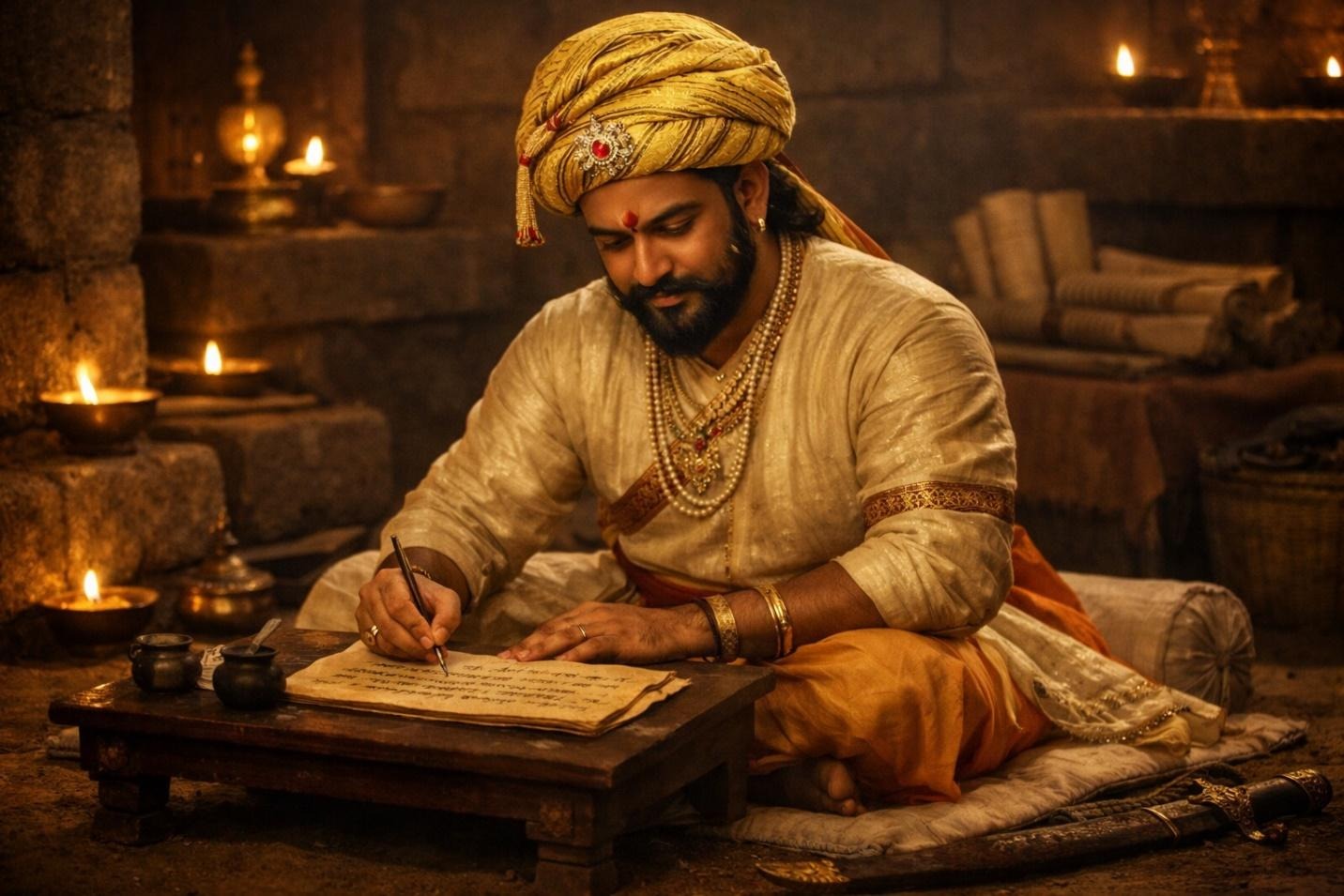
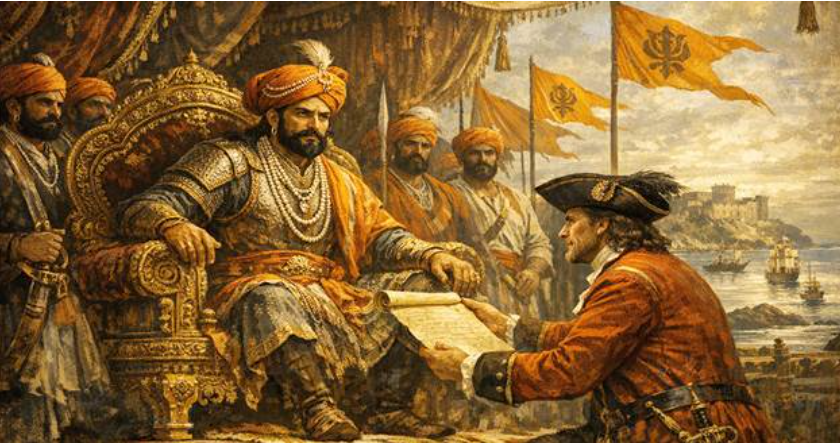
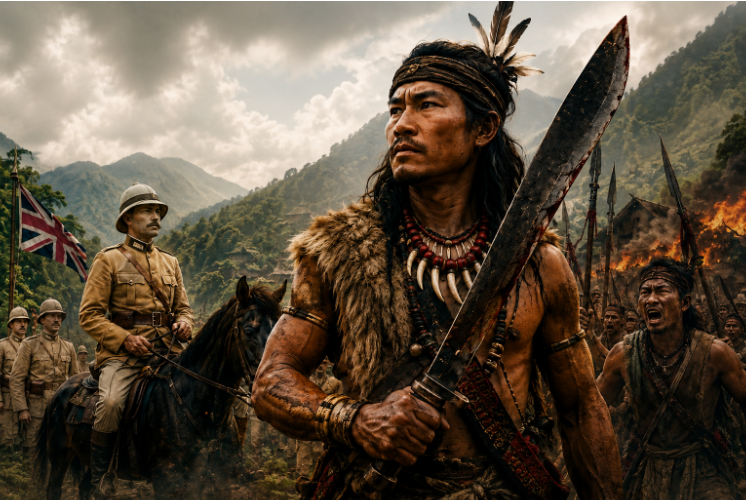
This image is AI-generated
In the valleys of the Sahyadri, a name echoes that history primarily remembers as a fierce warrior. Most people know him as the great Chhatrapati and a valiant fighter against the Mughals. But the pages of history hide another identity of his, known to very few. This is that of a great Sanskrit scholar. Sambhaji Maharaj was not just a battlefield warrior; he was also a “Sanskrit warrior,” a scholar-ruler whose pen was as sharp as his sword. He authored important works in Sanskrit and Braj Bhasha, with ‘Buddhbhushanam’ being his prominent creation. This stands as proof of his profound study and intellectual prowess. That's why history needs to understand Sambhaji Maharaj not just through his valor, but also through his scholarship.
Sambhaji Maharaj was born on May 14, 1657. He was the eldest son of the great Maratha king Chhatrapati Shivaji Maharaj. After his mother, Saibai, passed away when he was just 2 years old, his upbringing was taken over by his grandmother, Jijabai. Jijabai raised him in an environment where both martial arts and learning were given equal importance from childhood. He had complete mastery over more than 13 languages, including Sanskrit, Hindi, Marathi, Braj, Kannada, Telugu, Tamil, Malayalam, Bengali, and foreign languages like Arabic, Portuguese, and English. He achieved proficiency in these languages. Even at a young age, he deeply studied scriptures, poetry, and politics. After his initial education under Umaji Pandit, his advanced learning took place under the guidance of scholars like Kavi Kalash, Mahakavi Bhooshan, Gagabhatta, and Keshav Pandit. They imparted knowledge of the Dharmashastra, ethics, and literature. This education later established him as a ruler proficient not only in warfare but also in the power of ideas and knowledge.
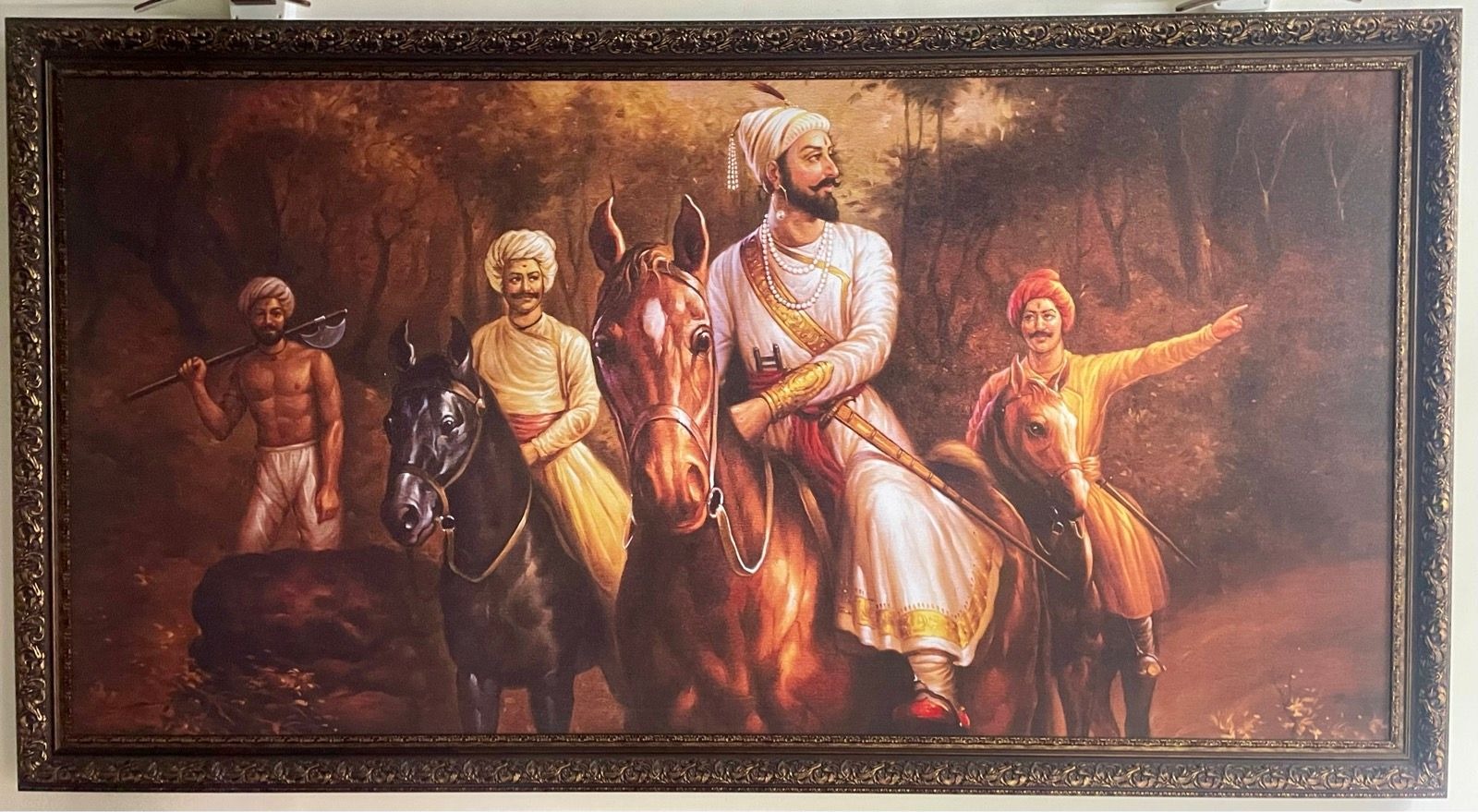
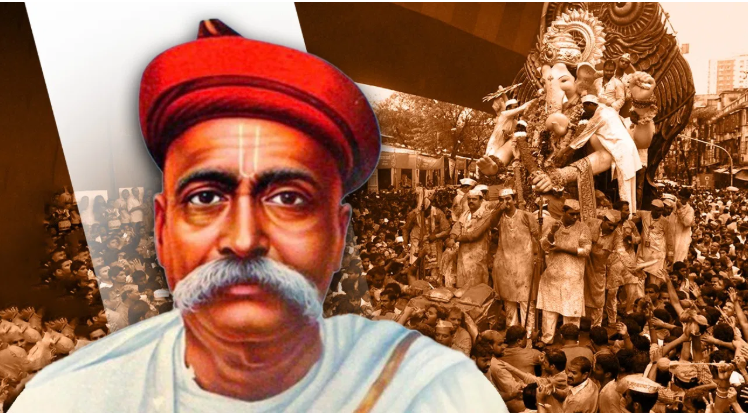
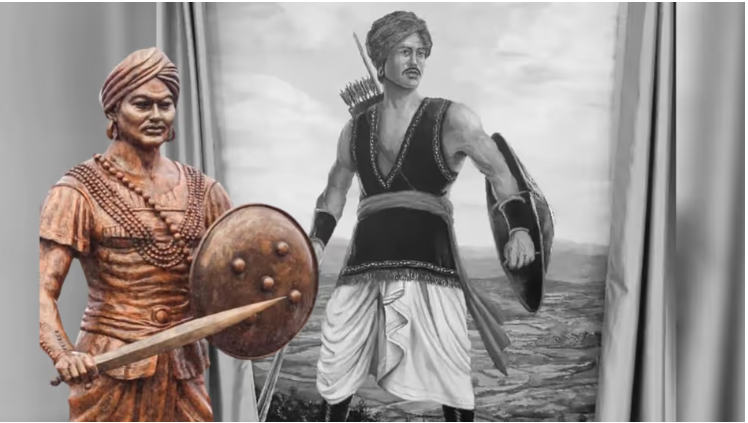
Sambhaji Maharaj | Image Source: Greatpeoples
The most prominent proof of Sambhaji Maharaj's scholarship is his Sanskrit text ‘Buddhbhushanam’. This is not merely a literary work but a comprehensive encyclopedia covering various dimensions of governance, ethics, and culture. ‘Buddhbhushanam’ is divided into three parts, describing topics like poetics, figures of speech, music, Puranas, and archery. Alongside this, the ‘Buddhbhushanam’ text presents important principles related to the duties of an ideal king, state administration policies, treasury management, and military leadership. It sheds detailed light on topics like espionage systems and administrative balance.
This work shows that Sambhaji Maharaj was not just a brave warrior but a profound thinker, writer, and skilled ruler who emphasized a balanced integration of art, culture, and governance alongside valor, state security, and territorial expansion.
Besides ‘Buddhbhushanam,’ Sambhaji wrote famous works in Braj Bhasha such as Naikabhed, Nakhashikh, and Saatsatak. His love for literature wasn't limited to writing. He was a deep connoisseur of literature and poetry. He composed poetry and participated in scholarly debates. Patronizing scholars in the Maratha court was a key part of his policy. That's why Sanskrit learning and traditions received support during his reign. This tradition was inspired by his father Shivaji Maharaj, who had made the preservation of Sanatan Dharma and culture a part of state policy. In this way, Sambhaji Maharaj carried forward both the traditions of warfare and scholarship.
In truth, Sambhaji Maharaj was among those rare rulers who kept the tradition of knowledge alive alongside warfare. He knew that a state is run not just by the sword, but also by policy and intellect. ‘Buddhbhushanam’ is a symbol of this very idea, a text that shows Sambhaji Maharaj was not just a warrior but a thinking ruler.
Today, as history is being read from a new perspective, it is essential to bring forward Sambhaji Maharaj's identity as a “Sanskrit warrior.” His sword protected the Maratha empire, but his pen established an intellectual tradition of statecraft and policy. That's why viewing him only as a brave warrior and ruler would be incomplete. He represented a tradition where knowledge, power, and art walked hand in hand. This name echoing in the hills of Sahyadri reminds us that history's great warriors become immortal not just on the battlefield, but also in the realms of ideas and scholarship. Sambhaji Maharaj is a symbol of this legacy, a ruler whom history should honor with equal reverence as a “Sanskrit warrior."