When Revolutionary Freedom Fighter Sitarama Raju Attacked After Informing British Empire, Looted Police Station

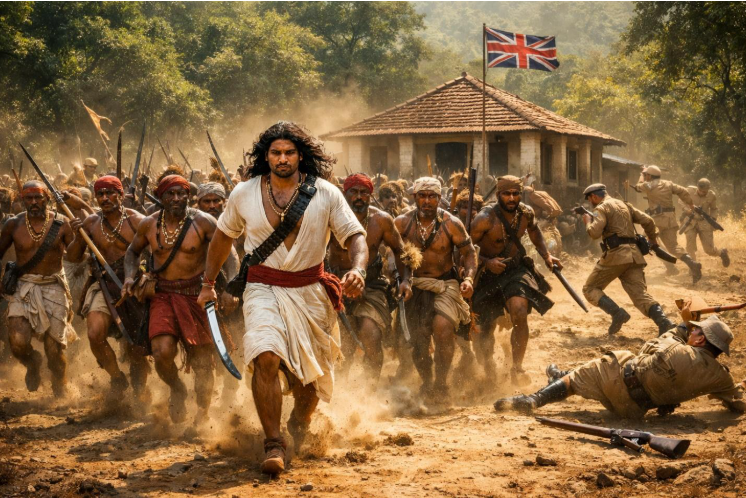
Alluri Sitarama Raju | This image is AI-generated
In the dense forests and hills of Andhra Pradesh, echoes the heroic saga of a revolutionary who openly challenged British rule. This is the story of the historic attack on the Chintapalli Police Station, now in Visakhapatnam district, where revolutionaries seized not just weapons but also ignited a new flame of pride. At that time, the Chintapalli Police Station fell under the Madras Presidency. It was an era when British oppression was at its peak, and everyone, from tribals to others, was suffering. The British were seizing forests and lands from tribals through laws, forcing unpaid labor, torturing people, and sexually exploiting women as commonplace atrocities. Amid this atmosphere of despair emerged a revolutionary as a beacon of hope: Alluri Sitarama Raju. He resolved to counter this tyranny with full pride and valor, launching a planned and principled war against injustice.
Sitarama Raju made it clear even before attacking the British that his struggle was not mere violence but rooted in principles. Following ancient Indian war traditions, he gave prior notice to the enemy before attacking. This was not just a warning but a message that they were not sneaky thieves but brave warriors fighting a righteous war.
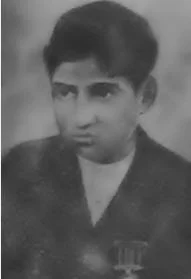
Revolutionary Sitaram Raju | Image Source: Hindupost
Witnessing the growing atrocities on tribal society, Sitarama Raju gathered people in Peddavalsa under the Madras Presidency on August 21, 1922, and decided to move towards Chintapalli the next day. This information reached the British, too, but they dismissed the warning lightly. Raju knew his aim was not just to attack, but to establish a symbol that the tribal society would no longer remain silent. This warning exemplified the confidence of a true, brave revolutionary.
On the afternoon of August 22, 1922, when the sun was at its zenith, a group of about 300 revolutionaries advanced toward the Chintapalli Police Station. This was no ordinary mob but an organized force, including variant tribal warriors like Gam Mallu Dora, Gam Gantam Dora, Kankipati Sarbanna, Singadu, Mamidi Chinnayya, and Jaggi Virayya Dora. Lacking modern weapons, Sitarama Raju's army stood against injustice armed with bows, arrows, spears, and swords. Maximized usage of limited resources was their strategy. With around 300 trained fighters, Alluri Sitarama Raju attacked the Chintapalli Police Station. Though they had no modern arms, the British police couldn't resist in front of the revolutionaries. Within moments, all policemen fled. The station was now under Alluri Sitarama Raju and his revolutionary army's control.
After the attack, Raju and his comrades seized 11 guns, 5 swords, and 1390 cartridges from the station. They set fire to the record registers. And as they left, they did something that immortalized the event in history: They recorded full details in a station record book—what was taken and in what quantity—then signed it. This was like a slap on the Britisher’s face. The message left with Alluri Sitarama Raju's name was a challenge, declaring that the freedom struggle would now be fought openly, not in hiding.
Raju decided to loot weapons from police stations because he realized traditional arms alone couldn't challenge British power. They had bows, arrows, spears, and swords, but faced guns and ammunition. So he changed strategy: use the enemy's resources against them. The Chintapalli attack became a key part of Sitarama Raju's freedom struggle strategy. It not only gave them modern weapons but multiplied their comrades' morale. They were no longer hidden rebels in forests but an organized army capable of directly challenging the British.

Death anniversary of revolutionary Sitarama Raju | Image Source: Hindupost
The attacks didn't stop after Chintapalli. Sitarama Raju and his army struck Rajavommangi and Addatigala police stations, driving out the police and seizing weapons. As always, he informed the British before attacks and left notes detailing the weapons taken. This valor shook the British government to its core. Eventually, they placed a 10,000 rupee reward for finding Sitarama Raju, but failed. In those days, the British spent 40 lakh rupees trying to capture him.
Frustrated at not catching Sitarama Raju, the British intensified atrocities on tribals. On May 7, 1924, Sitarama Raju surrendered to the British. However, the cruel senior British officer Goodall tied the unarmed Raju to a tree and shot him dead. Born on July 4, 1897, Sitarama Raju sacrificed his life for the nation at the age of just 27 years.