First Ascent of Mt. Everest in 1953: From Bombay to Everest: The Untold Story of How India Made It Possible
India’s entry into the expedition began in late February 1953 in Bombay (now Mumbai).

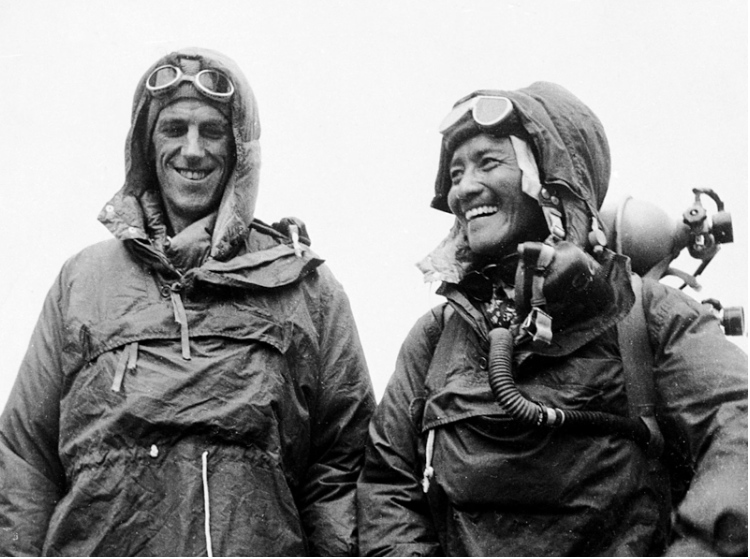
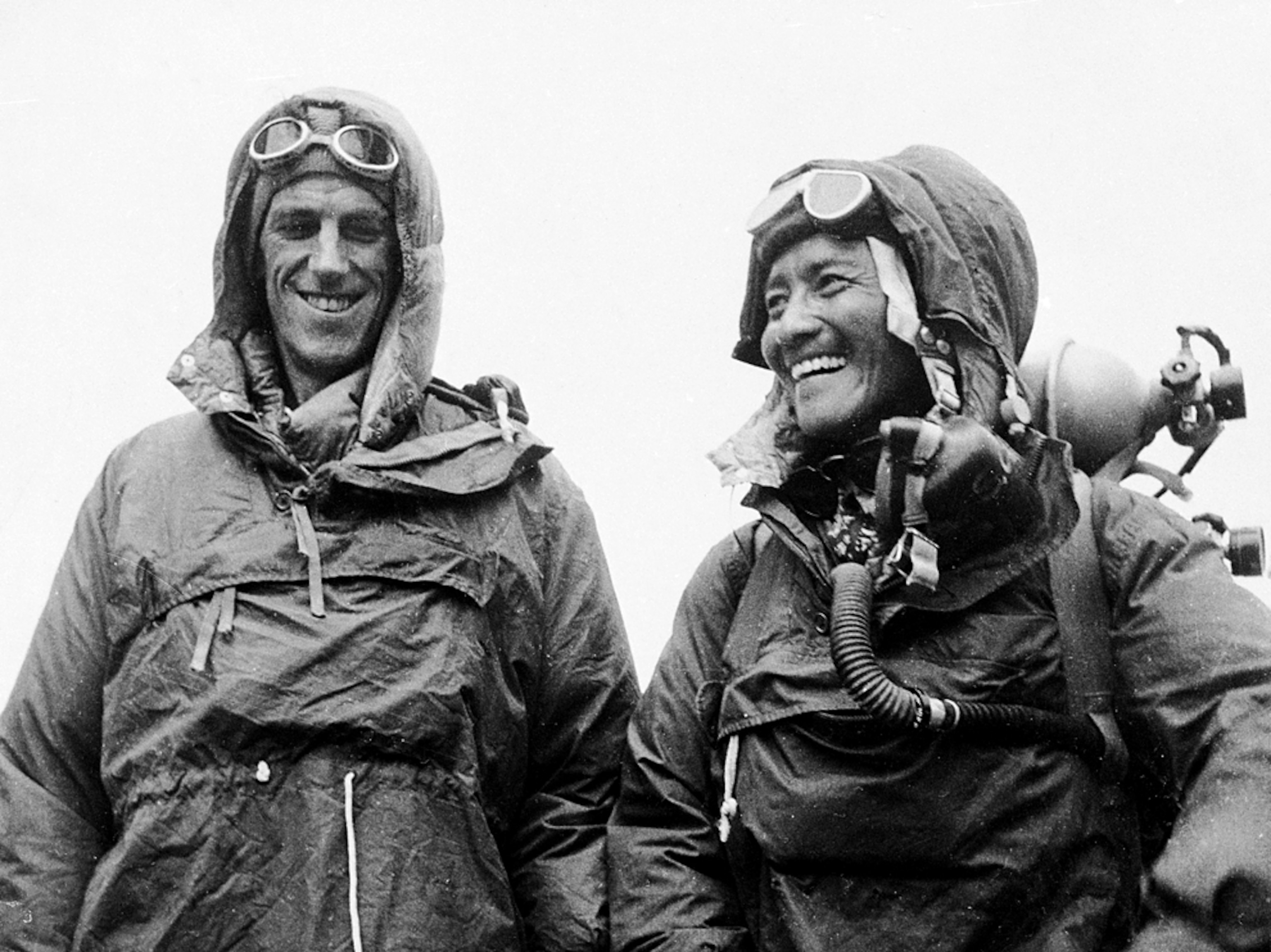
Sir Edmund Hillary and Tenzing Norgay at Mount Everest in 1953 | Image Source: National Geographic
On May 29, 1953, at the highest point of the Earth, Mount Everest (8,848m metres above sea level at that time), two men stood tall: Tenzing Norgay Sherpa of Nepal and Sir Edmund Hillary of New Zealand. These two had etched their names in history to become the first ones to stand atop the world’s highest peak. Of course, this would not have happened alone. So, who worked behind the scenes to ensure the success of the mission? One of them is India, a country that provided the vital logistical support, and a crucial labour of days & nights that happened thousands of kilometres away from Mount Everest. Today, let us rewind the time and unravel how India’s logistical support helped the first ascent of the Everest, without which this would have never been possible.
Bombay, February 1953: The Journey Begins
India’s entry into the expedition began in late February 1953 in Bombay (now Mumbai). When the main expedition team arrived in India on February 28, they had with them around 480 packages, weighing a staggering 7.5 tons. The packages consisted of climbing gear, oxygen equipment, tents, food supplies — all the essentials that the climbers needed during the expedition. Now, as the team was to move from Bombay to Nepal, so were the packages. It was here that A. R. Leyden, Secretary of the Himalayan Club in Bombay, intervened.
He took upon himself the responsibility of ensuring the smooth transportation of the packages to Nepal through customs. He oversaw the transfer of this vast consignment from the ship, ensuring it passed through all required legal clearances and was loaded onto the Indian rail network for its journey toward the Nepalese border. Following Leyden’s successful coordination in Bombay, the cargo moved through a complex transit route: Transfering from major rail lines to smaller trains, then onto lorries, and finally transported via an overhead ropeway into Kathmandu.

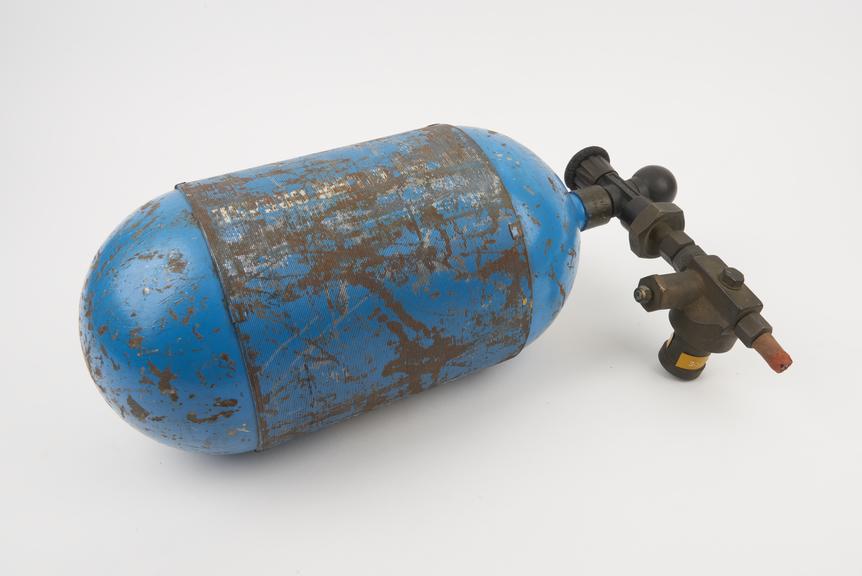
Oxygen cylinder used by climbers on 1953 Mount Everest expedition | Image Source: Science Museum Group
Meanwhile, as the consignment was being transported via road, a similar crucial task was unfolding over the skies: The transportation of a 2000-pound oxygen consignment from Delhi to Kathmandu, for which the Indian Air Force had stepped in. The supply of oxygen at Earth’s highest point was vital for the mountaineers’ training and the acclimatization (a process by which the members of the expedition adjust to low oxygen levels at high altitudes). Notably, the oxygen equipment was finalized a bit later, so they were being handled separately from the main consignment. The shipment of the oxygen equipment to India came on February 20, 1953. From here, the IAF spearheaded the transfer of the oxygen consignment to Kathmandu, bypassing rail and road routes and ensuring it reached the team in time.
Kathmandu, Early March 1953: Men and Machinery Come Together
In March, as the members of the British Expedition, led by Colonel John Hunt, reached Kathmandu, so did their equipment, but it was not a cake walk. While Tenzing and Hillary reached Kathmandu in Nepal with 17 Sherpas, holding the “Tiger Badge” (The Sherpas are the men who carry loads, fix ropes, and guide climbers through some of the world’s most dangerous terrain), their 7.5 tons consignment wasn’t there yet.
By March 8, the package had reached Thankot ropeway, a stop from where another critical intervention took place. Thus, to transfer the package from the Thankot ropeway to Bhadgaon (present-day Bhaktapur), about eight miles from Kathmandu, the Indian Army Sappers (military engineers) weighed in. As the package arrived just a day before the members of the expedition were scheduled to move towards their first base camp in a monastery at Thyangboche, the Indian Army Sappers’ involvement helped in saving time. They ferried the loads to a baggage depot established within the lines of the Nepalese Army at the town of Bhadgaon. This saved the expedition a full day's march from the city to bring the baggage and helped keep the team on schedule.
Namche Bazaar, Late March 1953: The Wireless Lifeline
The expedition then marched via multiple ridges and valleys, organizing caravans, before finally reaching Namche Bazar on March 25. Here, the mountaineers found an invaluable Indian wireless station operated by the Indian government under the supervision of the Indian Embassy in Kathmandu. The station became the expedition’s communication lifeline.
Just days after reaching Namche Bazaar, in early April, when the team discovered that some of their oxygen cylinders were leaking, the team sent an alert through the wireless post. The alert reached Kathmandu on time, and the officials were able to inspect the next oxygen consignment before it reached the team. With this, a major crisis was averted.
At the same time, a challenge of the weather loomed. Mountaineers’ preparedness is one thing, and the weather that supports them is another. Any sudden storm or the change of wind’s course affects the summit. Hence, to keep the members of the expedition aware of the weather, the Indian Meteorological Department (IMD) stepped in. From its office in Alipore, the IMD began providing daily, specialized weather forecasts which were broadcast to the expedition via All India Radio (AIR).
Between early April and late May 1953, the Everest expedition faced various challenges. However, through rigorous acclimatization and multiple attempts, Hillary and Tenzing ultimately reached the summit on May 29.
Mount Everest, May 1953: The Summit Succeeds
Finally, on May 29, 1953, at 11:30 a.m, Tenzing Norgay and Sir Edmund Hillary reached the summit of Mount Everest, becoming first in the world to have achieved this glory. They took with them an ice-axe that bore the flags of the United Nations, Britain, Nepal, and India. Tenzing, as an act of devotion, buried offerings of food in the snow, including chocolate, biscuits, and lollies, as a gift to the Gods.

Sir Edmund Hillary and Tenzing Norgay capture themselves atop Mount Everest | Image Source: Wikipedia
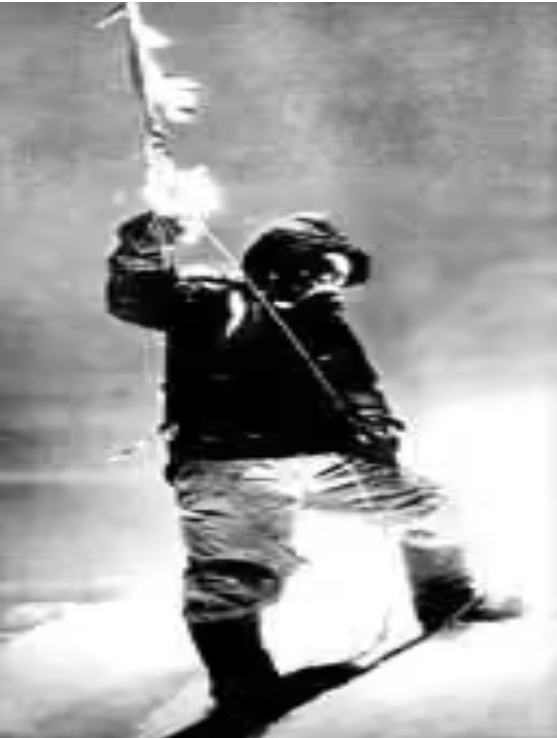
Sherpa Tenzing Norgay stands on the summit of Everest with an ice-axe bearing flags | Image Source: The Guardian
The news of their success was transmitted through the Indian wireless station at Namche Bazaar, then to Kathmandu, and then to the world. Thanks to the Namche Bazaar Indian wireless station, the news of the summit’s success could reach London just in time for the Coronation of Queen Elizabeth II on June 2, 1953.
Celebration followed. When the team traveled back to Lobuje, a location below the expedition’s base camp, they fired a ceremonial salute using twelve bombs provided by the Indian Army for a 2-inch mortar. Originally meant to trigger avalanches for safety, these explosives instead became a symbol of victory. Following the achievement, on June 6th and 7th, the Indian Air Force flew a four-engine Liberator aircraft over Mount Everest to take photographs from high altitude. These rare pictures captured the mountain from above and later helped show the world this historic moment.
Behind the Glory
The story of Everest’s first ascent is often told as a tale of two men standing at the top of the peak, but as we trace the journey step by step, it becomes clear that the summit was the final moment of a much greater effort. From the docks of Bombay to the skies over Kathmandu, from railway networks to wireless signals in the Himalayas, India quietly powered the expedition. In the end, Everest was not just conquered at 8,848 meters; it was built, coordinated, and sustained several miles away in India, reminding us that some of the greatest achievements in history stand on foundations we rarely see.