The Juhu ‘Mud Flat’ Thriller: How JRD Tata Grounded the Arrogance of the British Raj?

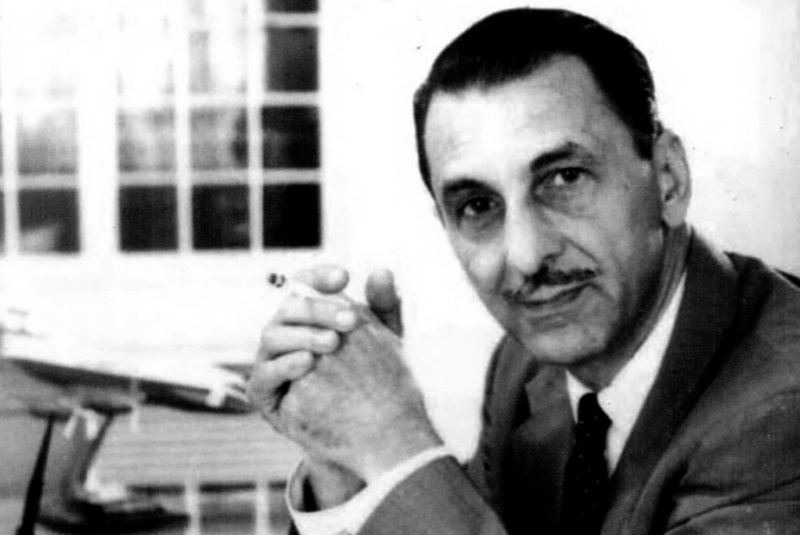
JRD Tata in his office room | Image Source: madras courier
In the 1920s, aviation in India was largely controlled by the British. Amid this British monopoly of the Indian skies, a young man, Jehangir Ratanji Dadabhoy Tata, stepped forward with a pilot’s license and an audacious dream to build an airline of his own. He pursued that dream relentlessly, training between 1927 and 1929, and in 1929, he became India’s first licensed pilot. However, he faced opposition within his own ‘Tata Sons’ board. But JRD did not back down. Finally, the Tata Sons’ board agreed. He, along with Tata Sons, applied to the British Indian government for permission and an airmail contract. This was necessary because civil aviation was tightly regulated under colonial rule. Here comes the twist!
Looking at Tata's proposal for his own airline, British officials laughed it off. They threw a challenge: "Alright, if you have the guts, land your plane on that Juhu mud flat in Mumbai.. let’s see!" Juhu, back then, was a useless swamp. During the monsoon, it would turn into a pond, and during high tides, the seawater would swallow the land. The British plan was that landing a plane there would be equivalent to suicide.
In 1932, Tata Air Services was set up as India’s first commercial carrier, handling the transport of mail and passengers domestically | Image Source: India Today
Mind Game with the Moon: Celestial Science as the Shield!
J.R.D. Tata accepted the challenge thrown by the British. There was no concrete runway there, and no ATC to give signals. Then, how and when to land the plane?
Our ancestors used to calculate the ocean's ebb and flow (tides) based on the movement of the moon. J.R.D. Tata used that same wisdom. He meticulously studied the phases of the moon and the ‘Tide Tables.’ He calculated, down to the second, at which position the moon would be in the sky for the water on the runway to recede and the mud flat to appear. That day, the moon was his Traffic Controller, giving the green signal!
That Historic Moment: From Karachi to Juhu!
October 15, 1932. The day to create history had arrived. J.R.D. Tata took off from Karachi in his small Puss Moth aircraft. The journey proceeded towards Mumbai via Ahmedabad. There were no passengers in the plane, only 25 kilograms of mail (letters). While British officials waited, expecting a "certain disaster," JRD trusted his calculations. Exactly at the precise moment when the seawater receded according to the moon's movement, he landed the plane safely on the Juhu mud flat! There were no brass bands to welcome him there, only his wife Thelma and a small dog. In that silence, the Indian aviation revolution was born.
J.R.D. Tata was the legend who, in an era without technology, grounded the British arrogance that "Indians cannot do it," solely with the moon as his witness. Those tire marks left on that mud flat were the very first steps taken for millions of Indians to fly in the sky today.