Vasco da Gama Did Not Discover the Route to India Himself; a Gujarati Navigator Showed Him the Way from Africa to India
Kanji Malam from Mandvi, Kutch, was a cotton and indigo trader, who is referred to in Portuguese records as 'Malemo Cana' or 'Moor of Gujarat'.

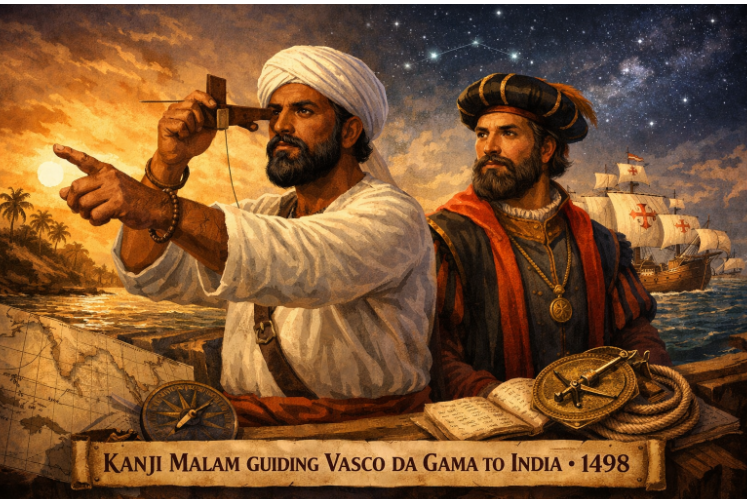
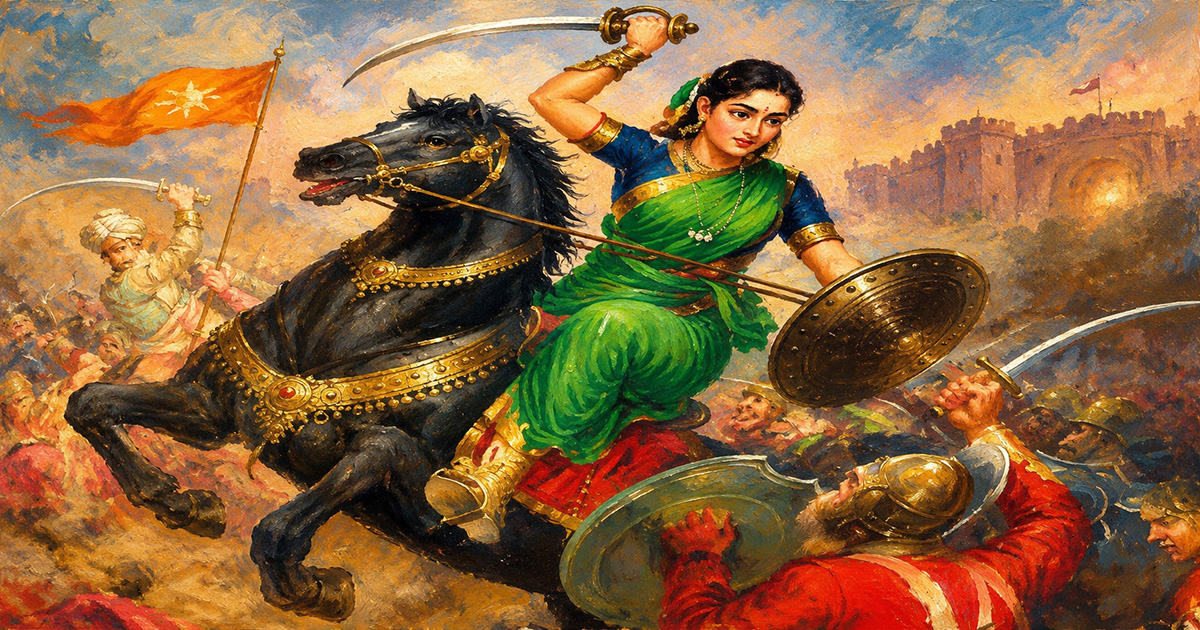
This image is AI-generated
Books on world history describe Vasco Da Gama as the great discoverer who found the sea route to India, but the truth is completely different. Let us tell you how Vasco Da Gama's voyage in 1498 was actually successful because of a Gujarati navigator, Kanji Malam. This also makes it clear that he did not discover the route himself, but rather the Kutchi navigator showed him the correct path.
Vasco Da Gama's voyage began on July 8, 1497, from Lisbon, Portugal, when King Manuel I of Portugal sent him with four ships and 170 sailors in search of spices to India. They passed the western coast of Africa and crossed the Cape of Good Hope, but from there, the route across the Indian Ocean was completely unknown to them. Monsoon winds, sea currents, and navigating using stars were skills unknown to Europeans. After months of arduous travel, they reached the Malindi port on the east coast of Africa in April 1498, where their ships were exhausted, and the crew was falling ill. Here, for the first time, they realized that reaching India without local help was impossible, so they asked the Sultan of Malindi for an experienced pilot.
The Sultan of Malindi helped and sent a navigator with the Portuguese from Gujarati traders' ships. This navigator was none other than Kanji Malam from Mandvi, Kutch, a cotton and indigo trader, who is referred to in Portuguese records as 'Malemo Cana' or 'Moor of Gujarat'. Kanji Malam had been trading between Africa and India for a long time, carrying goods in exchange for gold and ivory, and navigating using the traditional Indian instrument called the kamal with the help of stars. He boarded Vasco's ship and fully utilized the monsoon winds, departing from Malindi on April 24, 1498. This was the moment when the European 'discovery' story truly began to rely on Indian knowledge.
After this, the journey progressed rapidly, and they crossed the Indian Ocean in just 23-24 days, whereas without a pilot, they could have wandered for months or sunk. Kanji Malam not only showed the route but also kept the ships safe, as he possessed deep knowledge of the Indian Ocean passed down through generations of Gujarati navigators. Portuguese journals like those of João de Barros and Fernão Lopes de Castanheda clearly state that this pilot was from Gujarat, not an Arab or European. The rumor about Ibn Majid has also been rejected by historians because he was 77 years old at the time and not there. In this way, with Kanji Malam's help, Vasco Da Gama reached the Kappad coast of Calicut (present-day Kozhikode) on 20 May 1498, but he took the credit himself.
The most exciting and important part comes here, where it is proven that Vasco did not discover the route himself. Kanji Malam used his kamal instrument to measure the height of stars and was aware of the direction of the monsoons, keeping the ships on the right path, which allowed only 55 out of 170 sailors to return, but the voyage was completed. Original Portuguese sources describe 'Malemo Cana' as Gujarati, and according to Indian news portals like Times of India and ED Times, it was Kanji Malam from Mandvi, Kutch, whose ship was three times larger. This incident shows that navigation knowledge of the Indian Ocean was already with the Indians. Europeans just came to use it. If Kanji Malam had not been there, Vasco's voyage would have failed, and the course of history would have changed.
This story teaches us that the real discoverers are those whose knowledge is being applied, not the one who takes the credit. Vasco Da Gama's voyage began colonialism, but it proves that India's maritime knowledge was centuries old and superior. Thanks to unknown navigators like Kanji Malam, the door between Europe and Asia opened, yet their name faded from history. Today, when we talk about global trade, remember that every 'discovery' has a local guide behind it. This story teaches us that true history is about collaboration, not solitary victory, and Gujarat's navigation tradition still makes us proud.
.jpg)