Smiling Buddha: How a Scientist, Raja Ramanna Shaped the Nation’s Security? | Pokhran I
The central figure behind Pokhran I was scientist Dr. Raja Ramanna. He was the man who provided the theoretical strength, scientific discipline, and strategic courage for that declaration.

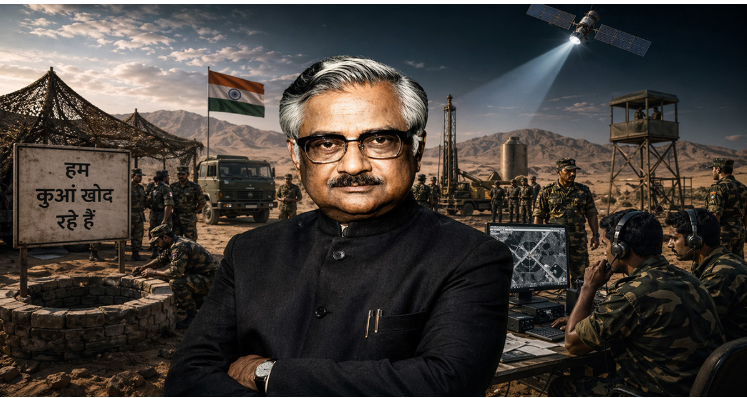
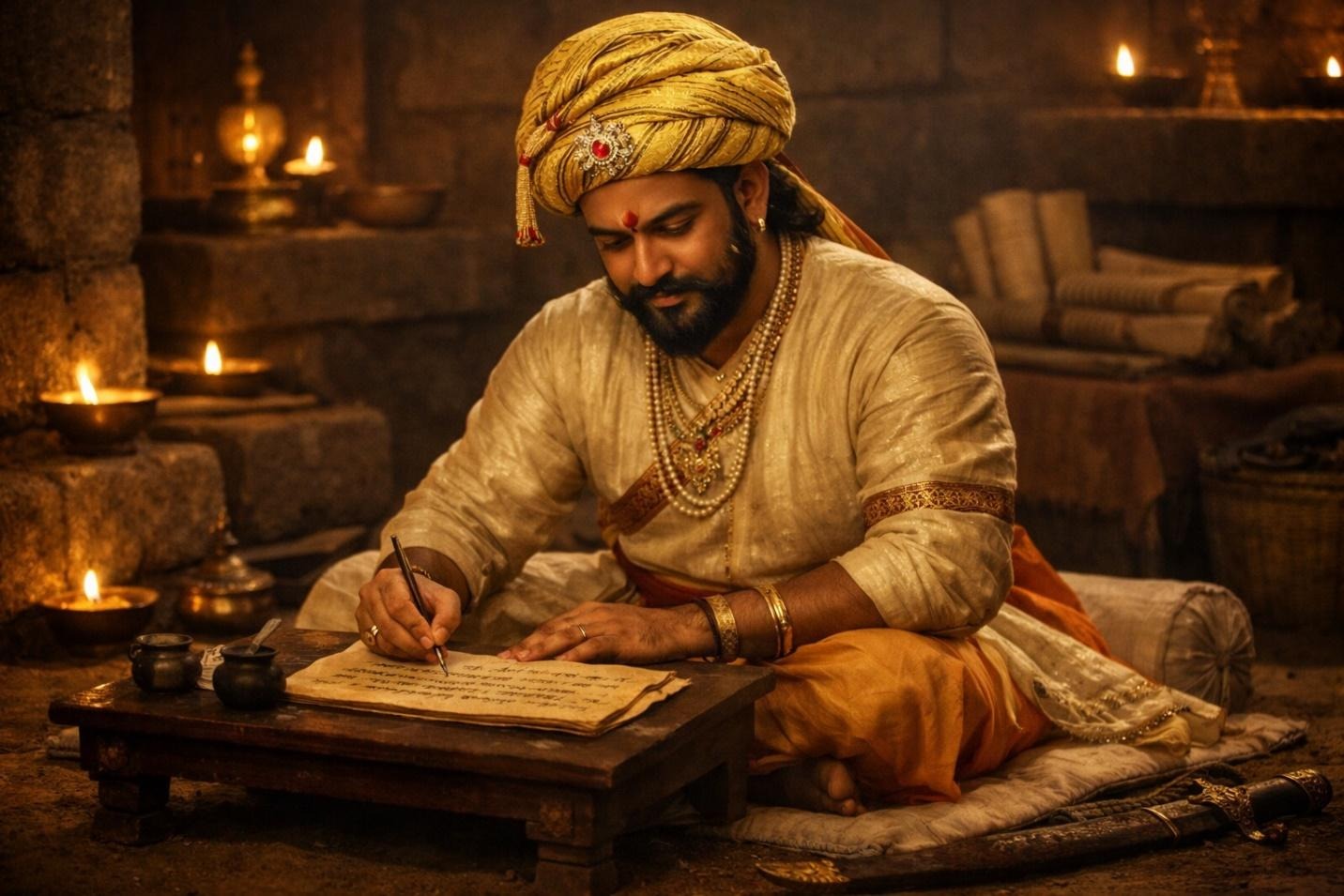
This image is AI-generated
May 18, 1974, the morning in the Pokhran desert began as usual. But beneath that silent sand, a decision to change India’s history was being prepared. The central figure of that decision was scientist Dr. Raja Ramanna. It was not just a nuclear test. It was a historic declaration that a nation could determine its own security. Ramanna was the man who provided the theoretical strength, scientific discipline, and strategic courage for that declaration.
Raja Ramanna, Indian physicist and scientist | Image Source: ahf.nuclearmuseum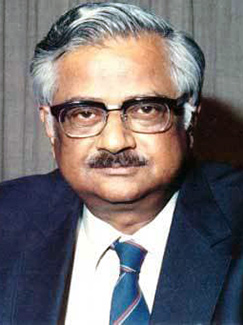
The Pressure Cooker: The Grip of History
The 1962 war with China left a deep wound on India. Later, in 1964, China's nuclear test changed global strategic equations. In that context, the feeling that India also needed independent defense capabilities grew stronger. Back then, nuclear science was not just a subject for laboratories. It was a complex blend of national security, diplomacy, and national self-confidence. Raja Ramanna was among those who bore the pressure of this background. He rose to a key leadership role in India’s nuclear program after Homi Bhabha.
The only question before Ramanna was: How to show the world that India has nuclear capability? The answer he gave to that question was not in words; it was seen in method, planning, and silent discipline.
Secret Toil
The primary strength behind the success of Pokhran-I was secrecy. The team working under Raja Ramanna's leadership operated within a very limited circle and with extreme caution. There is evidence that about 75 scientists participated in this project. Even though it looked like normal movement from the outside, inside, there was precise coordination. The American intelligence apparatus, international doubts, and political sensitivity—all of these were focused on that target. Yet, Ramanna’s team did not stop the work.
The Great Secrecy: A Political Spy Thriller
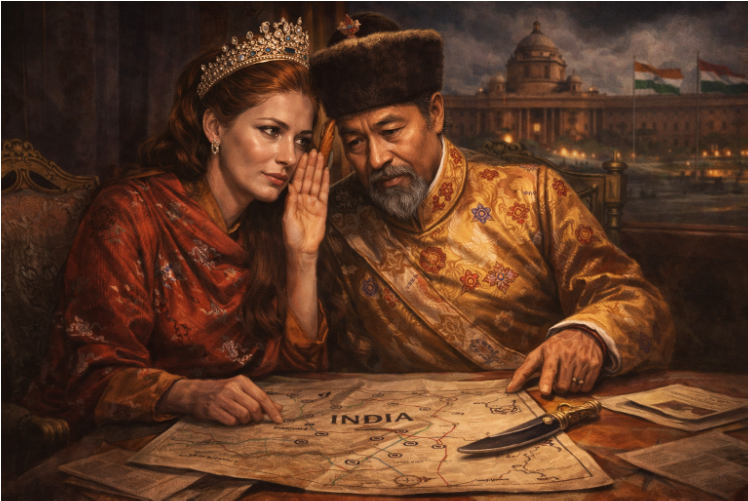
Politically, it was an extremely dangerous 'mind game'. The 75 scientists led by Raja Ramanna turned into a tightly-knit secret system. There was no drama, only control. While CIA satellites were scouring the Pokhran ground from the sky, Ramanna’s team moved around in military uniforms with pseudonyms. If anyone asked, they would say, "We are digging a well." American spies never imagined in their dreams that such a strategist could exist within a scientist.
The Risk Taker: Leadership Means Boldness
If we see Ramanna merely as "the scientist who detonated the bomb," it would be giving him very little respect. He should be seen as "the warrior who bore a great decision." If an experiment succeeds, it is a scientific victory. But standing firm with the courage required for that experiment to happen is a leadership victory. What if the experiment failed? Global nations would isolate India. Between technical uncertainty on one side and political risk on the other, Ramanna hitting the target while standing between these two was no ordinary feat. A leader is not one who is not afraid, but one who bears that fear between clenched teeth and leads his team. Ramanna bore that loneliness for the country. He made it possible to complete a task that couldn't be fully shared with anyone, in a way that benefited the entire nation.
That is the human angle in this story. Ramanna was not just a scientist; he was a man who stood alone for the country. He was the person who could complete a task for the nation that he couldn't fully tell anyone about.
The Climax: The Buddha Smiled—Not Non-violence, but Self-Defense!
India conducted its first nuclear test at Pokhran | Image Source: India Today
On May 18, 1974, at 8:05 AM, the test took place in Pokhran. With that moment, India successfully completed its first nuclear test. Through the underground explosion, the country announced its scientific capability to the world. Later, the message sent to Delhi remained in history: “The Buddha has finally smiled.” In that sentence, there was more gravity than pride. It was a signal that while India seeks peace, it can defend itself if necessary. This message, which came on the day of Buddha Purnima, became a symbol of Indian science, restraint, and self-confidence. What made Raja Ramanna stand tall was not just his scientific talent. It was the leadership clarity, team coordination, and the power to remain stable even in extremely sensitive situations. He did not just give a technical direction to the Indian nuclear program; he also provided scientific self-confidence to the country.
For this reason, the story of Pokhran-I is not complete without Ramanna. Because what exploded in Pokhran that day was not just a device. It was the faith India developed in its own power. The person who gave shape to that faith was Raja Ramanna. Raja Ramanna's name might not always be in big headlines. But the foundation he laid in India’s security structure still stands. National security does not mean just holding guns at the borders; it also means standing for the country in the laboratory, in planning, and in decision-making.
The real name behind that light that blossomed in the Pokhran desert is Raja Ramanna. His story is not just a scientist's story. It is the moment a nation learned to respect itself. He was born on July 10, 1926, in Tumkur, Karnataka, and in 1975, the Government of India conferred upon him the Padma Vibhushan.