1st Amendment & Press Freedom: When Nehru's Displeasure Overrode Press Freedom

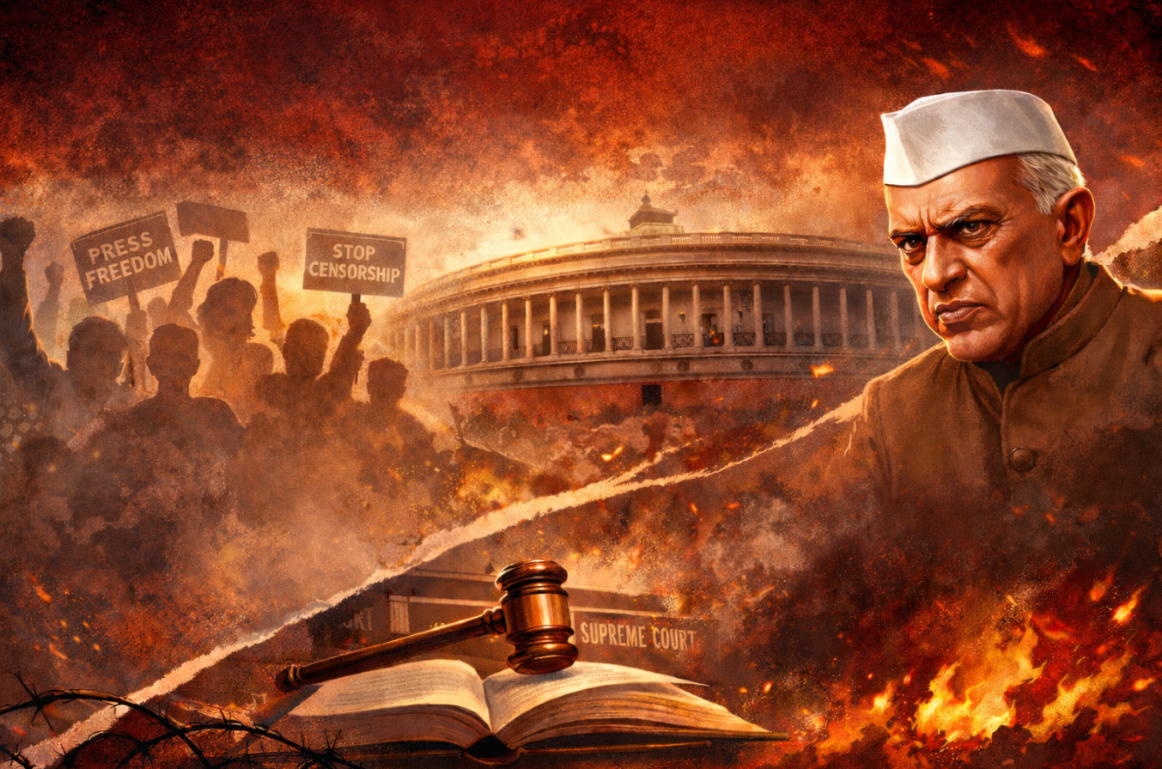
This image is AI-generated
While India's first Prime Minister, Jawaharlal Nehru, was preaching non-alignment to the world, a small weekly magazine targeted his foreign policy and raised questions about it. For Nehru, this was no ordinary criticism; it was a personal insult that stung so deeply that he amended the Constitution itself. The First Constitutional Amendment of 1951, which was the result of Nehru's deep displeasure, was triggered by Romesh Thapar's Crossroads magazine, which was sharply criticizing his foreign policy. Let's find out why and how the attempt to suppress the press's voice began right at the start of democracy.
The Crossroads weekly magazine was launched in Bombay on April 29, 1949. It was started by Romesh Thapar, a Marxist intellectual. Thapar, who had returned from England and was influenced by communist ideology, featured articles by writers like Mulk Raj Anand, Pablo Neruda, and Balraj Sahni in the very first issue of his magazine, which raised questions about the Nehru government's domestic and foreign policies. The magazine's focus was on India's neutrality in the Korean War, which Thapar considered as support for American imperialism. Nehru, who was the pioneer of the Non-Aligned Movement, was stung by this. But the beginning seemed peaceful. The magazine's sales were low, yet it became a hit in leftist circles. Although it did not target Nehru personally, the criticism of foreign policy was continuous. In this way, Nehru's focus now turned to this "communist propaganda." Thus, a small magazine began being a mirror to Nehru's policies, which was going to test his tolerance.
In March 1950, when the Congress government of Madras (now Tamil Nadu) banned the entry and distribution of Crossroads magazine in the state under Section 9(1A) of the Madras Maintenance of Public Order Act, 1949. Why? It criticised the firing of 22 communist prisoners in Salem Jail, in which the magazine also described police brutality. The government order stated that this ban was necessary for public order. Now, Thapar called it a fascist attack and announced plans to go to the Supreme Court by raising funds from readers. It was said that on one hand, Nehru talks about press freedom, and on the other hand, state governments are curbing press freedom at his behest. This ban gave the story a new turn, turning it into a constitutional battle.
The story reached the Supreme Court, where Thapar directly filed a petition under Article 32. Under which the Nehru government was put on the back foot. On May 26, 1950, a six-judge bench (led by Justice M. Patanjali Sastri) ruled 5:1 that the ban was unconstitutional. The court said the ban is valid only when the foundations of the state are shaken. This decision became a milestone for the press. High courts began striking down the Press Emergency Powers Act and sedition clauses. Nehru received a jolt. He said in Parliament that the Constitution needs to be amended. But in reality, it was his personal displeasure because Crossroads had called India's neutrality in the Korean crisis "imperialist tilt," which was hurting Nehru's global dreams. Thapar's victory was a big defeat for Nehru. Now he began thinking of changing the Constitution so that such criticism does not happen again.
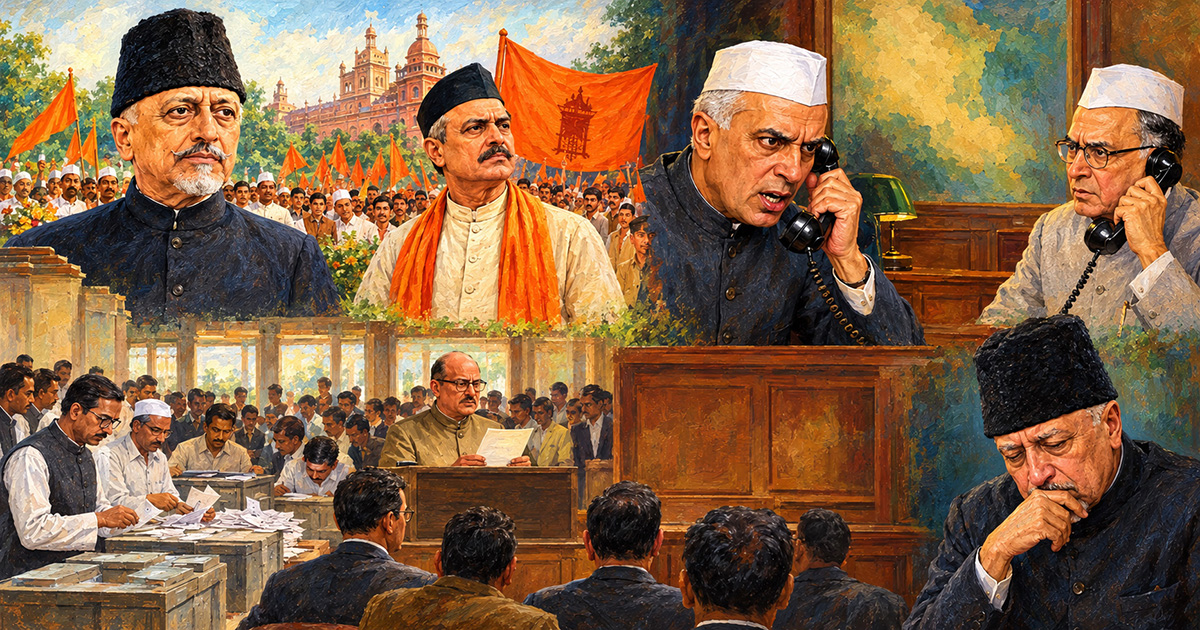
The Constitution’s (First Amendment) Act, 1951 was published in the Gazette of India on May 10, 1951. This was not an ordinary reform; it was just a weapon to silence Crossroads. "Reasonable restrictions" were added in Article 19(2). These included public order, relations with foreign states, incitement to crime, decency, etc. These objectives stated that the court had made freedom so broad that even incitement to murder would be unpunished. During the debate in Parliament, Shyama Prasad Mukherjee opposed it, calling it an attack on press freedom. Nehru argued that it was necessary to prevent violence after Partition, but in reality, it was targeted at Thapar. This bill was passed on June 18, 1951. Thapar called it the murder of democracy, but Nehru emerged victorious. It was said that Nehru's displeasure was so deep that the entire Constitution was bent to suppress one magazine. This was the moment when Nehru's dream of modern India outweighed press freedom.
It has been said in this episode that, at the very dawn of democracy, the arrogance of power was poised to crush the press. This incident teaches us that freedom of expression is not a gift, but a continuous struggle. Leaders like Nehru, who were heroes of independence, could be so affected by personal criticism that they went on to amend the Constitution. Nehru's displeasure serves as a lesson that the personal ego of those in power should never be placed above the constitution.
.jpg)