International Day of UN Peacekeepers: How World’s First-Ever All-Female Unit Became “Indian Sisters” for War-Torn Liberia
Peacekeepers from India were deployed in war-torn Liberia in 2007, becoming the world’s first-ever all-female United Nations peacekeeping unit.

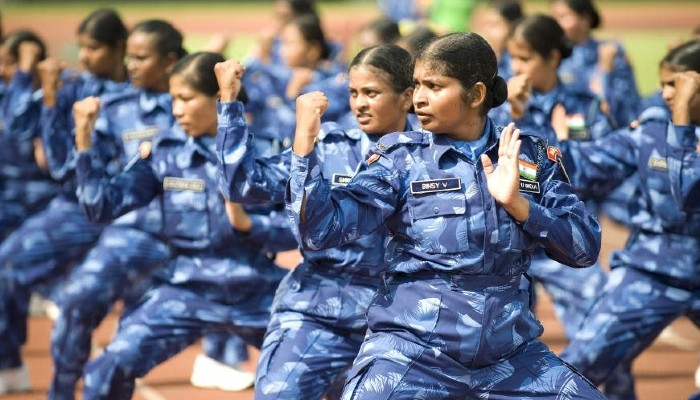
India's 'Blue Helmets' on a mission to give peace a chance | Image Source: India News Network
First came stones and petrol bombs, followed by a violent mob charging forward angrily in the streets of Monrovia towards a group of women dressed in blue uniforms and berets. The women, who had barely arrived just a couple of days ago in Liberia, stood their ground. No gunfire shots were fired, no lives were lost, and neither did they use violence. Instead, to disperse the violent mob, they used water cannons and tear gas shells, and by noon, there was peace. Who were these women who dispersed the mob with such control and discipline? They were peacekeepers from India to be deployed in war-torn Liberia in 2007, becoming the world’s first-ever all-female United Nations peacekeeping unit. Today, as we observe the International Day of UN Peacekeepers (May 29), we reflect on the extraordinary role played by Indian women amid chaos and war in redefining what peacekeeping itself could look like.

India Deploys Its "Largest Single Unit Of Women Peacekeepers In UN Mission | Image Source: NDTV
Liberia: A War-Torn Nation Residing in Fear
To understand why the presence of Indian women peacekeepers mattered, one must first understand the situation that prevailed in Liberia, a country in West Africa. Between 1989 and 2003, the country was torn apart by two brutal civil wars. Entire communities were displaced, infrastructure had collapsed, and hundreds of thousands of civilians had lost their lives. But of all, it was the women who had suffered the most. Widespread sexual violence was reported during the conflict, yet their trust in law-enforcing institutions, such as the police forces, had almost eroded. For many Liberian women, the very systems meant to protect them had either failed them or frightened them.
Liberia's civil war refugees left destitute | Image Source: Reuters
Thus, for such a fragile society, Liberia, in those years, was not just rebuilding infrastructure; it was rebuilding trust. Especially for women, who had suffered the most. It was in this particular moment that, in 2007, for the first time in UN peacekeeping history, an all-female Formed Police Unit (FPU) from India was deployed to Liberia. Stationed in the Congo Town suburb of Monrovia, the all-female Formed Police Unit (FPU) consisted of 103 Indian women handling operational duties, supported by 22 men in logistics roles.
“The Right People at the Right Time”
Their presence was immediately recognised as significant. As UN spokesperson Ben Dotsei Malor put it, “The Indian women are the right people at the right time to come here now.” And so were their responsibilities, rigorous and relentless. From protecting the Ministry of Foreign Affairs and the office of Liberia’s President to conducting 24-hour patrols, from escorting VIPs to securing volatile and remote regions alongside Liberian and international forces, their role was central to stabilising the country.
Just a couple of days after their arrival, they came face to face with a violent mob. Yet, despite the violence and chaos, the unit demonstrated utmost control. Sharing her experience, Seema Dhundia, the former commander of the first all-female Police Unit (FPU) to a UN mission, said, “Even though Liberians are more well-built than Indians, we managed to control the mob with non-lethal weapons like tear gas and water cannons. By noon, the mob had dispersed without us firing a single shot, and we had won the admiration of the locals who were watching us.” That day, as the dust settled, the locals began calling them “Indian sisters.”
How the Women in Blue Built the Society: One Step At a Time
This is how the Indian contingent worked differently. They did not just patrol the streets or escort the VIPs; instead, they entered the very core layer — the local people. They taught self-defence to women, held sessions on sexual violence and HIV/AIDS, opening conversations that had once been silenced by fear. They mentored Liberian police officers, shared skills like map-reading, and worked to rebuild confidence in local law enforcement.
Displaced communities receive free medical checks | Image Source: UN Peacekeeping
In Congo Town, they organised medical camps in areas where healthcare was scarce. In one such camp in 2009, over 200 patients, mostly women, were treated in a single day. For many, it was the first time they could openly discuss their health, including reproductive concerns, with someone they trusted. They even spent time with orphanages and schools, slowly weaving themselves into the social fabric of a recovering nation.
And the impact was immediate. Within just 60 days of their arrival, reporting of sexual violence increased significantly. And with increased reporting, eventually, a reduction in such crimes was visible. Crime rates dropped in several areas, with some estimates suggesting armed robberies reduced by as much as 65 percent due to their consistent foot patrols and community engagement. More importantly, they inspired change from within. Liberian women began joining the security sector in greater numbers; the numbers that once stood at just 6 percent rose to 17 percent over the years. This was the powerful impact that these women had made. When the locals saw these peacekeepers, they realised that they could, too, join the forces.
Indian peacekeepers helping people in war-torn Liberia | Image Source: United Nations (India)
India’s Long-Standing Legacy in UN Peacekeeping
Since the 1950s, India has contributed over 300,000 peacekeepers to more than 50 UN missions worldwide, making it the largest contributor in the history of UN peacekeeping. Today, more than 5,000 Indian personnel continue to serve in active missions, often in some of the most dangerous regions in the world. Among them are hundreds of women officers who are not just participating, but leading and transforming peacekeeping efforts.
India's 'Blue Helmets' on a mission to give peace a chance | Image Source: India News Network
As External Affairs Minister Dr. S. Jaishankar has rightly put, “At the heart of our foreign policy lies a commitment to peacekeeping — rooted in dialogue, diplomacy, and cooperation. Guided by the philosophy of ‘Vasudhaiva Kutumbakam,’ the belief that the world is one family, India will continue to contribute meaningfully to the cause of UN peacekeeping.” This came true in Liberia. The all-female Indian unit served nine rotations between 2007 and 2016, before completing its mission. When they left, Liberian President Ellen Johnson-Sirleaf said, “We see you as family.” This was only possible because in Liberia, these women did more than keep peace — they changed what peace looked like.