Maharani Tarabai Bhosale: How a 25-Year-Old Queen Brought Aurangzeb’s Empire to Its Knees
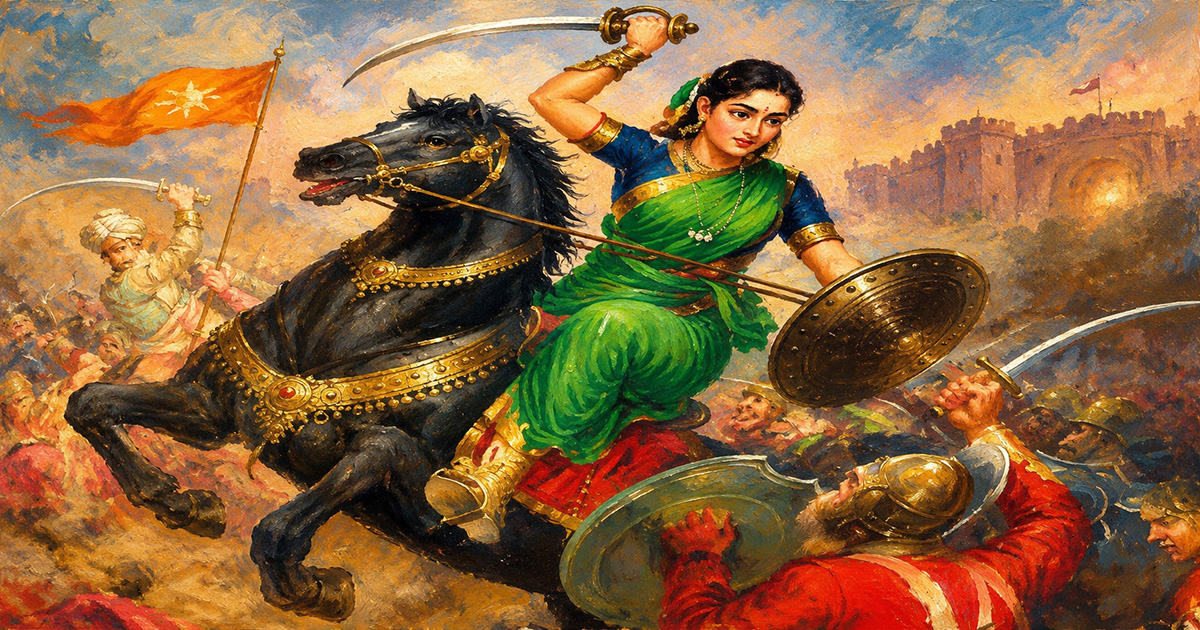
Following her husband’s death in 1700, the young widow, Maharani Tarabai Bhosale, assumed command of the Maratha forces.

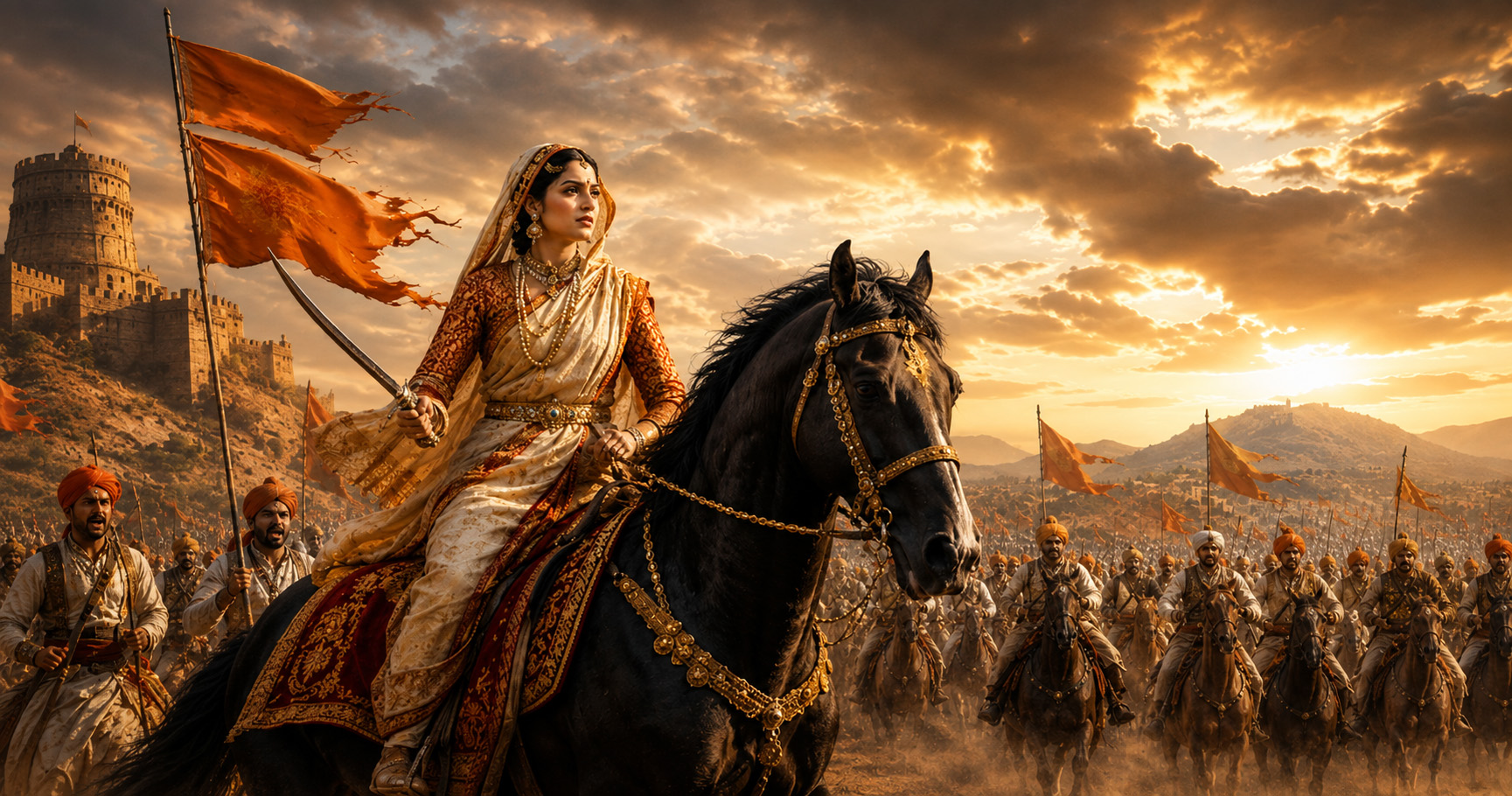
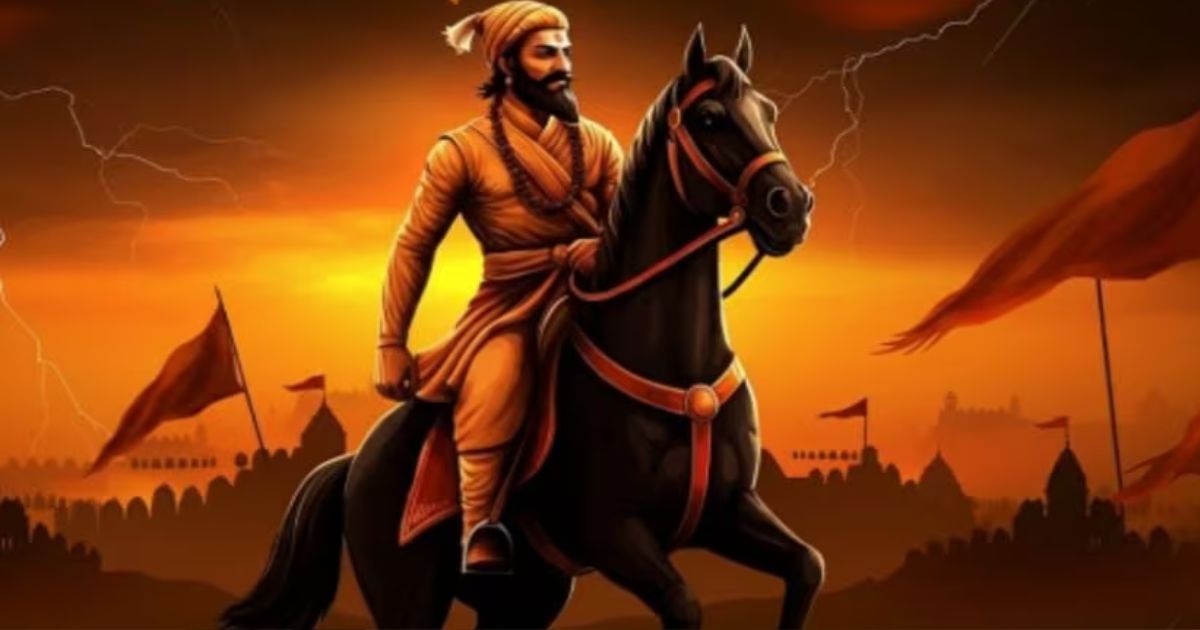
Maharani Tarabai Bhosale | This image is AI-generated
March 1700. Dust swirled across the hills of the Deccan, and the future of the Maratha Empire appeared shrouded in darkness. Chhatrapati Rajaram, the younger son of Chhatrapati Shivaji Maharaj and ruler of the Maratha Empire, had passed away. Years of warfare had exhausted the Marathas. Many of their forts were under siege by Mughal armies, while Emperor Aurangzeb himself was camped in the Deccan with hundreds of thousands of troops. From Delhi to the Deccan, people believed that the end of the Marathas was now inevitable. Yet, amid this despair, a 25-year-old queen stepped forward—Maharani Tarabai Bhosale. The daughter of the renowned Maratha commander Hambirrao Mohite, Tarabai had been familiar with warfare and administration since childhood.
Following her husband’s death in 1700, the young widow assumed command of the Maratha forces. Rather than succumbing to grief, she had her minor son, Shivaji II, crowned at Vishalgad and took charge of the empire as regent. This was not merely a royal ceremony; it was an open challenge to Aurangzeb.
Tarabai quickly realized that fighting a purely defensive war against the vast power of the Mughal Empire would be suicidal. She completely transformed Maratha military strategy. Orders were issued that not every fort had to be defended until the last moment. If a fort became impossible to hold, it could be surrendered—but only after forcing the enemy to pay such a heavy price that it would exhaust itself in the process.
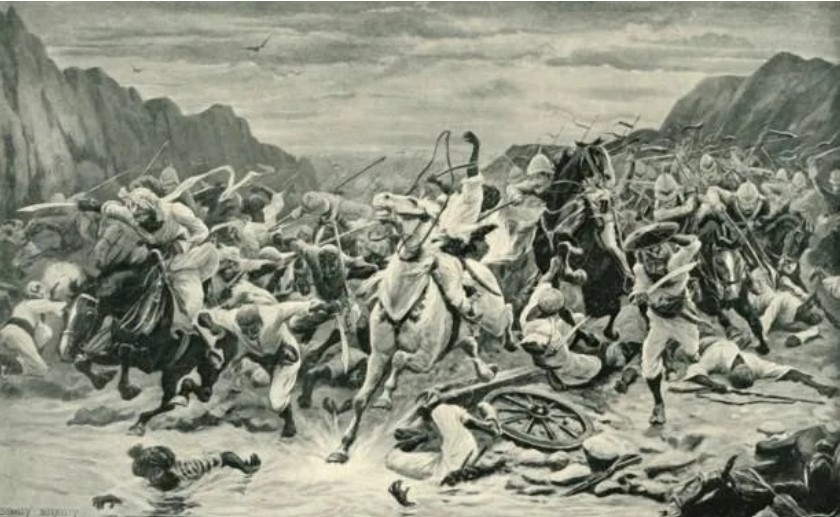
In 1700, Aurangzeb laid siege to Satara Fort. Throughout the months-long siege, Maratha troops continuously attacked Mughal supply and communication lines. The fort eventually fell, but only after the Mughals had spent enormous sums of money and lost thousands of soldiers. The following year, during the siege of Panhala Fort, Tarabai personally visited the fort to inspire the defenders. When circumstances became unfavorable, the fort was evacuated in a carefully planned manner. In 1702, the Mughals faced similar difficulties around Vishalgad, where guerrilla attacks and the rugged terrain constantly harassed them.
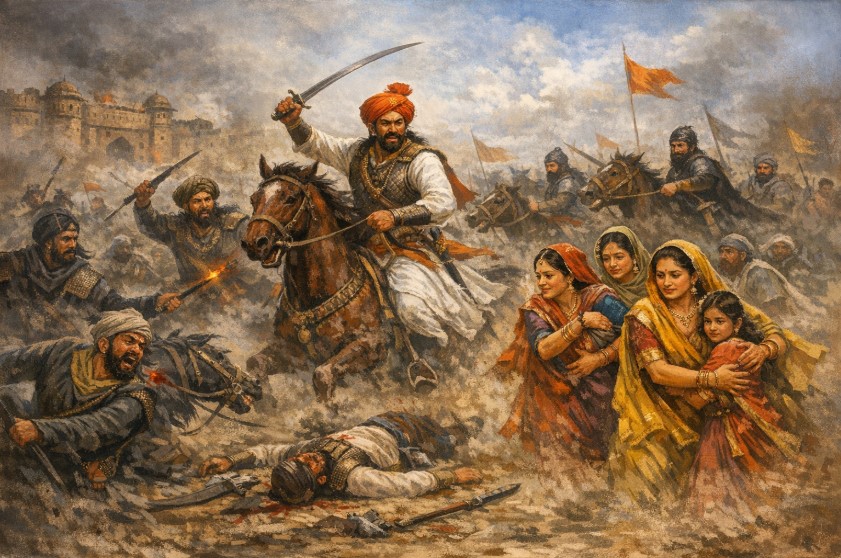
In 1703 and 1704, the Mughals managed to gain control of important forts such as Sinhagad and Torna through heavy bribery. However, this too was part of Tarabai’s strategy. The Mughals would spend months capturing a fort and then invest vast amounts of money in repairing and defending it. As soon as they moved on, Maratha forces would suddenly strike and recapture the same forts. Historians later remarked that the Marathas were effectively fighting the Mughals using Mughal resources.
By 1705, Tarabai understood that victory could not be achieved by fighting solely in the Deccan. She decided to carry the war into the heart of the Mughal Empire. Acting on her orders, Nemaji Shinde and Khanderao Dabhade crossed the Narmada River and launched raids into Malwa. For the first time, Maratha forces had penetrated so deeply into Mughal territory. Soon afterward, Maratha cavalry began appearing in Gujarat, Berar, and Telangana. Mughal officials were left bewildered: the very Marathas they sought to suppress in the Deccan were now threatening some of the empire’s richest provinces.
In 1706, Maratha commanders, including Dhanaji Jadhav, carried out continuous attacks in Gujarat and the Burhanpur region. Money intended for the imperial treasury was frequently intercepted and looted along the way. Tarabai had effectively launched an economic war. Maratha forces began collecting a substantial portion of revenue from Mughal territories in the form of chauth. Provinces that once paid taxes to Delhi were now paying tribute under the Maratha banner. Aurangzeb’s greatest strength had always been his vast treasury, and Tarabai struck directly at it.
Gradually, the situation began to change. By 1706, Maratha power had been reorganized and revitalized. A cavalry force of nearly 80,000 horsemen had been assembled, while Maratha detachments operated continuously across Mughal provinces. Communication networks were disrupted, supply routes became unsafe, and Mughal officials increasingly lived in fear.
The contemporary historian Khafi Khan, in his work Muntakhab-ul-Lubab, acknowledged Tarabai’s extraordinary abilities in both administration and military leadership. Her commanders were active across nearly every Mughal province, and Mughal officials lived under the constant threat of Maratha attacks.
Meanwhile, Aurangzeb was growing old and increasingly frustrated. Nearly three decades of campaigning in the Deccan had drained the strength of his empire. He had spent enormous amounts of money, time, and manpower. Forts that had taken years to capture were once again falling back into Maratha hands. Aurangzeb had come to conquer the Deccan, but the Deccan had become the greatest challenge of his reign.
On 20 February 1707, the 88-year-old Aurangzeb died at Ahmednagar. Even at the time of his death, Maratha resistance had not been crushed; in fact, it had become stronger than ever.
Maharani Tarabai’s seven-year rule from 1700 to 1707 is regarded as one of the most decisive chapters in Indian history. Had she surrendered after Rajaram’s death, the Maratha Empire might have disappeared altogether. Instead, she not only preserved Swarajya but also laid the foundations for the eventual decline of the Mughal Empire.
Historian Jadunath Sarkar also acknowledged that Tarabai’s administrative skill and courage kept the Maratha state alive during its most difficult period. In the decades that followed, Maratha power expanded into northern India, while Mughal dominance gradually declined.
That 25-year-old queen won not merely through the sword, but through intelligence, patience, and strategy—and in doing so, secured her place forever in the pages of history.
.jpg)