Just $250 and Two Printing Presses: How Swami Prabhupāda Built ISKCON Press to Spread the Bhagavad Gita in America
Back in 1944, long before he set foot in America, Prabhupāda had started a magazine called Back to Godhead in Calcutta. It was a one-man publishing mission: writing articles, editing content, and arranging for the magazine to be printed.

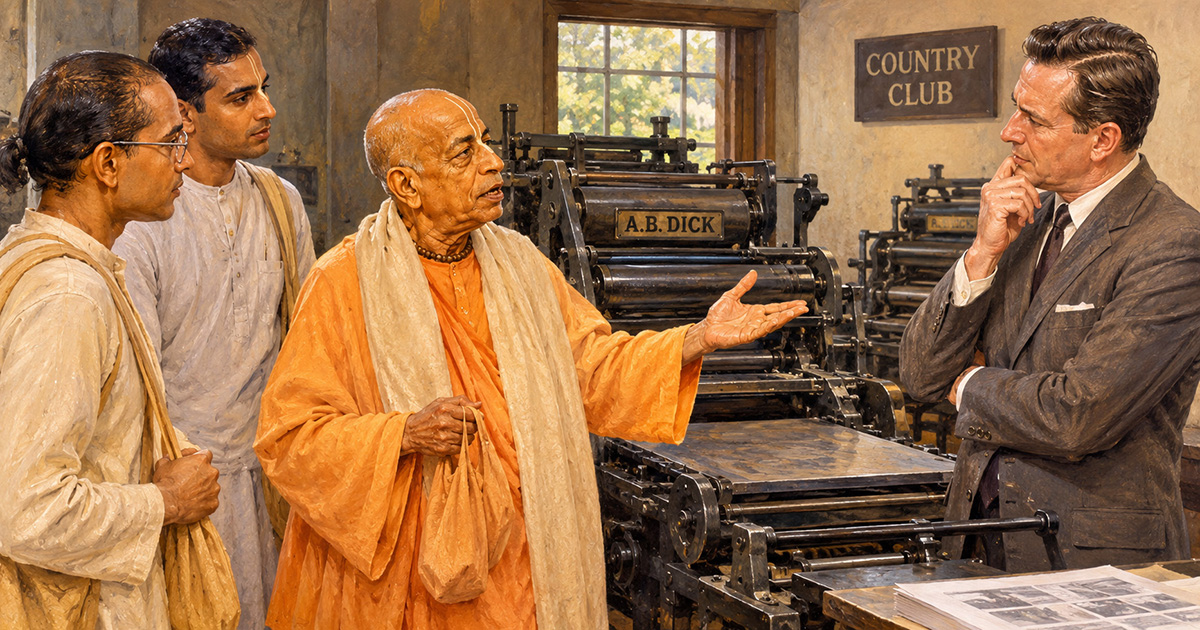
When ISKCON founder found a printing press in New York | This image is AI-generated
Two old printing machines, just $250, and one Indian monk determined to take the teachings of the Bhagavad Gita to the entire world.
In 1966, when Swami Prabhupāda was trying to spread Krishna consciousness in America, he realised that preaching alone wasn't enough. He needed a way to put India's ancient spiritual wisdom into print and reach people far beyond his small New York temple. But he didn't have a publishing house or a wealthy investor backing him. But what he did next established ISKCON's printing operation in America. This is that story.
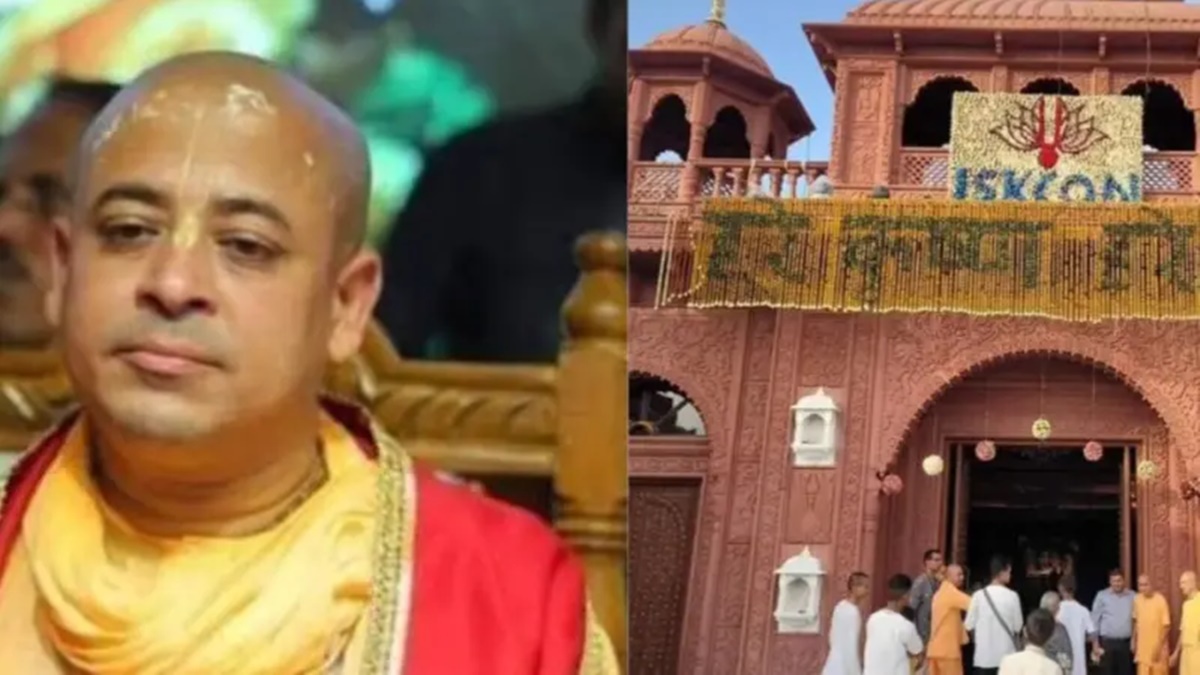
Swami Prabhupāda, the ISKCON founder | Image Source: ISKCON
Back in 1944, long before he set foot in America, Prabhupāda had started a magazine called Back to Godhead in Calcutta. It was a one-man publishing mission, writing articles, editing content, and arranging for the magazine to be printed. His purpose was simply to make the teachings of Lord Krishna and the philosophy of the Bhagavad Gita accessible to all.
More than two decades later, after arriving in New York, he wanted to revive this very magazine. He had established a small centre at 26 Second Avenue, had a tiny group of American disciples, and had begun introducing young Americans to India's spiritual traditions. With this aim nearly fulfilled, he now wanted to reach a much wider audience. And for that, he needed a printing press of his own.
Fortunately, when one of his disciples, Gargamuni, learnt about this, he came across a lead. A country club in Queens, New York, had an old A.B. Dick printing press that it wanted to sell. Prabhupāda decided to check the printing press himself. So, along with Gargamuni and another disciple, Kirtanānanda, he borrowed a van and drove all the way to Queens to inspect the machine.
When they arrived, the country club manager quoted $250 for the printing press. It was old, but still in working condition. However, during their conversation, the manager mentioned that the club actually had one more printing press lying unused on its premises. In this, Prabhupāda immediately saw an opportunity.
Instead of negotiating for the first machine alone, he proposed to offer the manager $250 for both the printing presses. His reasoning was simple: The club had no use for these machines, whereas he wanted to use them to print a spiritual magazine that could benefit people across the world. Surprisingly, the manager agreed! And just like that, for the price originally quoted for one machine, Prabhupāda had managed to secure two printing presses. Gargamuni and Kirtanānanda loaded the heavy printing presses into their borrowed van and brought them back to Manhattan. This marked the beginning of ISKCON Press.
But acquiring the machines was only the first step. Now came the real challenge: printing the magazine. Prabhupāda entrusted the editorial work to his young American disciples. Rāya Rāma typed the stencils, while Hayagrīva took charge of editing. Downstairs at the 26 Second Avenue storefront, the disciples began operating the printing press. Eventually, this small set of people produced 100 copies of the first American issue of Back to Godhead, a 28-page magazine.
But printing the pages was not enough. Each copy still had to be assembled, arranged, and stapled together. So, on a quiet night, when there were no lectures, the disciples gathered downstairs and got to work. They lined up stacks of printed pages along wooden benches, carefully putting together the magazines.
While they were in the middle of this, the side door suddenly opened, and Prabhupāda walked downstairs. This was unusual because he had never visited the printing room on an off-night before. The disciples immediately bowed down to offer their respects. Prabhupāda gently asked them to continue working. He then walked along the row of printed pages, looked at the finished magazines, and touched the copies with pride. Then, he proudly declared, "ISKCON Press!"
Yet there was still one final task: getting the magazines into people's hands. Without waiting for the next morning, that very night, Gargamuni and Brahmānanda loaded all 100 copies onto their bicycles and set out across New York. They rode through the Lower East Side, visited local head shops, and travelled as far as 14th Street and the West Village, distributing the magazines until every single copy was gone.
From a small publication in India to a printing operation in America, this was another chapter in Prabhupāda's mission to introduce the world to India's spiritual heritage and take Lord Krishna’s teaching to the world.
Note: The story has been taken from the book, “Prabhupāda: A Biography” by Satsvarūpa Dāsa Goswami, specifically in Chapter 2.