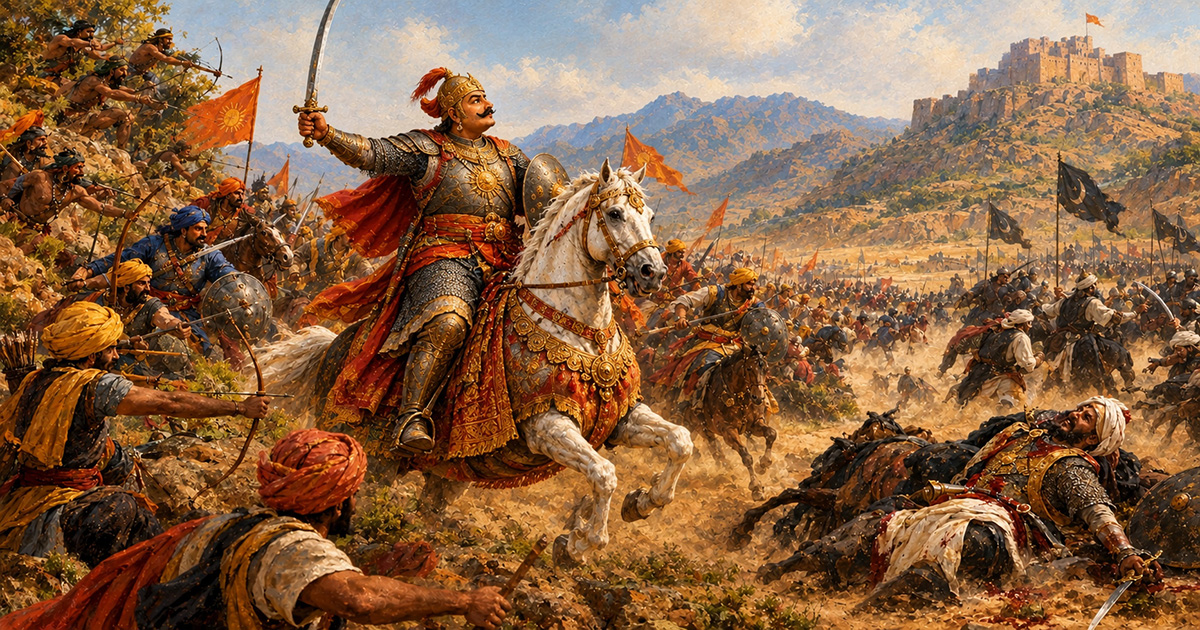
Onake Obavva: The Woman Who Saved Chitradurga Fort Against Hyder Ali's Troops
Hyder Ali’s men had found a secret way into the fort. With no time to call the guards, Obavva grabbed an onake, a wooden pestle, to stop the advancing enemy soldiers.

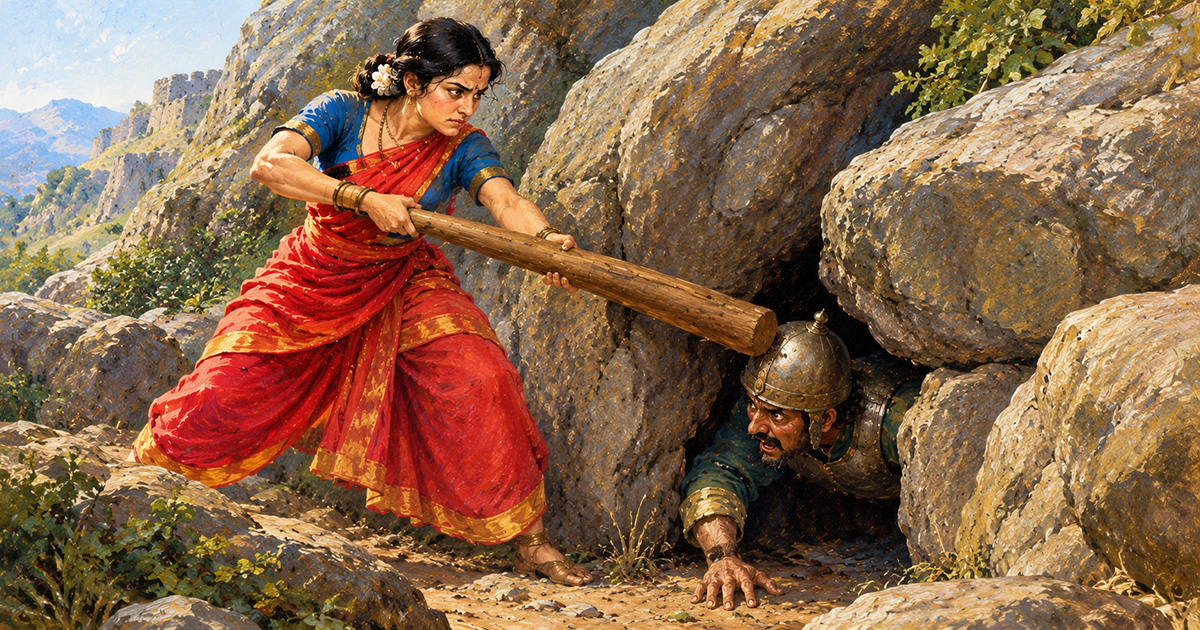
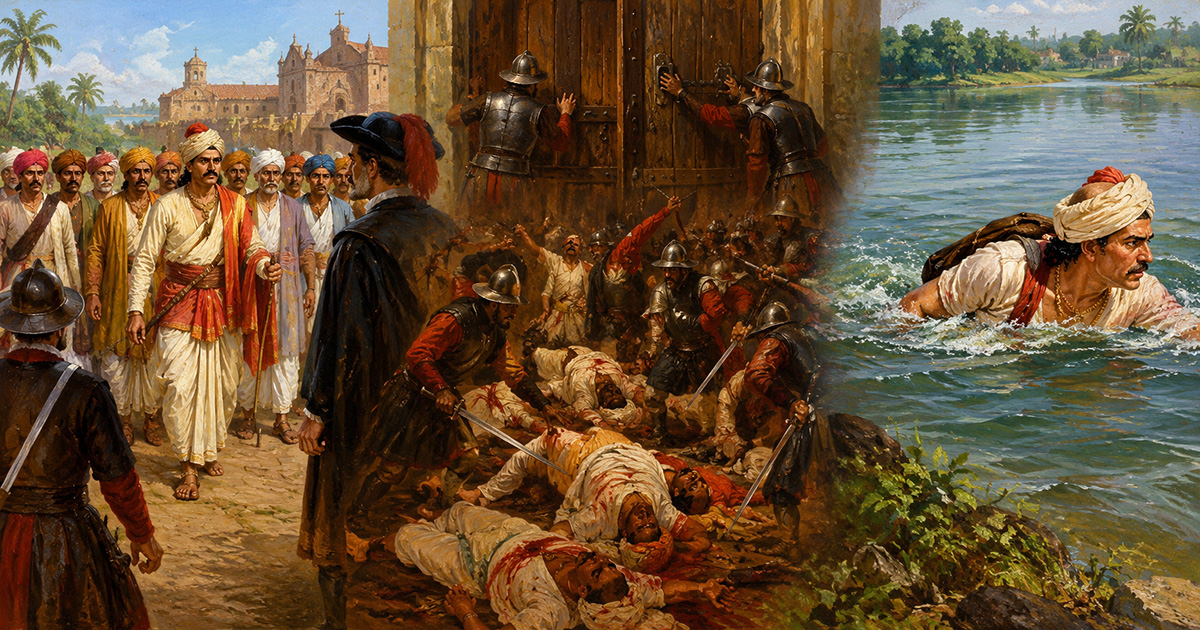
The woman who turned a pestle into a weapon | This image is AI-generated
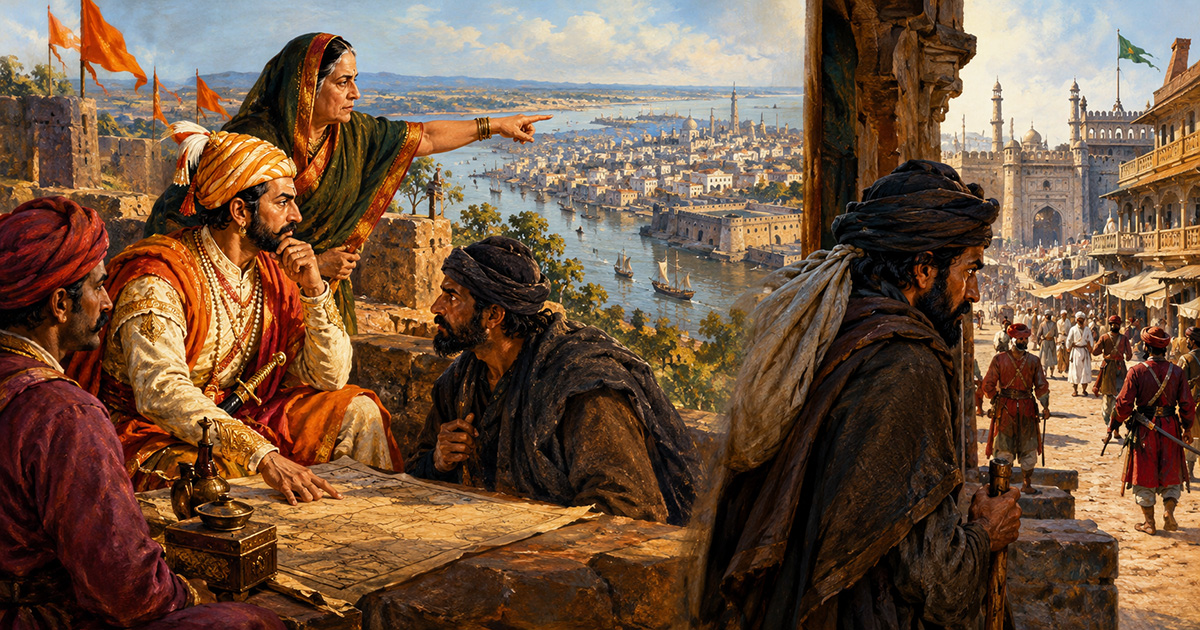
In the 1760s, the afternoon seemed ordinary inside the massive Chitradurga Fort, ruled by Madakari Nayaka IV of the Nayaka kingdom in the Mysore region of present-day Karnataka. The fort stood across a chain of rocky hills, its seven layers of walls, strong gateways and watchtowers making it one of the hardest forts to attack. For nearly 20 years, the forces of Hyder Ali of Mysore had struggled to capture it. That afternoon, Obavva, the wife of one of the fort’s watchmen, Kahale Mudda Hanuma, was at home when her husband sat down for his meal and asked her for some water. She picked up a clay pot and walked towards a natural pond near the rocky passage.
As she approached the pond, a strange sound caught her attention. She stopped and looked towards the rocks. Slowly, the head of a soldier appeared through the narrow opening. Obavva froze. Then she understood. Another enemy soldier was waiting behind him. Hyder Ali’s men had found a secret way into the fort. Instead of attacking its heavily guarded gates, they were trying to enter through this small passage, one after another. If they got inside unnoticed, the fort could be attacked from within.
There was no time to run back. No time to call the guards. The first enemy soldier was already making his way through. Obavva quickly looked around for something she could use to stop them. Her eyes fell on a familiar household tool, an onake, a long wooden pestle used for pounding grain. She picked it up and moved towards the opening. Pressing herself against the rock wall, she waited for the soldier to emerge. He slowly crawled forward, unaware of what was waiting for him. The moment his head came out, Obavva raised the onake and struck him down.
She quickly dragged his body away from the opening. Then she returned to the same spot and waited. Soon, she heard another soldier crawling through the passage. His head appeared. Obavva struck again. She pulled him aside and waited for the next man. The soldiers inside had no idea what was happening. The passage was so narrow that they could come out only one at a time. Each soldier believed the way into the fort was clear. Each one came through expecting to meet no resistance. Instead, they found Obavva waiting for them with the wooden pestle.
The minutes passed, but Obavva did not move from her position. One soldier came through, then another. She kept striking them down and pulling their bodies away before the next man could see them. The secret passage had turned into a trap. The soldiers had expected to quietly enter Chitradurga, but one woman was stopping them at the very point where they emerged. All she had was a household tool, yet she continued to hold her ground.
By then, Mudda Hanuma had finished his meal and returned to his post. What he saw shocked him. His wife was standing near the passage with the blood-stained onake in her hands, while the bodies of the enemy soldiers lay nearby. He immediately understood what had happened. He raised kahale, a horn used to sound an alarm. The warning spread through the fort, and its defenders rushed towards the passage. The enemy’s secret attack was no longer a secret. The remaining soldiers were forced into a fight before they could enter the fort.
But in the confusion, one final soldier managed to come through the passage unnoticed. Obavva was focused on the fighting around her and did not see him approaching from behind. Before she could turn, he attacked her. Obavva fell. The fort’s defenders soon killed the enemy soldier, but the woman who had stood alone at the narrow passage was gone. She had fought until the defenders arrived and had given them the time they needed to stop the attack.
The passage through which the soldiers had tried to enter Chitradurga later became known as Onake Obavvana Kindi — Obavva’s passage. The fort had seven walls, strong gates and massive rocks to protect it from armies. But that afternoon, its defence came down to one woman standing beside a small opening, a wooden pestle in her hands. Obavva had not gone there looking for a battle. She had gone to fetch water. But when the enemy appeared, she chose to stand in their way.