Bappa Rawal: The Warrior Who Rode Against the Islamic Invaders
Bappa Rawal, a brilliant military strategist guided by his Guru Rishi Harit, knew that to resist Islamization, the Bhartiya kings would have to stand united.

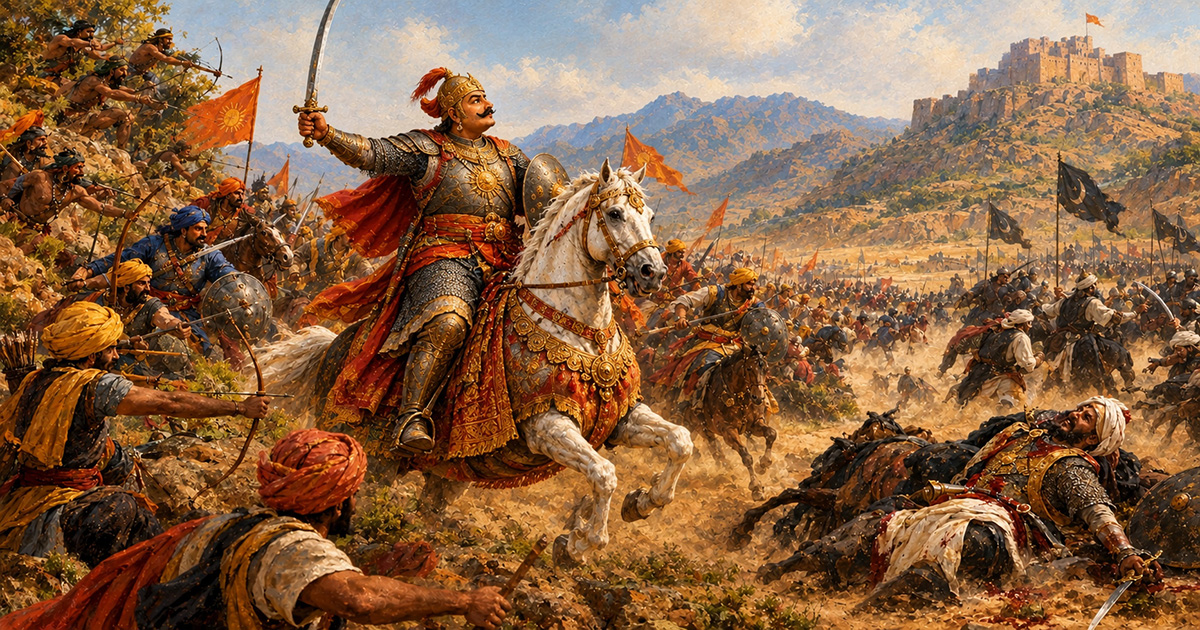
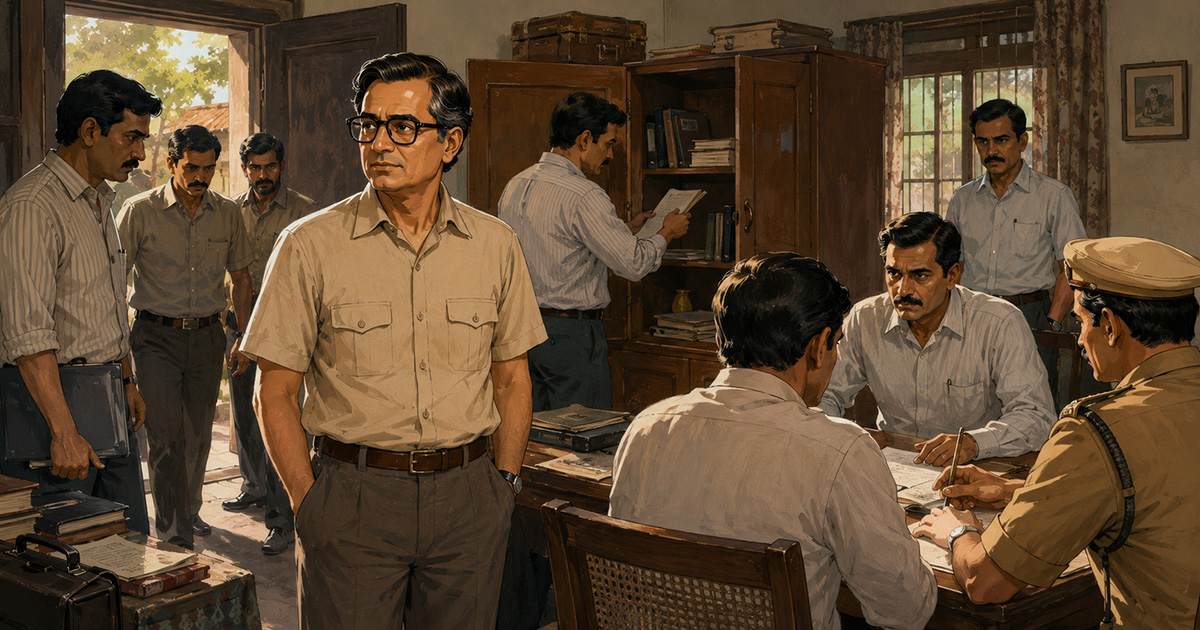
Bappa Rawal, the king who united kingdoms to fight the Arab invasion | This image is AI-generated
Rajasthan's soil did not just protect India from Islamization… it stood guard for the whole Bharat.
It was 738 CE. From Sindh, a huge Arab army was moving towards Marwar, led by Junaid al-Marri, the Umayyad governor of Sindh, who set his eyes on Bharat, determined to conquer its heartland. Stories of the suffering caused by the Arab campaigns had already reached Rajasthan. People had been killed, villages attacked, and people taken captive. Now the army was moving closer to Mewar. But inside Chittor, Bappa Rawal of the Guhila dynasty refused to sit and wait. He knew that if he allowed the army to reach his gates, the enemy would control the battlefield. He looked towards the west and made his decision. Bappa would take the fight beyond Mewar’s borders.
Bappa, a brilliant military strategist guided by his Guru Rishi Harit, began preparing for a counter-offensive. He knew that to resist Islamization, the Bhartiya kings would have to stand united. So he brought together Nagabhata of the Gurjara-Pratihara Dynasty, Pulakesiraja of the Chalukya Dynasty, and Jayabhata of the Gurjaras of Lata Dynasty to form a powerful alliance. Their joint Rajput forces fought the Arab invaders in the Battle of Rajasthan. Together, their resistance began to close the road that Junaid’s forces were trying to open into the Indian heartland. Bappa was ready to face the invading army. He was not going to defend Chittor simply; he wanted to stop the enemy before they could move deeper into India.
Junaid's army was much larger and had powerful cavalry. On open ground, those horsemen could move very fast. Bappa knew this. So he used the land to his advantage. He moved the fight towards the rocky ground and narrow routes near the Aravallis, where a huge cavalry army could not move freely. The soldiers who knew the land had the advantage. The Bhil warriors, who were closely connected with Bappa since his childhood in Mewar, also joined him
Then, near Jodhpur in Marwar, Bappa Rawal finally faced the advancing army of Junaid al-Marri. The numbers were frightening, only 5,000 to 6,000 Bharatiya warriors standing against an Arab army of nearly 60,000. Dust filled the air as thousands of horses moved across the battlefield. Junaid's army looked almost impossible to stop. But Bappa was not standing alone. Nagabhata, Pulakesiraja, and Jayabhatta came together to stop the Arab advance. Then Bappa gave the order. His warriors charged. The Bhil warriors used their knowledge of the land to strike from the hills, while Bappa’s soldiers attacked from the ground. Nagabhata’s forces joined the assault, while Pulakesiraja and Jayabhatta added their strength to the alliance. What had looked like an overwhelming Arab army was now facing a united Indian resistance. In the fierce fighting, Junaid was struck and suffered fatal wounds. He fell on the battlefield, and with their commander dead, the Arab army began to collapse completely.
The scale of the defeat was remembered in Arab historical writing as well. Arab historian Al-Baladhuri, in his 9th-century chronicle Kitab Futuh al-Buldan, describes the battle: “We found no place to hide our heads from the anger of the Hindus. They hunted us down and killed us.”
But Bappa did not simply return to Chittor after the victory. He wanted to make sure the enemy could not quickly return. He and his allies chased the retreating Arab army westward. The army that had marched from Sindh towards Rajasthan was now fleeing back through Gujarat, Saurashtra, and Sindh. But Bappa did not stop there. He continued the pursuit all the way to Iran. Bappa had begun his journey as Kalabhoja and had risen to become Bappa Rawal, the warrior who stood at the forefront of Mewar’s resistance. His name would remain connected with the defence of Mewar and the long struggle against the Arab advance.