How Did Nanaji Deshmukh Take Charge of the Underground Resistance Against the Emergency After That One Phone Call?
When an emergency was proclaimed, JP, Morarji Desai, and Raj Narain, along with several other prominent opposition leaders, had been arrested. Nanaji knew that if he, too, was arrested, the movement would collapse.

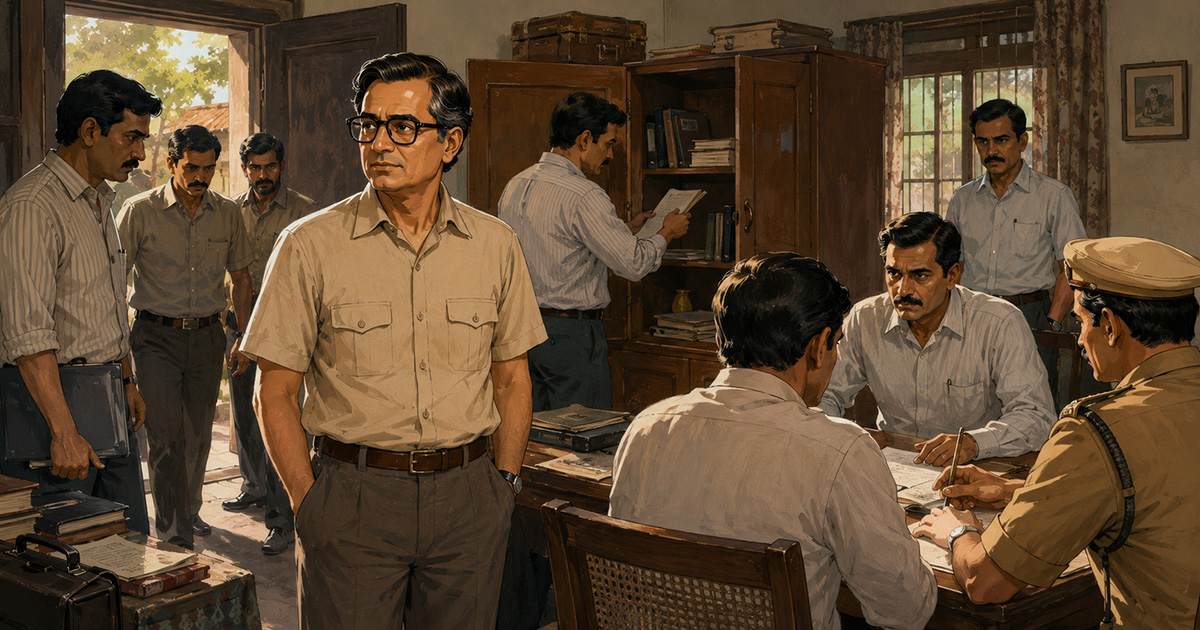
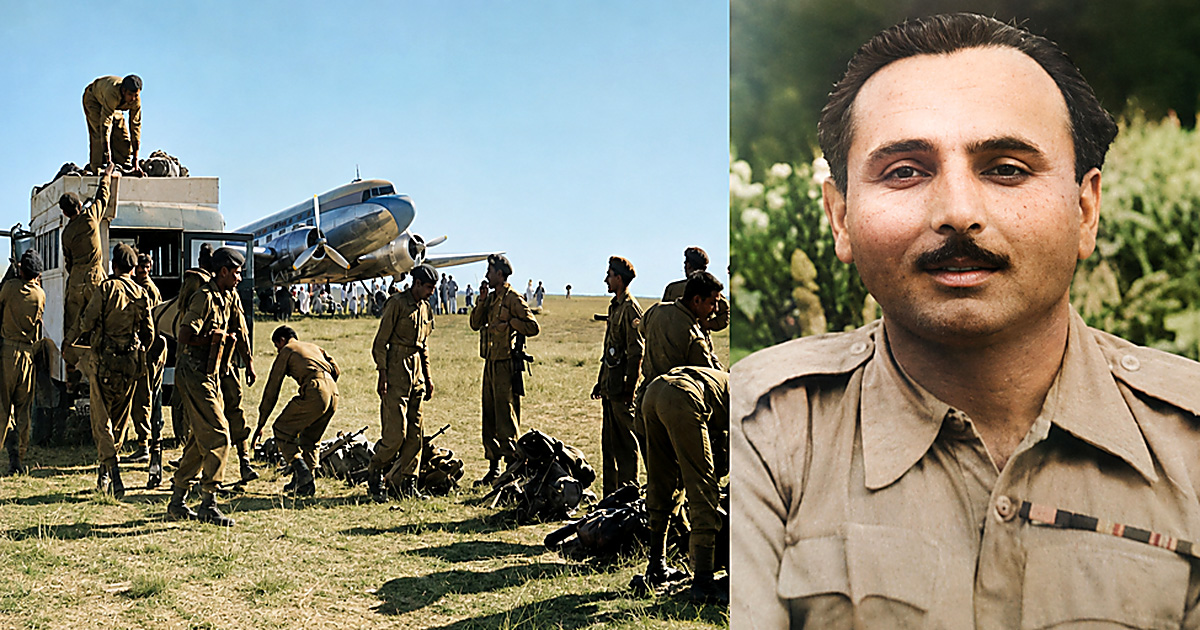
Nanaji Deshmukh during 1975 Emergency | This image is AI-generated
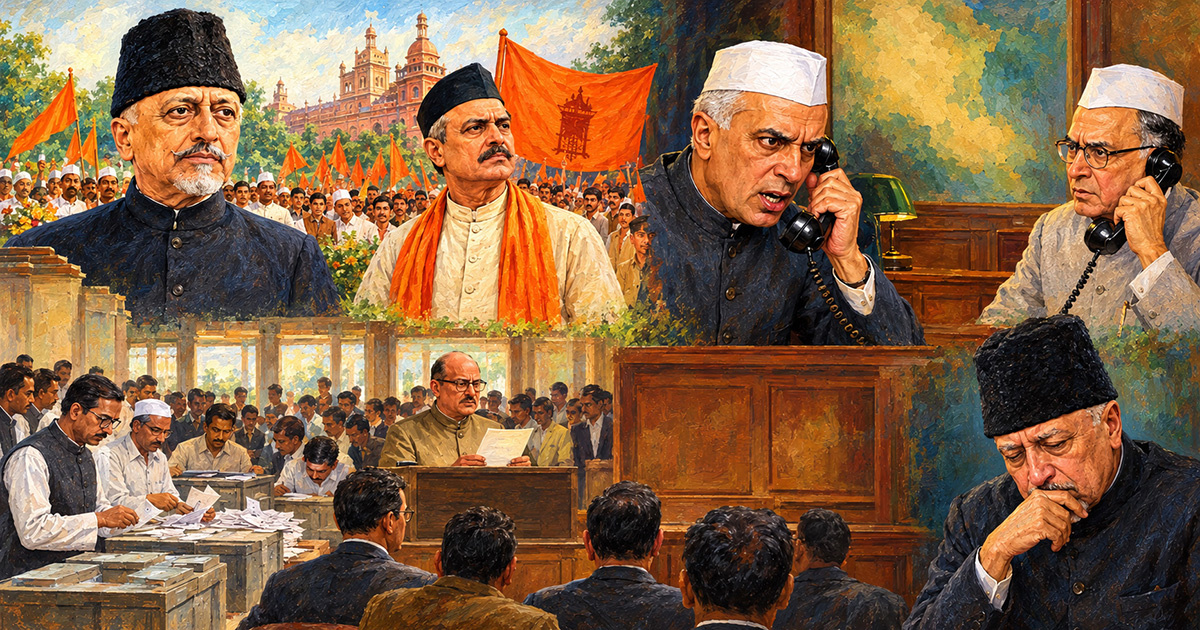
At 12:15 a.m. on June 26, 1975, a phone rang at the office of the Deendayal Research Institute in Delhi. Nanaji Deshmukh picked up the receiver. From the other end came a stranger’s voice, speaking with extreme caution: “You have only one hour. The police will reach your location at exactly 1:00 a.m.” With that, the caller hung up. Nanaji placed the receiver down, and at that moment, there were no questions in his mind, only one responsibility. Just a few hours earlier, at midnight on June 25, Indira Gandhi had declared a state of Emergency, which suspended all democratic rights. Orders had been issued for the immediate arrest of key leaders of the opposition.
In fact, from the Bihar Movement of 1974 itself, a major wave of discontent was spreading across the country. In this movement, Shri Nanaji Deshmukh, a full-time worker of the Rashtriya Swayamsevak Sangh (RSS), played an important role in coordination and organisation as a trusted associate of Loknayak Jayaprakash Narayan (JP). Against this backdrop, on June 20, 1975, the ‘Lok Sangharsh Samiti’ was established in Delhi in the presence of four parties, and the responsibility of serving as its General Secretary was entrusted to Nanaji. Thereafter, following the meeting held under JP’s leadership at Delhi’s Ramlila Maidan on 25 June and a few hours before the imposition of the Emergency, a secret meeting was held at JP’s residence, and a far-sighted decision was taken at this meeting that if JP or any other prominent leaders were arrested, Nanaji should remain underground and take charge of the entire movement through the ‘Lok Sangharsh Samiti’.
That very night when the phone call came, JP, Morarji Desai, and Raj Narain, along with several other prominent opposition leaders, had been arrested. Nanaji knew that if he, too, was arrested, the movement would collapse. Without panicking, he alerted his associates. One of his assistants packed two dhotis and a shirt into a briefcase, and within half an hour, Nanaji left the place. Before leaving, he transferred the ownership of two old Fiat cars registered in his name to the wives of his associates and began using a new white Fiat obtained from a businessman opposed to the Congress for anti-Emergency activities. He continued to travel across the country in this very car.
But Nanaji’s journey after leaving Delhi was far from easy. Police were conducting checks everywhere, and vehicles were being stopped at checkpoints. So, initially, he stayed at a secret location about ten miles from Delhi. However, building an underground movement required funds and a communication network. For this, Nanaji decided to travel to Mumbai. During the journey, he completely changed his appearance. He set aside his kurta-pyjama and wore a bush shirt and trousers, dyed his hair black, and even changed his spectacles.
After reaching Mumbai, industrialist Nusli Wadia, the owner of Bombay Dyeing, gave Nanaji shelter at his home in South Mumbai. The Indira Gandhi government was so strict that Wadia’s companies could have been subjected to raids. Yet Wadia, who had supported the Bharatiya Jana Sangh since the 1960s, stepped forward because he was so impressed by Nanaji’s work that he regarded him as his “ideal.” However, staying at Wadia’s home for too long was also risky. Therefore, to maintain secrecy, Nanaji never stayed at any one place for more than two days.
After that phone call, Nanaji began working vigorously as part of his underground life. He convened an important meeting of underground leaders such as Subramanian Swamy, M. L. Khurana, Ravindra Varma, and Dattopant Thengadi. At the meeting, he called for a symbolic plan called ‘Operation Takeover’ to restore India’s democracy from what he described as Indira Gandhi’s authoritarian rule during the Emergency. Accordingly, underground publications such as ‘Satya Samachar’ from Delhi, ‘Mashal’ from Bihar, ‘Janvani’ from Uttar Pradesh, and ‘Darpan’ from Madhya Pradesh were launched. Through these publications, information about the alleged excesses of Gandhi’s government and the suffering faced by millions of Indians was brought to the public. Secret cells were established across the country, and funds were also raised from Wadia and other industrialists.
Throughout this underground struggle, Nanaji received the support of various activists, including workers of the Rashtriya Swayamsevak Sangh. During the anti-Emergency movement, large numbers of volunteers and activists faced arrest, imprisonment, and repression. Of the 30,000 people arrested under the MISA (Maintenance of Internal Security Act), 25,000, and of the total 130,000 satyagrahis, more than 100,000 were reportedly from the Rashtriya Swayamsevak Sangh. During this period, the underground network also played a major role in providing financial and emotional support to the families of thousands of activists who had been imprisoned.
The underground network built under Nanaji’s leadership continued to maintain contact with activists across the country even after Nanaji was arrested on July 29, 1975, and the anti-Emergency voice continued to reach every corner of the country. Finally, Lok Sabha elections were held in March 1977; there was a change in government, and the Emergency came to an end. Nanaji, along with numerous political activists who had been imprisoned, was released. Yet, in the history of that period, the phone call received at midnight on June 26 still stands as a reminder of a decisive moment—a leader given barely an hour to act, who left the streets of Delhi in a white Fiat and went on to become an important figure in the underground struggle that challenged the repression during the Emergency across the country.