How Shri Rajnarayan Basu Challenged Christian Missionaries in 1872?
Born on December 7, 1826, Shri Rajnarayan Basu grew up at a time when British colonial influence was transforming Bengali society.

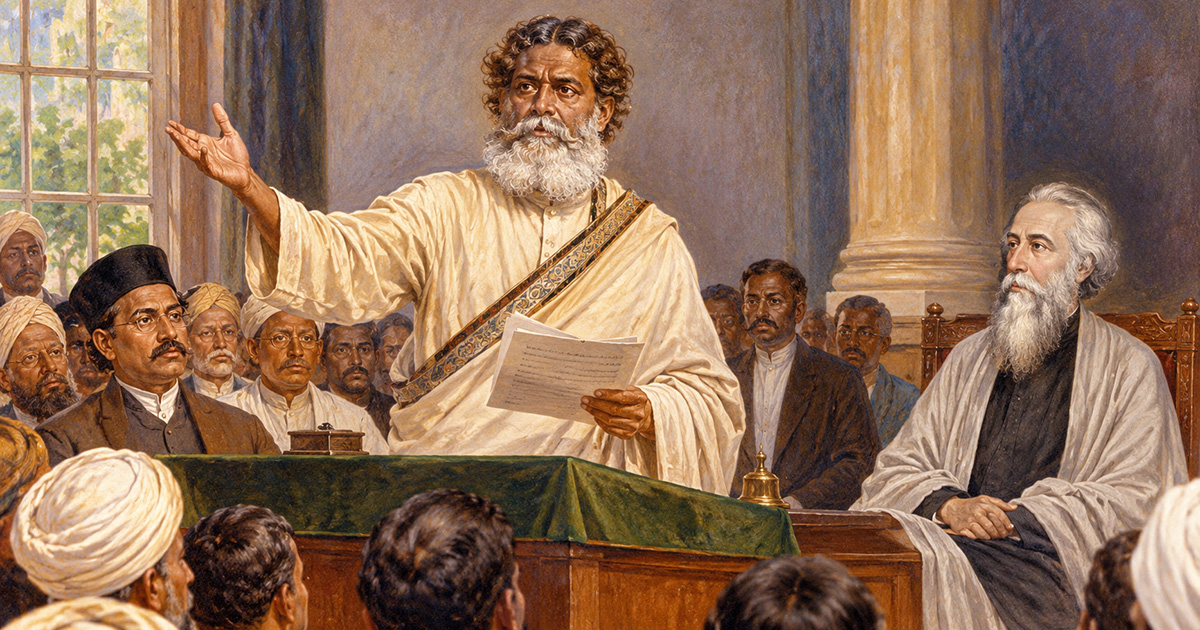
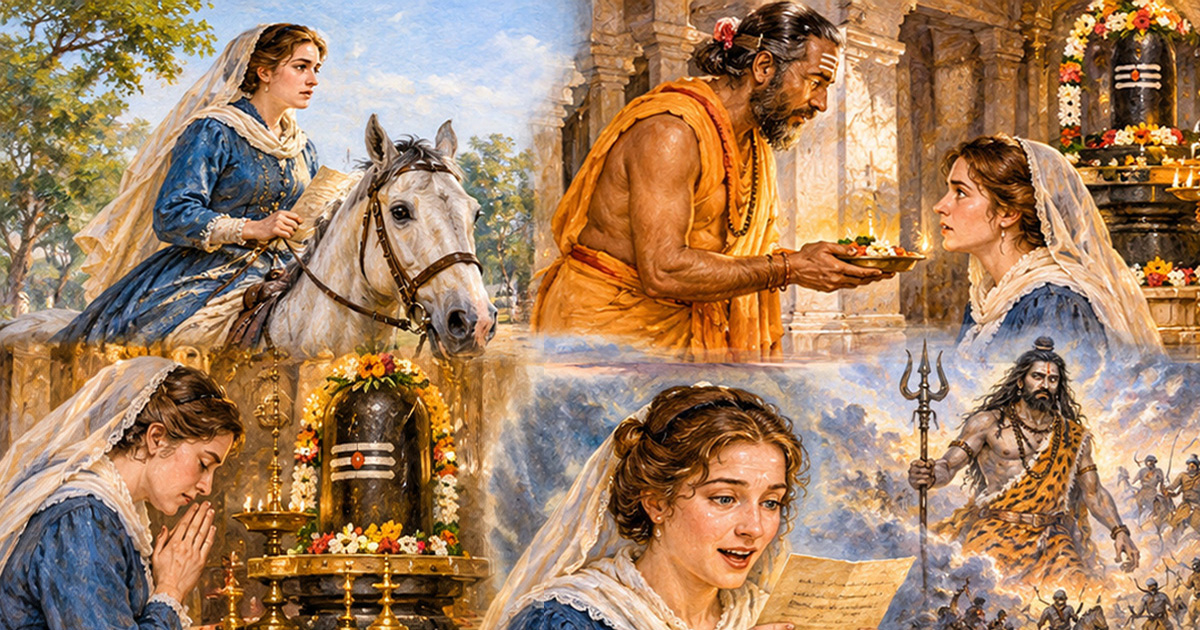
Shri Rajnarayan Basu | This image is AI-generated
What happens when an entire generation begins believing that its own civilisation is inferior? When young people start looking at their own roots and traditions with embarrassment and consider a foreign religion more enlightened than their own? This was the cultural crisis confronting 19th-century Bengal. And at a time when Christian missionaries were increasingly questioning Hinduism and influencing educated Bengali youth to convert to Christianity, one man decided to challenge them—not with anger but by sharing the wisdom of India's ancient scriptures.
This person was Shri Rajnarayan Basu, a prominent Bengali thinker and one of the early voices of India's cultural nationalism.
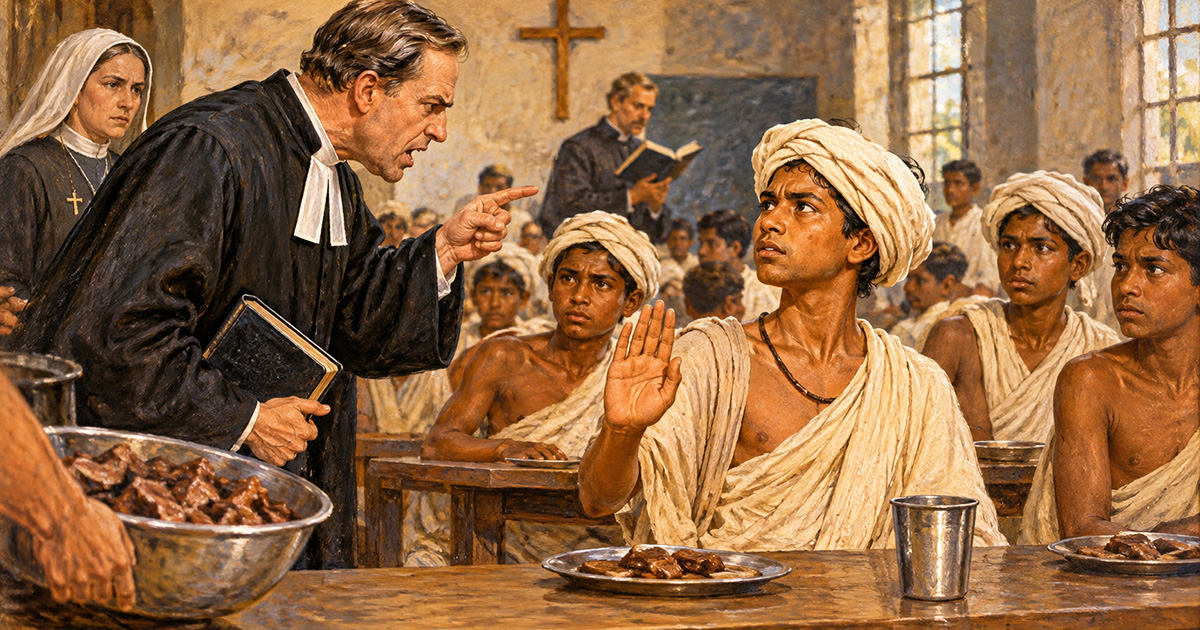
Born on December 7, 1826, Basu grew up at a time when British colonial influence was transforming Bengali society. English education was introducing young Indians to Western literature, science, and philosophy. However, alongside this intellectual exposure came a growing sense of cultural insecurity. With the advent of Western ideas, sections of the English-educated Bengali population began viewing European customs and Christianity as superior to their ancestral traditions. Christian missionaries further encouraged this perception by portraying Hindutva as a collection of superstitions, irrational practices, and outdated customs to woo people to convert. They frequently criticised Hindu religious practices, highlighted social customs and portrayed Indian civilisation as morally and intellectually inferior.
Basu had witnessed this transformation from close quarters. During his time at Hindu College in Calcutta, he saw talented contemporaries, including the poet Michael Madhusudan Dutt and barrister Gyanendramohan Tagore, embrace Christianity. He was deeply concerned by the growing tendency among educated Indians to become alienated from their cultural values.
However, Basu believed that the answer was not to reject Western education. Instead, the idea was that Indians could learn from the West without considering their own civilisation inferior. He believed that a clear understanding of the philosophical depth and distinctive character of Hinduism was needed. And so, in 1872, he decided to put forward this argument before a wider audience.
On September 15, 1872, Shri Rajnarayan Basu delivered his celebrated lecture, “The Superiority of Hinduism”, at a meeting of the National Society of Bengal in Calcutta. The meeting was presided over by Maharshi Debendranath Tagore, and the address attracted considerable attention.
Here, Shri Basu made quite bold arguments. He maintained that Hinduism, when understood through its philosophical and spiritual traditions, possessed qualities that made it worthy of the highest respect. It was not a religion that could be dismissed simply by pointing towards a few social practices or customs.
He began by drawing attention to the extraordinary antiquity of Hinduism. Unlike religions associated with a particular historical founder, he said that Hinduism had evolved through immense spiritual, philosophical, and literary traditions. Its foundations stretched back to ancient times, with texts such as the Vedas and Upanishads. He further argued that Hinduism offered considerable freedom. It did not confine the search for spiritual understanding to one institution, one religious authority, or one prescribed method. Instead, different paths, interpretations, and approaches could coexist. Basu also highlighted the distinctive Hindu understanding of virtue and worship. He argued that goodness should be practised for its own sake, rather than merely out of fear of punishment or in expectation of heavenly rewards. Similarly, devotion should arise from genuine love for the Divine, not personal interests. Through these arguments, Basu challenged the missionary portrayal of Hinduism as an intellectually and morally inferior religion, demonstrating that its philosophical traditions possessed considerable depth and sophistication.
But the intellectual battle did not end with his lecture. One of the prominent Christian missionary scholars of the period, Dr John Murray Mitchell, found himself in a fierce disagreement with Basu. Mitchell had written extensively about Indian religions and was critical of Hindu philosophical and religious traditions. Unable to challenge Basu's arguments on the philosophical ground he had established, Mitchell shifted the discussion towards the Tantras. The intention was to use these passages to question the moral character of Hinduism itself. But Basu refused to be drawn into the argument on Mitchell's chosen terms. He refused to allow selected Tantric practices to become the measure of an entire religious and philosophical civilisation.
The significance of Basu's intervention extended far beyond this particular exchange. His lecture, subsequently published in 1873, circulated his arguments to a wider readership. Moreover, his ideas contributed to a growing intellectual movement that encouraged Indians to take pride in their cultural inheritance rather than blindly imitate European ways.
Basu believed that a nation could only develop genuine self-respect when it understood the worth of its own heritage. Through his speeches, writings, and advocacy of indigenous culture, he helped lay the foundations of a new cultural consciousness in Bengal. His ideas later influenced generations of nationalists, including his grandson, Sri Aurobindo, and Swami Vivekananda.
And that is what makes Shri Rajnarayan Basu's story so remarkable. At a time when educated Indians were being encouraged to question their own civilisation, he stood up and challenged the narrative with the power of philosophy and intellectual reasoning. He did not simply ask Indians to take pride in Hinduism; he presented arguments explaining why its traditions deserved to be understood and respected.
Note: The content for the story has been derived from “Rajnarayan Basur Atma-Charit,” authored by Shri Rajnarayan Basu himself.