When I.K. Gujral Refused to Follow Sanjay Gandhi’s Orders During the 1975 Emergency
After the meeting ended, Sanjay Gandhi stopped Gujral separately and told him that the news bulletins of All India Radio should first be shown to him and only then broadcast.

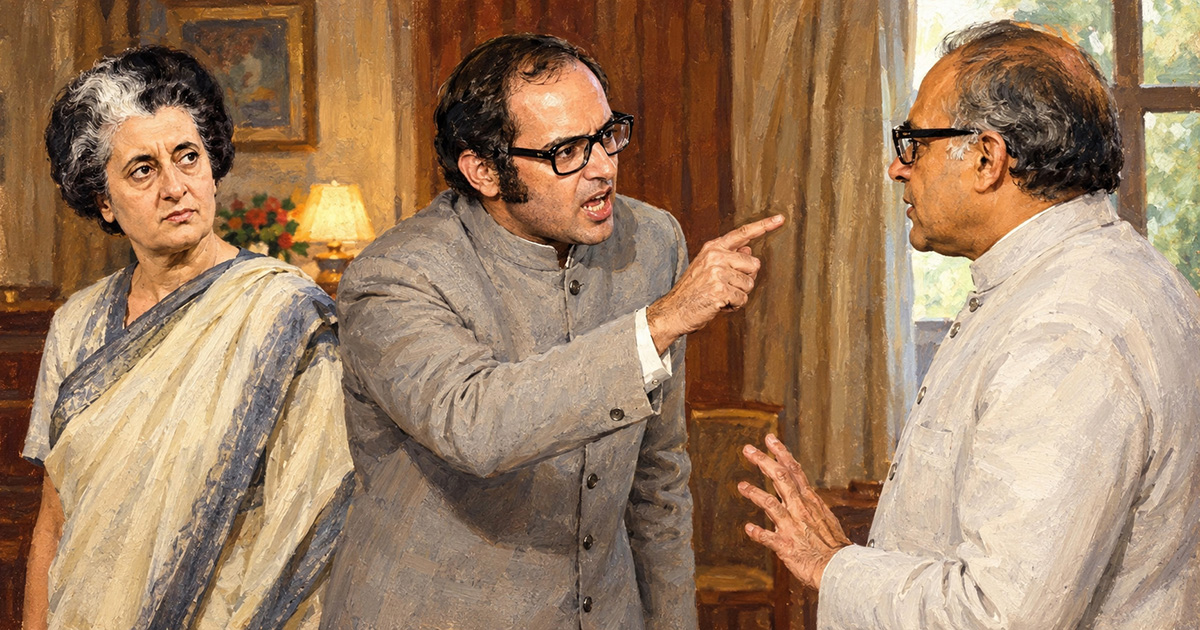
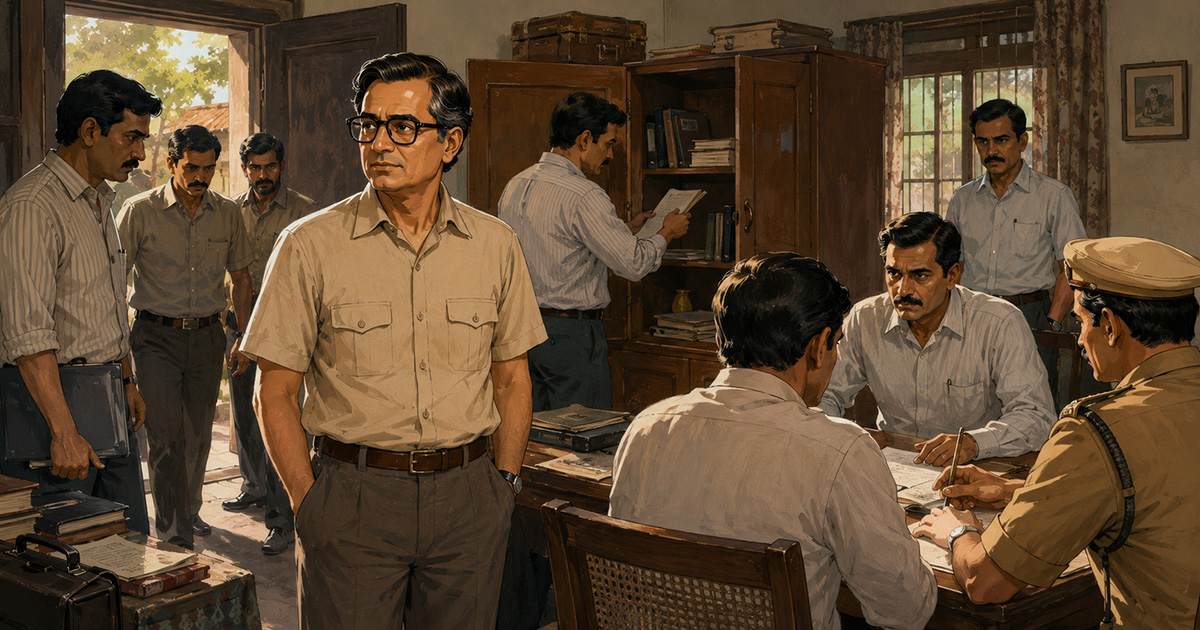
When I.K. Gujral refused to follow Sanjay Gandhi's orders | This image is AI-generated
On the night of June 25, 1975, the then Prime Minister Indira Gandhi imposed Emergency in the country. Arrests of political opponents had begun, and the biggest challenge before the Congress government was to keep the flow of information and news under its control. From cutting off electricity to newspaper offices located on Bahadur Shah Zafar Marg in Delhi, the atmosphere across the country had changed completely. But amid this changed environment, a confrontation also began within the government, showing that not everyone was willing to bow before the authority of the Emergency.
At the time, the responsibility of the Ministry of Information and Broadcasting rested with Inder Kumar (I.K.) Gujral. From All India Radio and news bulletins to decisions concerning the press, the entire information machinery came under this ministry. After the Emergency was imposed, the ministry's importance increased manifold because the government wanted strict monitoring of the news reaching the public.
On the morning of June 26, 1975, at 6 a.m., a Cabinet meeting was held at Prime Minister Indira Gandhi's office. I.K. Gujral was also present at this meeting. It was here that the ministers were formally informed about the Emergency.
After the meeting ended, Sanjay Gandhi stopped Gujral separately and told him that the news bulletins of All India Radio should first be shown to him before the broadcast. Gujral made it clear that this was not possible because the bulletins were not even shown to him before being broadcast. He said that such a demand would amount to interference in the ministry's functioning. Gujral made it clear that the news bulletins could only be heard at the time of their broadcast and that the ministry's procedures and responsibilities could not be altered to suit an individual's political wishes.
On June 26 itself, arrangements were also being made for press censorship, including the appointment of officials and censors. Gujral was asked to provide a list of press censors so that the arrangements could be taken forward. However, he refused to issue any orders in this regard. His position was clear: he would not issue an order that he did not consider appropriate in the discharge of his responsibilities.
But the matter did not end there. Shortly afterwards, Gujral was summoned to the Prime Minister's residence. By the time he arrived, Indira Gandhi had already left for her office. Sanjay Gandhi was present there, and another heated argument broke out between him and Gujral. Sanjay Gandhi told Gujral that the way he was working would simply not do. Gujral's response was firm. He said, "As long as I am here, things will continue this way. You should learn some manners when dealing with your elders." Gujral further stated that he was a minister in his mother's government and was answerable to her, not to him.
In the early days of the Emergency, this disagreement was no ordinary matter. Opposition leaders had been arrested, press censorship was being imposed, and the government machinery was under extraordinary pressure. At such a time, the Information and Broadcasting Minister was responsible for overseeing the government's information system. Gujral's position, therefore, directly clashed with the system that those in power wanted to establish.
Indira Gandhi, too, was not satisfied with the situation. Gujral was conveyed the message that during a situation like the Emergency, the ministry needed to be run in a much stricter manner and that his approach was too soft. The options before Gujral were now becoming clear. Either he had to change his way of working in accordance with political pressure, or be prepared to leave the ministry.
But before he could take any step, an announcement was made on the radio that V.C. Shukla had been appointed the new Information and Broadcasting Minister. I.K. Gujral was removed from the ministry and given charge of the Ministry of Planning. An important ministry like Information and Broadcasting was now in the hands of someone who could implement the Emergency's stringent measures in accordance with the wishes of Prime Minister Indira Gandhi and her son, Sanjay Gandhi.
This marked the beginning of a significant chapter in the history of the Emergency. With V.C. Shukla replacing Gujral, control over the press and government media became even stricter. Pressure over critical news increased, and allegations emerged that the government's publicity machinery was being shaped according to the political influence of the Prime Minister and Sanjay Gandhi.