How Lachit Borphukan Used River Warfare, Spies, and a Night Assault to Defeat Mughals & Recapture Guwahati in 1667?
The king appointed Lachit Borphukan as commander-in-chief and entrusted him with the mission of reclaiming Guwahati.

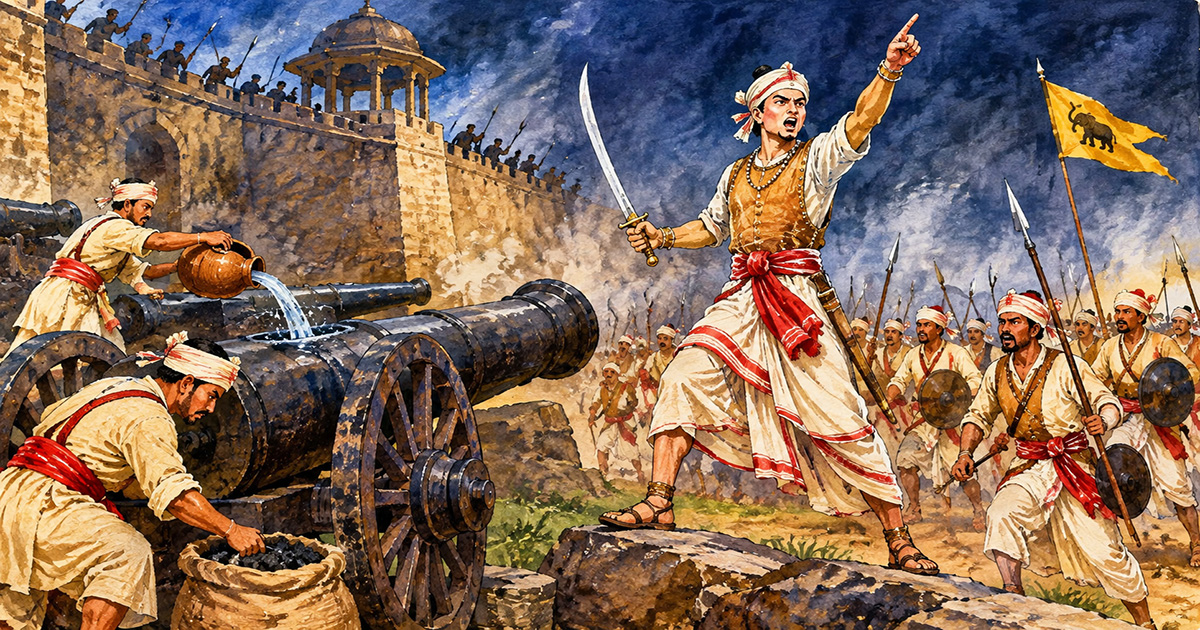
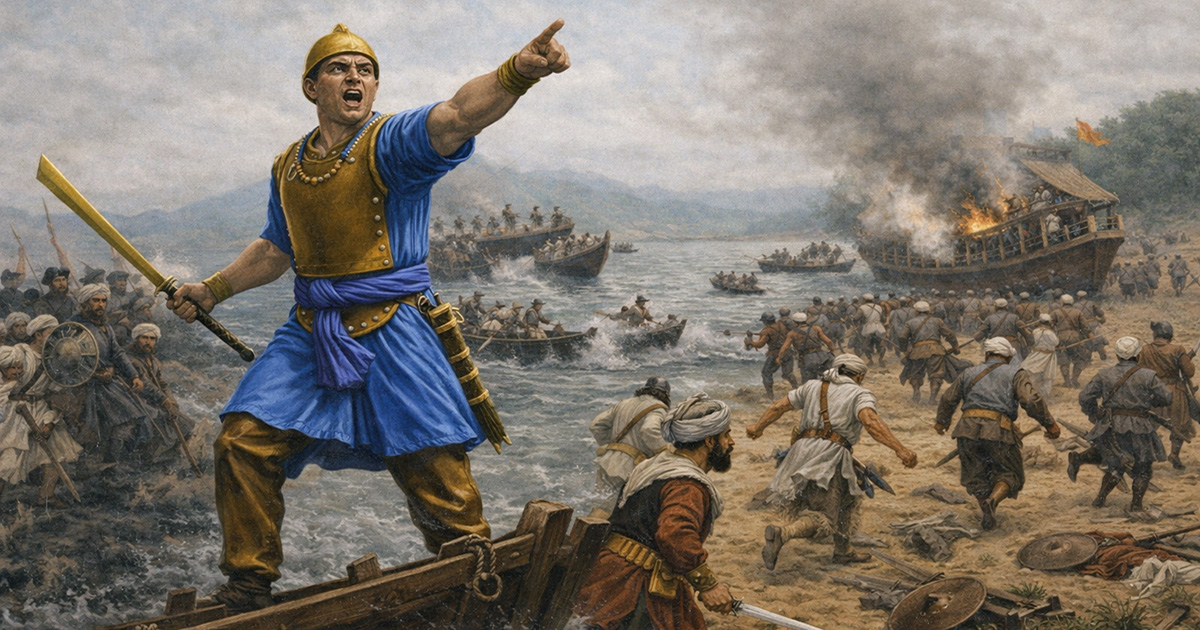
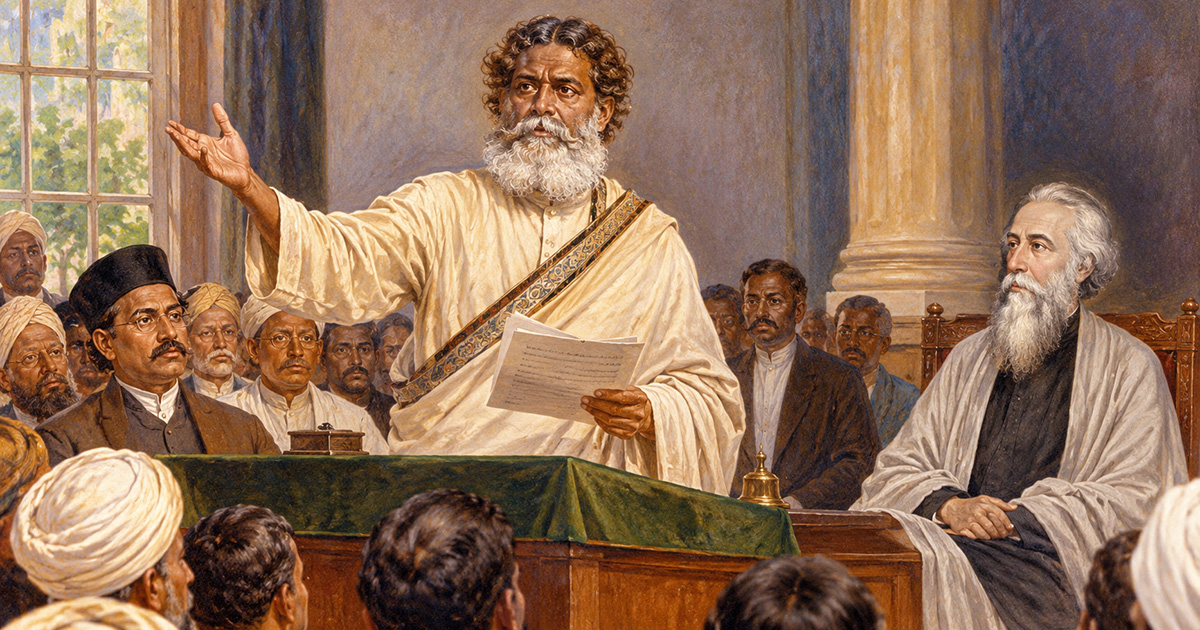
Ahom Kingdom's Lachit Borkhupan | This image is AI-generated
What happens when a kingdom loses a significant part of its territory to an invading empire? Does it accept defeat, or does it prepare to fight back? In the 17th century, a powerful kingdom in Northeast India chose the latter.
Long before modern Assam became an Indian state, a powerful kingdom ruled much of the Brahmaputra Valley in Northeast India. It was the Ahom kingdom, founded in 1228 CE by a Tai prince named Sukaphaa. For nearly six centuries, the Ahoms built a powerful kingdom, expanded their territories, and resisted several attempts by outside powers to conquer their land. But in the 17th century, they faced a formidable opponent: the Mughal Empire. In 1663, Mughal forces led by General Mir Jumla invaded Assam and forced the Ahom king to surrender Guwahati and other territories in western Assam. For the Ahoms, this was a serious blow to their territorial control and sovereignty.
But they were not prepared to accept the loss. Thus, in the same year, when King Chakradhwaj Singha ascended the throne, he was determined to reverse it. So the Ahoms prepared to strike back at the Mughals. The king appointed Lachit Borphukan as commander-in-chief and entrusted him with the mission of reclaiming Guwahati. The order was clear: victory or death. This is the story of how Lachit Borkhupan led a daring military campaign to wrest Guwahati from the Mughal Empire.
Lachit Borkhupan’s statue of valour | Image Source: Instagram
On August 20, 1667, Lachit was ready to march and set out from the Ahom capital with his forces divided into two main divisions. Instead of relying solely on land routes, he used the Brahmaputra River to transport his troops downstream. It was a calculated move as the river offered a faster route for moving men and supplies, while the coordinated advance put pressure on Mughal positions along both banks. The campaign also threatened to disrupt the enemy’s ability to bring reinforcements from Rangamati and Dhaka, Mughal-controlled centres in Bengal that could support military operations in Assam.
Lachit Borkhupan-led forces' first targets were the Mughal outposts guarding the approaches to Guwahati. On the northern bank, Ahom forces captured Bahbari Fort near the Barnadi River. They also established defensive positions around Shahburuz and Manikarneswar Hill. On the southern bank, the Ahoms reclaimed Kajali, Sonapur, Panikhaiti, and Tatimari outposts. One after another, the outer positions fell. The Mughal grip on the surrounding countryside began to weaken.
But reclaiming Guwahati was still a challenge. The key to the city was Itakhuli Fort, situated on a strategic hill near the Brahmaputra River. Its commanding position allowed the occupant to monitor military movements and commercial traffic. As long as Itakhuli remained in Mughal hands, the recovery of Guwahati would remain incomplete. Hence, to capture Guwahati, Lachit’s forces established a camp at Latasil and prepared to attack the fort’s eastern entrance, known as Jaiduar. Yet the Mughal defenders were well-positioned, with fortified walls and artillery ready to repel an assault. A direct attack would come at a heavy cost; hence, Lachit needed a different approach.
So, he deployed spies and commandos to infiltrate the Mughal camp. Their mission was to undermine the fort’s strongest defence before the main assault began. The spies managed to sabotage the Mughal artillery by pouring water into the cannon muzzles and soaking the stored gunpowder. This left the defenders unable to use their guns effectively at the crucial moment.
Then came the attack. In early November 1667, the Ahom army led by Lachit Borkhupan launched a fierce assault on Itakhuli under cover of darkness. With the Mughal artillery disabled, the attackers pressed forward against the fortifications. The fighting was intense, but the Ahom troops eventually overwhelmed the garrison and captured the stronghold. The Mughals attempted to counterattack from the Brahmaputra, sending boats against the Ahom positions. But Ahom artillery opened fire on the advancing fleet, forcing it back.
Lachit Borkhupan and his army | Image Source: Indus Research
The Mughal commanders could no longer hold their ground. Syed Firoz Khan and Mir Bakshi Sayyid Salar Khan retreated towards the Manas River with their remaining forces. Firoz Khan was subsequently captured by the Ahoms. By mid-November 1667, after roughly two months of campaigning, Guwahati and the Kamrup region up to the Manas River had been recovered. When news of the victory reached King Chakradhwaj Singha, his relief was immense. He exclaimed, “It is now that I can eat my morsel of food with ease and pleasure.”
The recovery of Guwahati was not simply a military success; it restored confidence in a kingdom that had been forced to accept humiliating terms only four years earlier.
Note: The information given in this story has been taken from two books. “Lachit Barphukan: Assam’s Hero Who Halted the Mughals,” published by the Directorate of Information and Public Relations, Government of Assam (2022); and “Lachit Barphukan and His Times,” authored by S.K. Bhuyan.