Bharat’s Pyramids: Moidams of Assam Reveal 600 Years of Ahom Royal Heritage

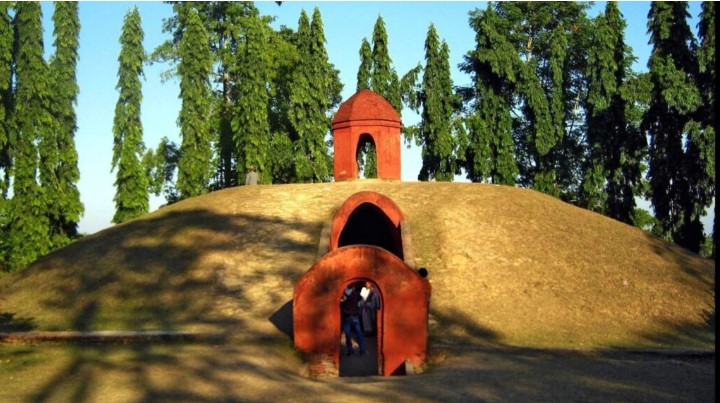
Do you know Bharat has its own pyramid-like structures? While Egypt is famous for its pyramids, Bharat too boasts a centuries-old legacy of pyramid-like royal burial mounds, the Moidams of Assam, which now hold the distinguished status of a UNESCO World Heritage Site.

Moidams, the Mound-Burial System of the Ahom Dynasty | Image Source: UNESCO
On this World UNESCO Day, let’s uncover this lesser-known wonder of India. Assam’s pyramid legacy, known as the “Moidams: The Mound-Burial System of the Ahom Dynasty,” these monumental structures from Assam’s Charaideo district have officially been inscribed on the UNESCO World Heritage List as of July 26, 2024. This makes the Moidams the third UNESCO World Heritage site from Assam, after Kaziranga National Park and Manas Wildlife Sanctuary, and the very first from Northeast India, recognized for its cultural significance.
What Makes Moidams So Special?
The Moidams of Choraideo, long revered by the indigenous Tai-Ahom community, are monumental earthen mounds that resemble the pyramids and royal tombs of Egypt and China. These mounds served as royal necropolises, final resting places for Ahom kings, queens, and nobles for nearly 600 years, from the 13th to the 19th century CE. The structures were initially built in wood and later with stone and burnt brick, showcasing advanced engineering and spiritual intent, with burial chambers containing royal insignia, personal belongings, and, in rare cases, attendants. Each Moidam is set against a sacred geography of hills, forests, and water, reflecting the Tai-Ahom philosophy of nature, divinity, and eternal remembrance.

Antiquities found in the burial chamber of Moidam C002 during excavation | Image Source: UNESCO
Historical and Cultural Significance
Originating with the Tai-Ahom people who migrated from China in the 13th century, Charaideo became their first capital and the epicenter of royal burial traditions in Assam. The Moidams were seen as “homes-for-spirits,” constructed to honor the divinity of the Ahom monarchs and ensure their souls’ journey in the afterlife. Despite facing vandalism in the early 20th century, preservation efforts by the Archaeological Survey of India (ASI) and Assam’s state government have restored and protected these sites, upholding their cultural and spiritual authenticity for future generations.

The Moidams were seen as “homes-for-spirits | Image Source: Chalo Hoppo
A World Heritage Honor
The inscription of Moidams on the UNESCO list not only highlights India’s position as sixth in the world for the number of World Heritage Properties but also brings national and global recognition to a unique tradition of monumental funerary architecture. The International Council on Monuments and Sites (ICOMOS) praised the Moidams for their outstanding testimony to cultural heritage and their representation of significant stages in human history. The recognition is a tribute to India’s relentless pursuit of showcasing its diverse and layered heritage to the world and marks a proud chapter for Northeast India on the global stage.