When Nehru Threatened to Resign Over a Bill to Ban Cow Slaughter
On April 2, 1955, a Congress MP introduced a bill in the Lok Sabha seeking a ban on cow slaughter. But Nehru threatened to resign over the bill.

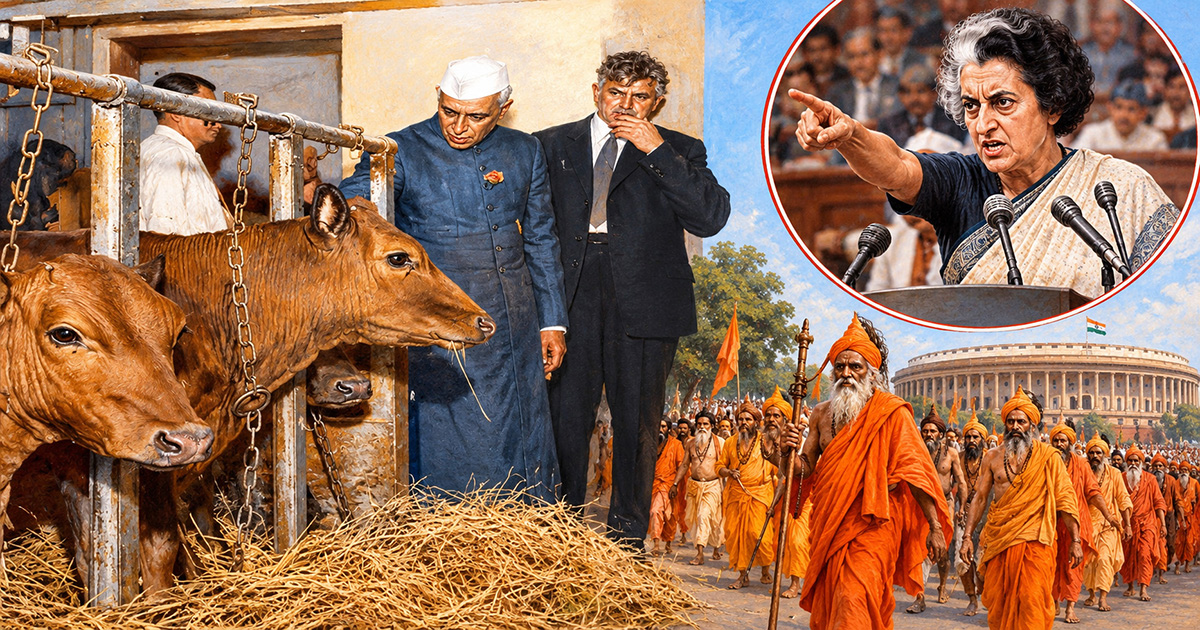
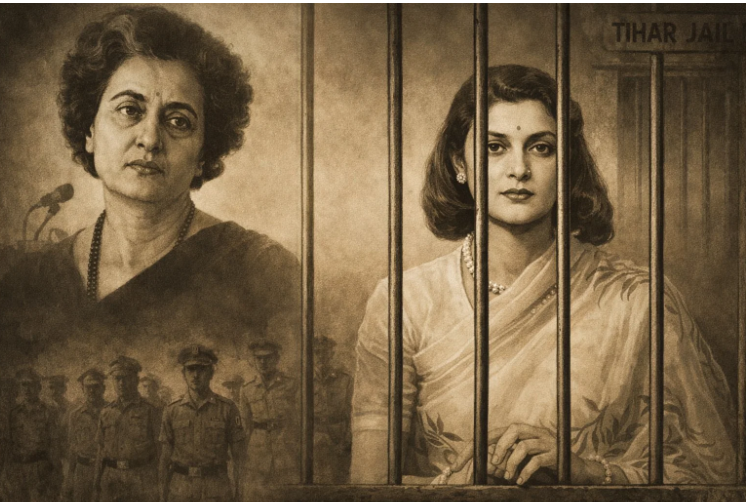
The anti-cow slaughter bill and the Congress government's reluctance | This image is AI-generated
On November 7, 1966, thousands of saints, seers, and protesters demanding a complete ban on cow slaughter were marching towards Parliament through the streets of New Delhi. To stop them, the Indira Gandhi government ordered the police to open fire. Several saints lost their lives in the firing, and a large number of protesters were injured. However, nearly 11 years before this incident, in 1955, a similar demand had led to a confrontation inside Parliament, during which Prime Minister Jawaharlal Nehru had gone so far as to emotionally threaten to give up the post of Prime Minister to defend his government's position. Nehru had stated clearly that if the cow protection bill was passed, he would not back down but would resign from his position instead. What exactly happened in the Lok Sabha that day that prompted Nehru to threaten resignation? Let us learn about this interesting story.
Nearly eight years had passed since India gained independence. A single demand was being raised across the country: Parliament should enact a law to stop cow slaughter. This was because cows were sacred and revered by millions of Hindus across the country. Cow protection was already a national debate. During the framing of the Constitution, members had argued for protecting cows and other cattle. This resulted in Article 48, which directs the state to take steps to preserve and improve cattle breeds and prohibit the slaughter of cows, calves, and other milch and draught cattle. But it did not itself impose a nationwide ban.
In this atmosphere, Congress MP Seth Govind Das planned to introduce a bill in Parliament to legally prohibit the slaughter of cows and other useful cattle. He had not come up with this plan suddenly. In July 1952, he introduced a private member’s bill seeking to preserve the country’s cattle, including through a ban on cow slaughter. Supporters invoked both the cow’s religious significance and the economic importance of cattle to Indian agriculture. Several Congress MPs supported him. However, Prime Minister Nehru had been a staunch opponent of a ban on cow slaughter from the very beginning. Nevertheless, with the support of several fellow MPs from his own Congress party, Govind Das prepared the complete draft of a bill seeking a legal ban on cow slaughter in the Lok Sabha.
On April 2, 1955, Congress MP introduced a bill in the Lok Sabha seeking a ban on cow slaughter. The bill was debated throughout the day. Most Congress MPs, including Seth Govind Das, expressed their views in support of the bill. MPs from the Hindu Mahasabha also supported Seth Govind Das's bill. But on the other side stood Prime Minister Jawaharlal Nehru. Presenting the government's position himself, he opposed the bill.
Although Nehru was the Prime Minister of India, he did not place much faith in Indian traditions and beliefs. As the debate on the bill progressed, the atmosphere in the House grew increasingly heated. The deep differences within the Congress party over the bill also began to emerge. Most Congress MPs came out in its favour.
Nehru had now begun to feel that the bill proposing a ban on cow slaughter would pass in the Lok Sabha, as several MPs from his own Congress party supported it. It was then that he resorted to an emotional political tactic. Standing up in Parliament, Nehru declared that if the bill was passed, he would resign from the post of Prime Minister. He would not back down under any circumstances.
After the bill had been debated throughout the day, the time came for voting in the evening. As a result of Nehru's emotional statement about resigning, several Congress MPs voted against the bill, even though they did not want to. Nevertheless, the bill received 12 votes in support. Among those who supported it were six Hindu Mahasabha MPs and six Congress MPs. They included former Congress president Purushottam Das Tandon. On the other hand, 95 votes were cast against the bill. As a result, Seth Govind Das's cow protection bill could not become law.
The tradition of opposing a law banning cow slaughter did not end with Nehru; it continued under his family as well. Eleven years after this incident, on November 7, 1966, on the occasion of Gopashtami, Nehru's daughter Indira Gandhi, while serving as Prime Minister, ordered the police to open fire on saints and seers in Delhi who were demanding a law banning cow slaughter. The incident resulted in substantial loss of life and property. As a result, this event is still remembered as a dark chapter in India's democratic history.