A Sikh, a Sanyasi, & a Vendor: How 25-Year-Old Narendra Modi Fought Back Emergency in Disguise & Outsmarted Arrest
At the time, Narendra Modi was just 25 years old, but was trusted enough to be assigned covert responsibilities. Operating under the pseudonym “Prakash”, he became a crucial link in the underground resistance network.

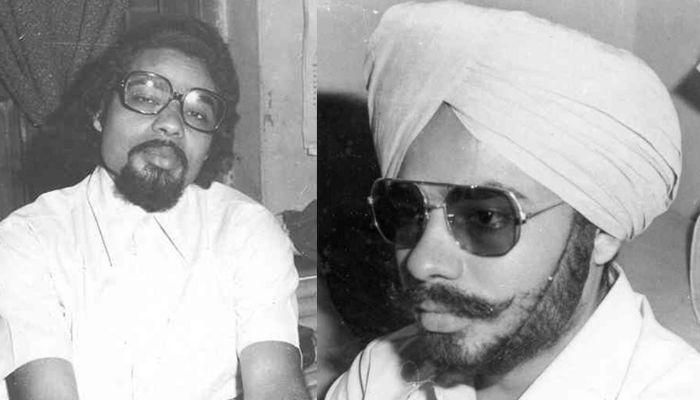
Narendra Modi disguised in different roles during the Emergency | Image Source: Op India
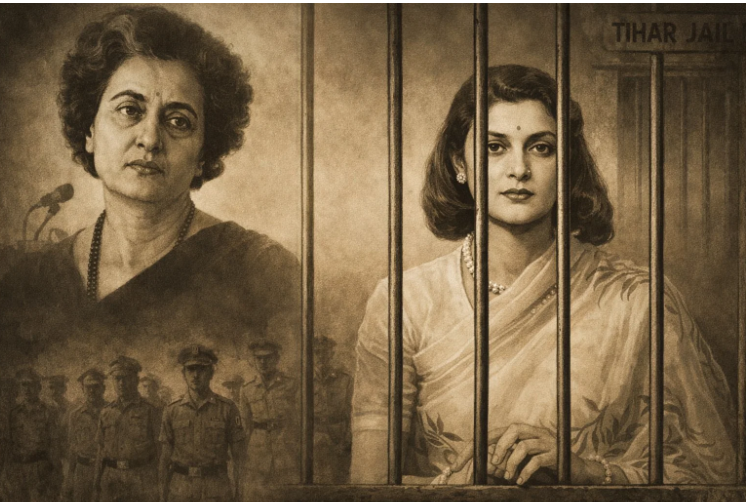
On the intervening night of June 25 and 26, 1975, the then Prime Minister Indira Gandhi strangled democracy to death by declaring an Emergency. Within hours, civil liberties were suspended, press censorship was imposed across the nation, and opposition leaders were detained without any prior notice. The crackdown was swift—organisations working on exposing the then-government were banned, freedom of speech was curtailed, and thousands were imprisoned. Among those heavily targeted during the Emergency was the Rashtriya Swayamsevak Sangh. Not only was it banned, but its members were thrown behind bars too. Yet, amidst this tyranny, when democracy was being dismantled in plain sight, a very different story was unfolding—one where a young swayamsevak refused to be caught. This person was no other than Narendra Modi. Aged 25 then, he used coded messages and secret networks to expose Indira Gandhi’s authoritarianism under the veil of emergency.
News clipping about declaration of Emergency in 1975 | Image Source: the Quint 
Why RSS Became a Target During the Emergency?
The imposition of the Emergency was a result of the Allahabad High Court’s invalidation of Indira Gandhi’s 1971 election victory, disqualifying her from contesting elections for six years. Faced with mounting opposition and political uncertainty, the government chose to exert control through an emergency. Interestingly, contrary to what many believe, the crackdown on RSS was not a sudden move. Rather, it had been anticipated. Months before the emergency was declared, K. R. Malkani, editor of The Motherland, published a front-page report suggesting that the government was preparing to ban the RSS. The tip, reportedly linked to Ramnath Goenka, the founder of The Indian Express, could not be independently verified at the time. However, it proved to be true.
Under the garb of emergency, RSS was banned, and thousands of swayamsevaks were detained. Documented accounts suggest that 23,015 swayamsevaks, including 77 women, were arrested, forming the single largest bloc of political detainees during the Emergency. But why? The RSS’s decentralised structure and disciplined cadre made it uniquely capable of sustaining resistance. That is why, for a government seeking absolute control, the RSS became a primary target. Yet, while many were imprisoned, some evaded to resist, including Narendra Modi, then a little-known RSS swayamsevak from Gujarat.
The 25-Year-Old in Underground Who Exposed Emergency
At the time, Narendra Modi was just 25 years old, but was trusted enough to be assigned covert responsibilities. Operating under the pseudonym “Prakash”, he became a crucial link in the underground resistance network. In his book, ‘Aapatkal Mein Gujarat’, Narendra Modi wrote that he donned many roles at once to evade arrest: A Sikh, a sanyasi, a hippie, a vendor, and even an incense-stick seller. Under disguise, he carried messages between leaders, transported banned literature, and even escorted high-profile figures, evading arrest.
Narendra Modi disguised as Sikh during Emergency | Image Source: X/@IndiaHistorypic 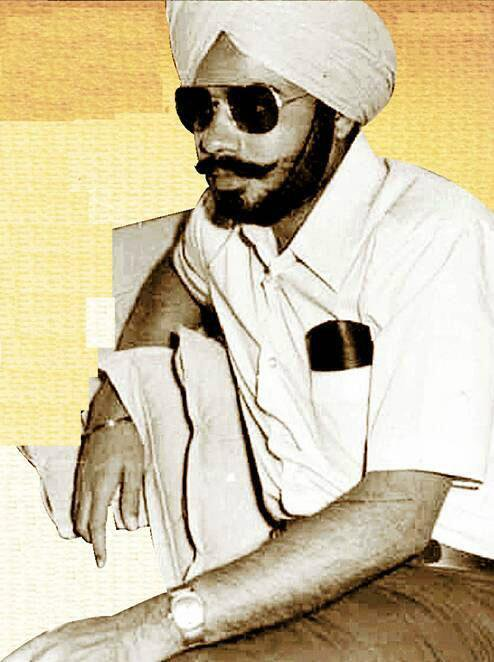
One of the most critical aspects of the underground movement was to dodge censorship. Thus, at that time, he positioned Gujarat as a hub for printing anti-Emergency literature. Modi organised the production and distribution of these materials across states like Rajasthan, Madhya Pradesh, and Maharashtra. In one instance, nearly two lakh copies of a magazine were printed in Ahmedabad and discreetly stored at multiple locations before distribution. However, printing was only half the challenge; distribution of these pamphlets served as the main problem. Hence, Modi and his associates devised unconventional methods ranging from hiding pamphlets in barber shops, using train networks instead of postal systems, to creating coded delivery chains.
Narendra Modi as a Sanyasi | Image Source: Op India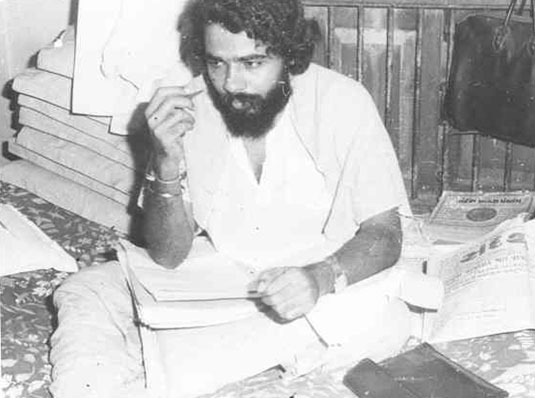
One of the most striking episodes from this period dates back to September 1976, when Narendra Modi reportedly entered Bhavnagar jail disguised as a “swamiji.” He obtained permission to enter the jail by claiming he needed to meet his "followers"; however, his real motive was to establish contact with incarcerated activists, including journalist Vishnu Pandya, who were among approximately 200 karyakartas held there. Inside, he spent nearly an hour with detained activists, discussing prison conditions, family welfare, and ways to expand the underground campaign. Not one single person was able to recognise him.
There was another incident, where Modi had a very close call. When the Emergency was at its peak, and people were being sent behind bars, Modi, disguised as a Sikh, was leaving a house in Ahmedabad when a police team arrived searching for him. An official interrogated him, “Do you know if someone named Narendra Modi is residing here?” Modiji remained calm and replied that he was unaware, walking away, and escaping what could have been a certain arrest.
In the Shadows of History
When the Emergency ended in 1977, the visible symbols of resistance were easy to identify: Leaders had been jailed, voices had been silenced, and institutions had been tested. But beneath that visible history lay another layer, quieter yet equally significant. Narendra Modi, a 25-year-old swayamsevak who resisted when the system had shut everything else down. Now, the Prime Minister of India, back then his role was not defined by public speeches or political stature, but by coded messages, multiple identities, and the constant risk of being discovered.
The Emergency is often remembered as a period when democracy was suspended. But this story is of a time when it survived, and in that silent struggle, figures like “Prakash” aka Narendra Modi, ensured that even in the darkest phase, when democracy almost died, it could never be stopped.