From Raja Wakankar to Sudhir Phadke: How RSS Swayamsevaks Ended Portuguese Rule in Dadra and Nagar Haveli After Months of Preparation?
When Dadra and Nagar Haveli officially became a Union Territory of India on August 11, 1961, Parliament merely completed a legal process. The region had, in reality, been liberated seven years earlier.

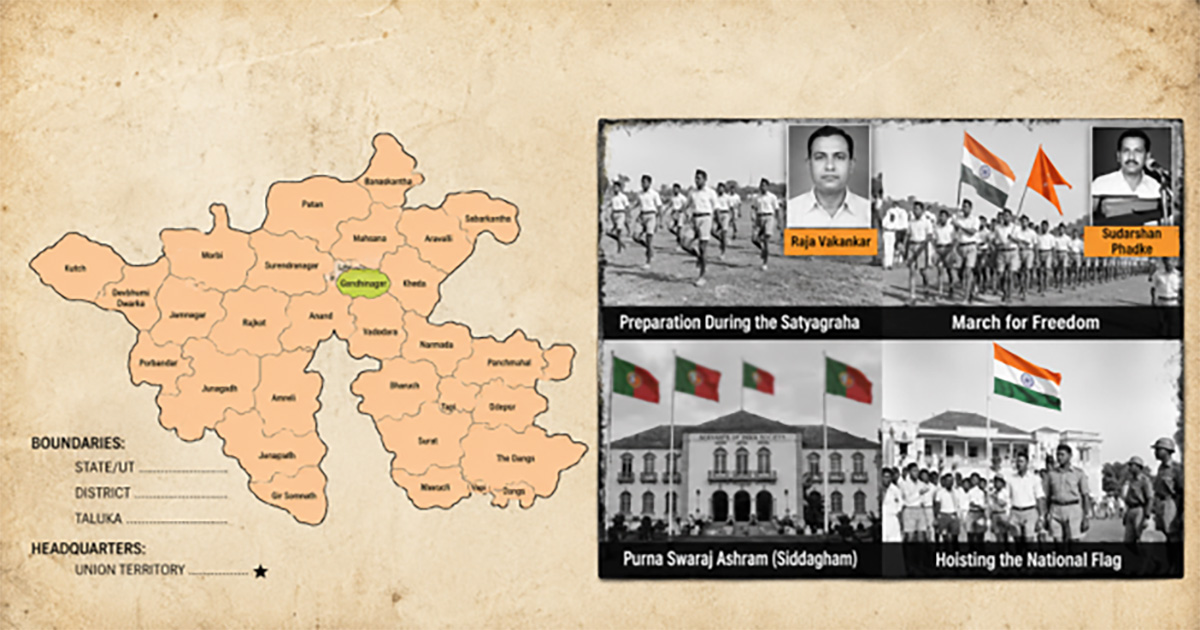
The liberation of Dadra and Nagar Haveli from Portuguese rule
When Dadra and Nagar Haveli officially became a Union Territory of India on August 11, 1961, Parliament merely completed a legal process. The region had, in reality, been liberated seven years earlier. On August 2, 1954, the Indian Tricolour was hoisted in Silvassa, bringing nearly 170 years of Portuguese rule to an end. But this victory did not come overnight. Behind it lay months of secret planning, fundraising campaigns, the preparation of trained swayamsevaks, and a series of daring operations. India gained independence on August 15, 1947, but Dadra and Nagar Haveli, like Goa, Daman, and Diu, remained under Portuguese rule. Portugal had established control over Dadra in 1783 and Nagar Haveli in 1785. Spread across approximately 487 square kilometres, these territories comprised 72 villages and had a population of around 42,000, most of whom belonged to the Warli community. This Portuguese enclave situated within independent India remained a challenge for nationalists.
At the beginning of 1954, the National Movement Organisation (NMO), the Azad Gomantak Dal (AGD), and the Rashtriya Swayamsevak Sangh (RSS) jointly decided to liberate Dadra and Nagar Haveli. In April 1954, these organisations formed a united front. Around the same time, two RSS swayamsevaks—Raja Wakankar and Nana Kajrekar—conducted an extensive survey of the region. They concluded that Lavachha village, located within Indian territory, could serve as the most suitable base for the liberation campaign. It was from here that the entire strategy was planned.
However, enthusiasm alone was not enough for such an operation. Funds, weapons, and resources were required. This responsibility was taken up by the renowned musician and nationalist activist Sudhir Phadke. A plan was made to raise funds through a grand musical programme in Pune. Scheduled initially for April 19, 1954, the event was to feature legendary artists such as Lata Mangeshkar, Mohammed Rafi, and C. Ramchandra, all of whom agreed to participate without charging any fee. Due to an accident, the programme had to be postponed, but when it was finally held on May 2, 1954, it proved immensely successful and generated the funds required for the liberation movement.
With the funds secured, the next phase began. On June 18, 1954, a secret meeting was held at the Lavachha Ashram. To avoid attracting the attention of Portuguese spies, the gathering was disguised as a devotional singing programme. Important intelligence emerged during the meeting. The police chief of Silvassa, Falcao, commanded a total force of 329 policemen, but only three policemen were stationed in Dadra and just nine in Naroli. It was decided that Dadra and Naroli would be attacked during the monsoon, when these areas became naturally isolated. Raja Wakankar and AGD leader Vishwanath Lavande took responsibility for providing twenty trained swayamsevaks each.
Events, however, unfolded somewhat differently from the original plan. On July 22, 1954, activists of the United Front of Goans (UFG) launched an operation in Dadra and declared it free from Portuguese rule. Yet this did not halt the United Front’s campaign. The next objective was to advance deeper into Nagar Haveli.
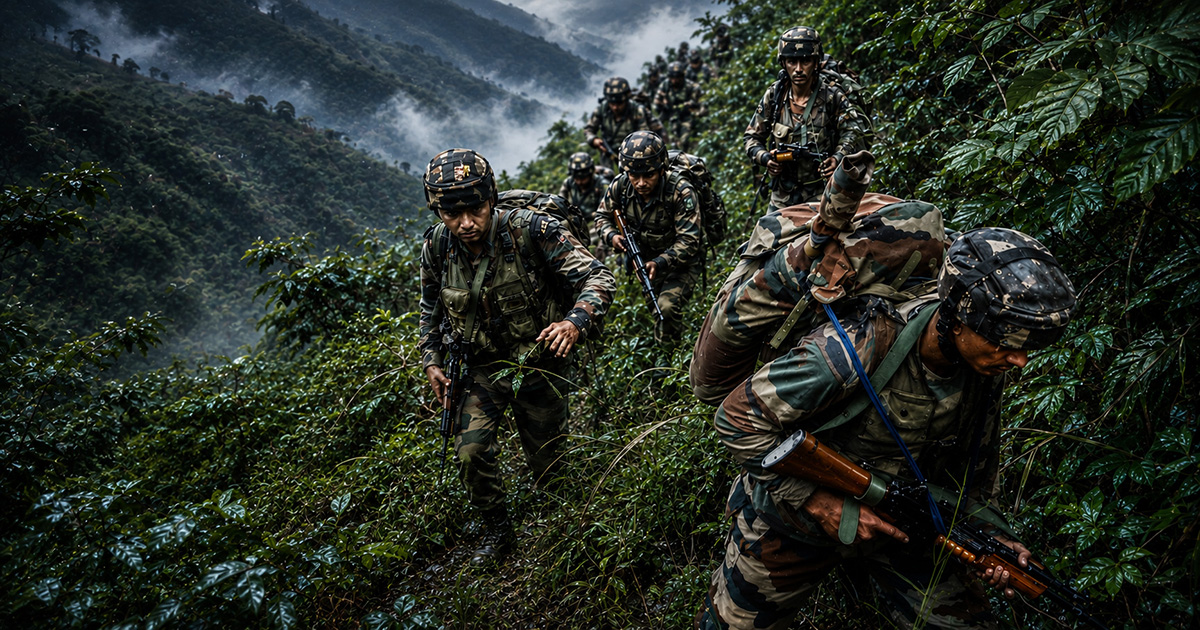
On the night of 28 July 1954, twenty RSS swayamsevaks under Raja Wakankar and Nana Kajrekar, along with ten AGD activists, set out from Karambeli. Crossing a flooded river, they surrounded the Naroli police station from all sides. Only six policemen were stationed there. They were asked to surrender, and without any major confrontation, they laid down their arms. Thus, on July 28, Naroli too was freed from Portuguese rule. The following day, an independent village council was established there.
After the success at Naroli, the leaders of the united front met again. They learned that nearly 200 armed Portuguese personnel and adequate supplies of weapons were present in Silvassa. Therefore, it was decided to call in approximately 150 additional trained RSS swayamsevaks from Pune. Meanwhile, the Piparia outpost had become almost deserted. On 1 August 1954, two groups advancing from Dadra and Naroli captured the Piparia post. The Portuguese police surrendered without resistance.
The final target was now Silvassa. On the same day, news arrived that additional RSS swayamsevaks were advancing from the Valsad and Vapi regions. Meanwhile, the Portuguese administrator, Captain Fidalgo, had begun to understand the seriousness of the situation. He knew that Dadra and Naroli had already been lost and that Portugal could not receive military assistance through Indian territory. Ultimately, he abandoned Silvassa with a few officers and around 150 soldiers, while instructing the remaining police force not to resist.
On the night of August 1, nationalist groups advanced toward Silvassa from three directions. Two of the groups were led by RSS swayamsevaks, while the third was under the leadership of the AGD. When they reached Silvassa, the Portuguese police surrendered. On the morning of August 2, 1954, nationalist forces entered Silvassa, declared Dadra and Nagar Haveli a liberated territory, and hoisted the Indian Tricolour. Nearly 170 years of Portuguese rule had come to an end.
Following liberation, Appasaheb Karmalkar was chosen by the people to administer the territory. But the story did not end there. Captain Fidalgo still remained inside Nagar Haveli with approximately 150 soldiers. Nationalist swayamsevaks continued pursuing him. Finally, on August 11, 1954, Fidalgo surrendered before the Indian Special Reserve Police. Four days later, on August 15, 1954, Appasaheb Karmalkar formally proclaimed the establishment of “Free Dadra and Nagar Haveli.”
For the next seven years, the region functioned under its own local administration. Finally, on August 11, 1961, the Indian Parliament enacted the Dadra and Nagar Haveli Act, officially incorporating the territory into the Indian Union as a Union Territory.
The historical fact, however, remains that while its legal merger with India took place in 1961, its actual liberation had already been achieved on August 2, 1954, through the courage of RSS Swayamsevaks, Goa liberation fighters, and local nationalists who raised the Tricolour over Silvassa and brought foreign rule to an end.