The Incredible Story of A.B. Devayya: The IAF Pilot Who Defeated a Superior Pakistani Jet
On September 7, 1965, the Indian Air Force dispatched a formation of aircraft to strike Pakistan’s Sargodha Air Base. Squadron Leader Ajjamada Boppayya Devayya was among the pilots participating in the mission.

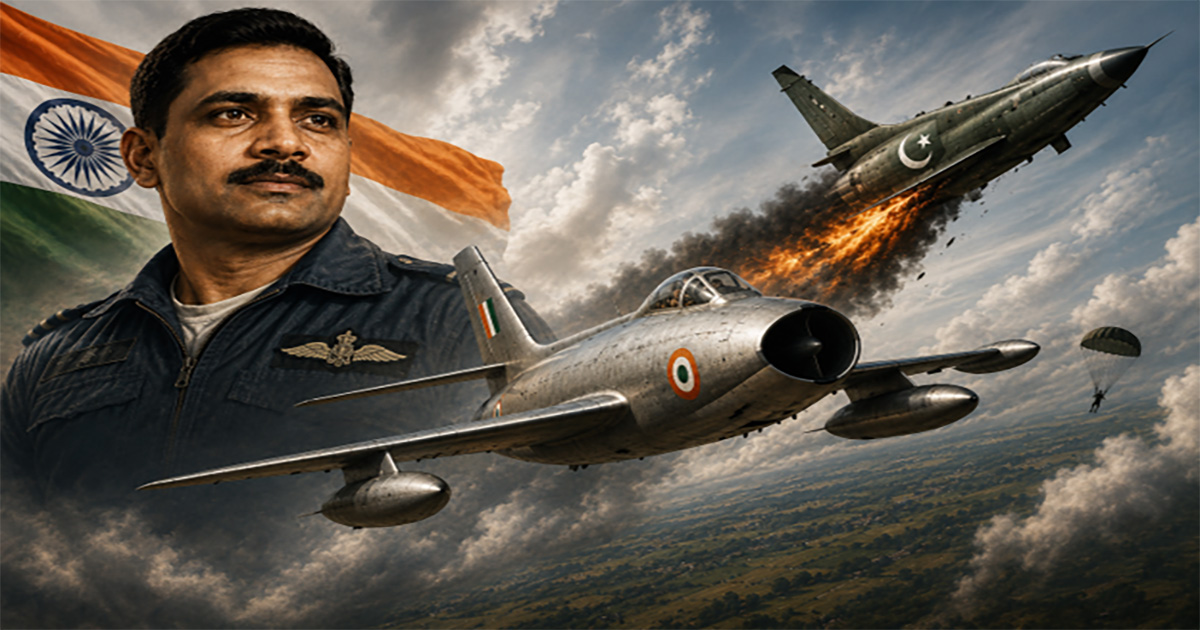
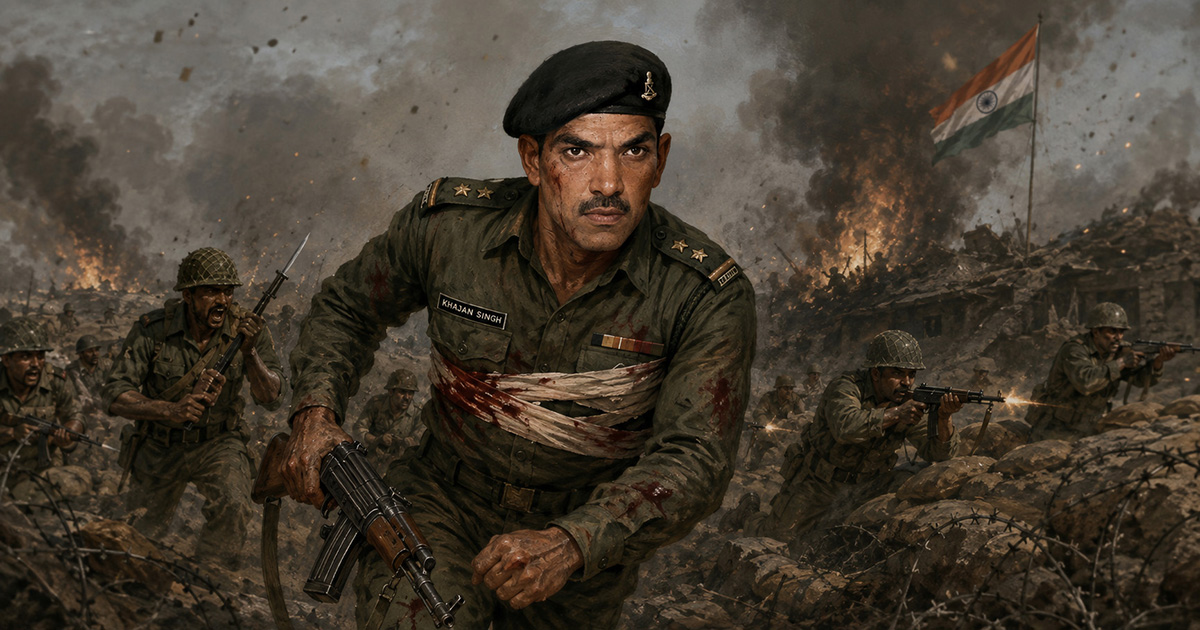
Indian Air Force's Squadron Leader Ajjamada Boppayya Devayya in 1965 India-Pakistan war | This image is AI-generated
The bravery displayed by Squadron Leader Ajjamada Boppayya Devayya during the 1965 India–Pakistan War is regarded as one of the most extraordinary acts in the history of the Indian Air Force. This was not merely a routine battle—a close-range aerial battle between fighter aircraft. It was the story of an Indian pilot who, despite facing a vastly superior enemy aircraft, demonstrated remarkable courage, exceptional flying skills, and an unwavering sense of duty toward his nation.
On September 7, 1965, the Indian Air Force dispatched a formation of aircraft to strike Pakistan’s Sargodha Air Base. Squadron Leader Ajjamada Boppayya Devayya was among the pilots participating in the mission. After completing the attack and beginning the return journey, Devayya’s Mystère IVA aircraft came under attack from a Pakistan Air Force F-104 Starfighter, an American-made supersonic fighter jet.
The Pakistani F-104 Starfighter was one of the most advanced and fastest aircraft of its time. It was capable of flying at supersonic speeds—faster than the speed of sound. Equipped with air-to-air missiles, it could destroy targets from long distances. It also carried a powerful 20mm Vulcan cannon capable of firing rounds at an extremely high rate. The aircraft had been designed specifically for aerial combat.
In contrast, the Mystère IVA flown by Devayya was an older French-built aircraft. It was subsonic, meaning it could not exceed the speed of sound. The Mystère had primarily been designed for ground-attack missions against enemy tanks and troops. It carried only two 30mm cannons and had no missiles whatsoever.
Technologically speaking, this was a completely unequal contest. Yet the battle had already begun. Pakistani pilot Flight Lieutenant Amjad Hussain accelerated his Starfighter and, diving from a higher altitude, launched a missile at Devayya’s Mystère. Fortunately for the Indian pilot, the missile missed its target.
Pakistan’s Amjad Hussain then switched to his aircraft’s powerful cannon and opened fire. The barrage severely damaged Devayya’s Mystère. Its radio communication system was completely destroyed, and several other critical components were badly damaged. Most pilots in such circumstances would have attempted to escape. But Devayya made a different choice. He turned back and decided to fight. He knew his aircraft no longer had sufficient fuel to make it back safely to India. He also understood that if he disengaged, the Pakistani jet could go on to attack other Indian aircraft.
Devayya rapidly maneuvered his Mystère and launched a direct counterattack against the Starfighter. The F-104 Starfighter had been designed for high-speed combat, but it struggled to maintain stability at lower speeds. Devayya knew this weakness well. Using his superior understanding of aerial maneuvering, he lured the Starfighter into a slow-speed turning battle, precisely the kind of engagement where the Pakistani aircraft was at a disadvantage.
Pakistan’s Flight Lieutenant Amjad Hussain reduced speed in an attempt to turn with him—a decision that proved to be a costly mistake. Closing the distance to barely 250 yards, Devayya unleashed sustained fire from his Mystère’s 30mm cannons. The shells struck the tail section of the Starfighter. The Pakistani jet suffered catastrophic damage. Amjad Hussain was forced to eject to save his life. He descended safely by parachute, but his Starfighter was destroyed.
On the other side, Devayya’s Mystère had also sustained severe damage during the engagement. He was deep inside Pakistani territory. Either his ejection seat failed to function, or he was no longer conscious. His aircraft eventually crashed, and he lost his life.
Initially, he was listed as “missing in action.” Later, he was officially declared dead.
For years, the details of this extraordinary encounter remained largely unknown. The story came to light in 1979 through British author John Fricker’s book, Battle for Pakistan. Drawing upon Pakistani sources, Fricker provided a detailed account of the dogfight. Remarkably, Amjad Hussain himself acknowledged that it was the Indian Mystère pilot who had defeated him.
Twenty-three years later, in 1988, the Government of India posthumously awarded Squadron Leader A.B. Devayya the Maha Vir Chakra, the nation’s second-highest wartime gallantry award. It was the first posthumous Maha Vir Chakra ever awarded to an officer of the Indian Air Force.
Ajjamada Boppayya Devayya was born on 24 December 1932 in Coorg, Karnataka, a region also known as Kodagu. Before the war, he served as an instructor at the Air Force Flying College. Once hostilities began, he joined No. 1 Squadron, famously known as the “Tigers.” His courage and sacrifice continue to inspire generations of Indian airmen.
In 2019, Air Chief Marshal B.S. Dhanoa recalled Devayya’s heroism while speaking about the bravery displayed by Wing Commander Abhinandan Varthaman. The story has also found a place in popular culture and was depicted in the film Sky Force.
The India–Pakistan War, which officially began on August 5, 1965, came to an end on September 23, 1965. Yet among the many stories of courage that emerged from that conflict, the dogfight fought by Squadron Leader Devayya remains one of the most remarkable. Against overwhelming odds, flying an older and slower aircraft, he refused to retreat. Instead, he turned toward danger, took on a technologically superior adversary, and emerged victorious. It was a battle that lasted only minutes in the skies—but earned him a permanent place in the annals of Indian military history.
.jpg)