When Nihang Baba Fakir Singh Khalsa & 25 Nihangs Raised the Saffron Flag at Ram Janmabhoomi in 1858
The construction of a disputed structure at the Ram Janmabhoomi site had resulted in tensions and confrontations. It was against this backdrop that Nihang Baba Fakir Singh Khalsa arrived in Ayodhya.

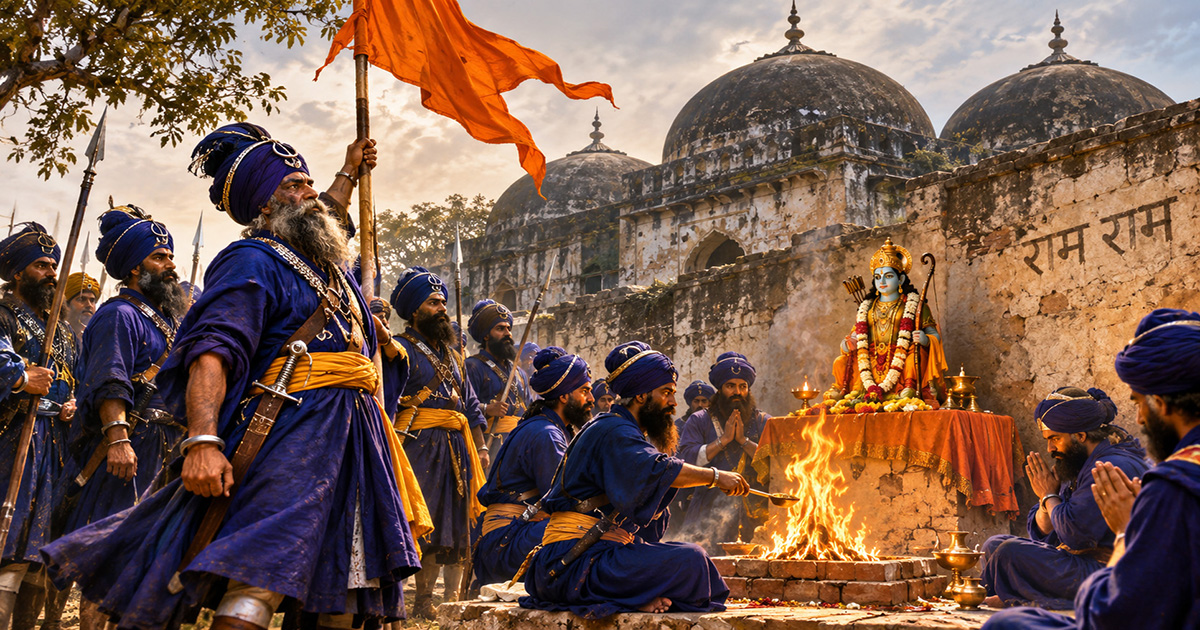
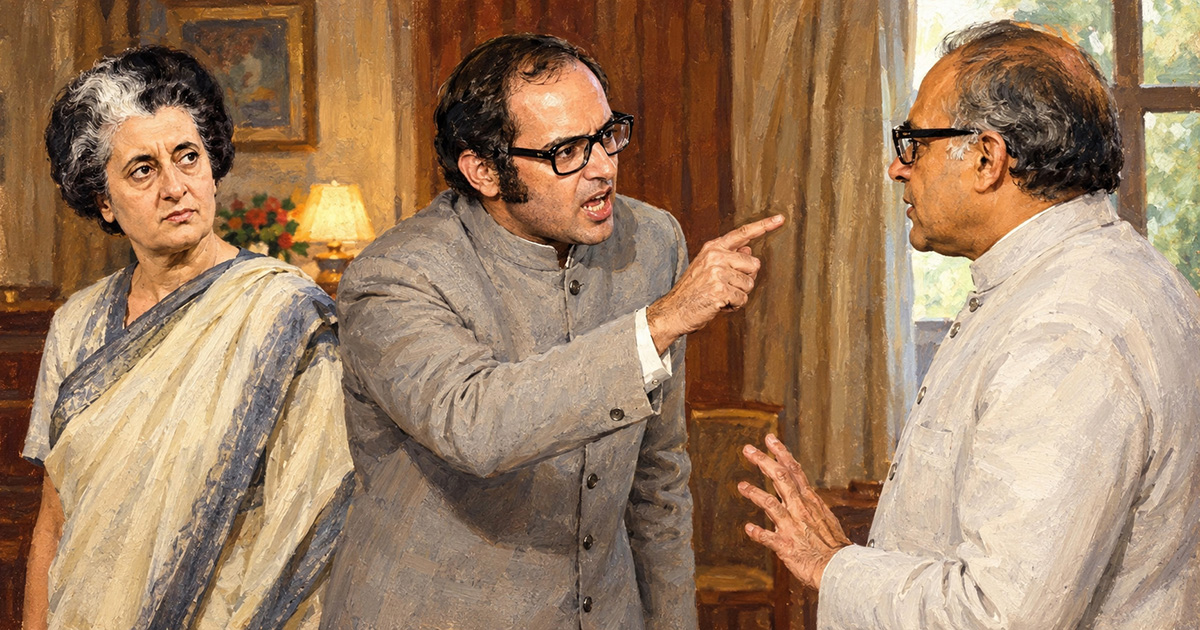
When Nihang Sikhs arrived at the Ram Janmabhoomi site in Ayodhya | This image is AI-generated
About 165 years before the Ram Mandir was finally constructed in Ayodhya, a small group of Nihang Sikh warriors entered the disputed site in Ayodhya, raised a saffron flag, installed an idol of Lord Ram, and performed Hindu rituals inside its premises. What followed would become one of the earliest recorded episodes of organised attempts to establish Hindu worship at the Ram Janmabhoomi site during British rule.
The Sikh connection with Ayodhya is rooted in history. Historical accounts record that Guru Nanak Dev, the founder of Sikhism, had visited Ayodhya around 1510–11 AD. This was nearly two decades before the construction of the disputed structure, traditionally dated to 1528. Likewise, further establishing the Sikh connection to Ayodhya is our story.
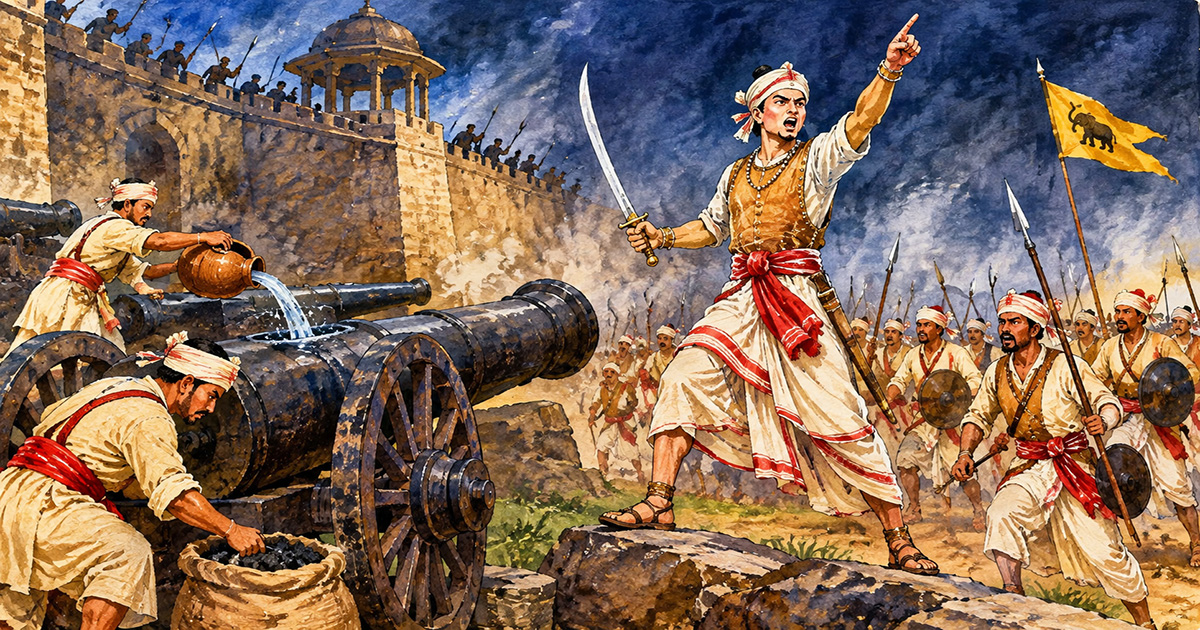
February 1856 onwards, the British had established their rule over Awadh. The construction of a disputed structure at the Ram Janmabhoomi site had resulted in tensions and confrontations. It was against this backdrop that Nihang Baba Fakir Singh Khalsa arrived in Ayodhya from Punjab with 25 Nihang Sikhs on November 28, 1858. They were no ordinary pilgrims. The Nihangs were formidable Sikh warriors, recognisable by their distinctive blue robes, towering turbans adorned with steel chakrams, and traditional weapons such as swords and spears. Thus, when the Nihang Sikhs entered Ram Janmabhoomi premises, what happened next was remarkable.
The Nihangs constructed an earthen platform, known as a chabutra, and installed an idol of Lord Ram on it. They then performed a havan and puja, lit a sacred fire, and raised the religious saffron flag. They even wrote 'Ram Ram' in charcoal across the walls of the structure.
Naturally, as their brave display of courage came at a time when tensions were already brewing in Ayodhya, their actions did not go down well with everyone.
Just two days later, on November 30, 1858, Muhammad Asghar, the Khattib (the preacher who delivers the Friday sermon) and the Muezzin (who recites the azaan) of the disputed structure, approached the British authorities to file a historic first FIR of the dispute at the site over the incident. He described the actions of the Nihang Sikhs as 'open tyranny and high-handedness'. The report filed by the local police official, Sheetal Dubey, documented that Baba Fakir Singh and “his guards” had occupied the space, asserting that “every place belonged to Nirankar”.
The British administration was determined to bring the situation under control. By December 10, the authorities had removed the saffron flag and expelled the Nihang from the Ram Janmabhoomi site. Yet, even after the British intervention, the episode had left its mark. The devotion of Hindu worshippers continued, and so did their efforts to maintain their presence at the sacred site. Taking inspiration from Nihang Baba, at several other instances, Hindu pilgrims built a chabutra near the premises and blew conch shells.
Eventually, the British administration erected a physical barrier separating the inner and outer portions of the premises. While Muslims continued offering prayers inside the inner enclosure, Hindu devotees retained access to the outer courtyard, where they worshipped at the Ram Chabutara and Sita Rasoi. The Ram Chabutara continued to serve as an important centre of Hindu worship for decades. Eventually, in 1885, Mahant Raghubar Das, the mahant (chief priest) of the Ram Chabutara, sought permission to construct a temple over their place of worship, carrying forward the demand for a proper place of worship at the birthplace of Lord Ram.
However, the utmost significance of the story can be felt when, just days before delivering the landmark verdict that paved the way for the construction of the Ram Mandir in Ayodhya in November 2019, the Supreme Court revisited the 1858 incident, stating that the event signifies the history of Hindu worship at the Ram Janmabhoomi site.
And so, an act carried out by the Nihang sikhs in November 1858 became part of a historical record that would survive for more than 160 years. Today, as the Ram Mandir stands tall in Ayodhya, the story of Baba Fakir Singh Khalsa and his 25 sikhs reminds us that the journey towards its construction was shaped by generations of devotion, perseverance and sacrifice.
Note: One of the main references for the story is author Meenakshi Jain’s Battle For Rama.