The Third Ban on RSS and the Tribunal’s Judgment: When the Congress Government’s Move Backfired
By the beginning of December 1992, the Ram Janmabhoomi temple movement had reached its peak across India.

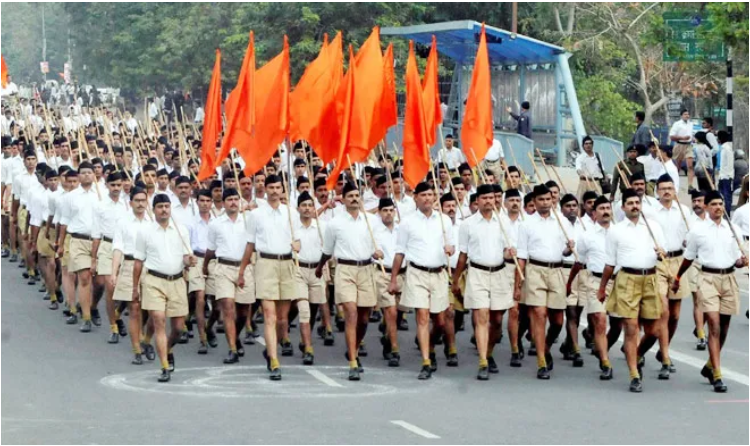
RSS and the Ram Janmbhoomi movement | Image Source: India TV
By the beginning of December 1992, the Ram Janmabhoomi temple movement had reached its peak across India. For years, the campaign had emotionally galvanized millions of Hindu devotees. From every corner of the country, ordinary people, pilgrims, and activists from Hindu organizations had poured into Ayodhya as karsevaks, determined to see the construction of a Ram temple on the contested site. Tens of thousands of karsevaks gathered in Ayodhya, and the atmosphere there crackled with religious fervour and political tension.
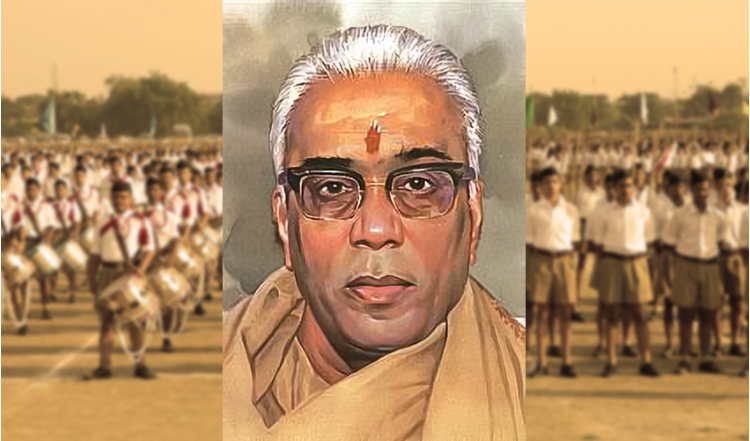
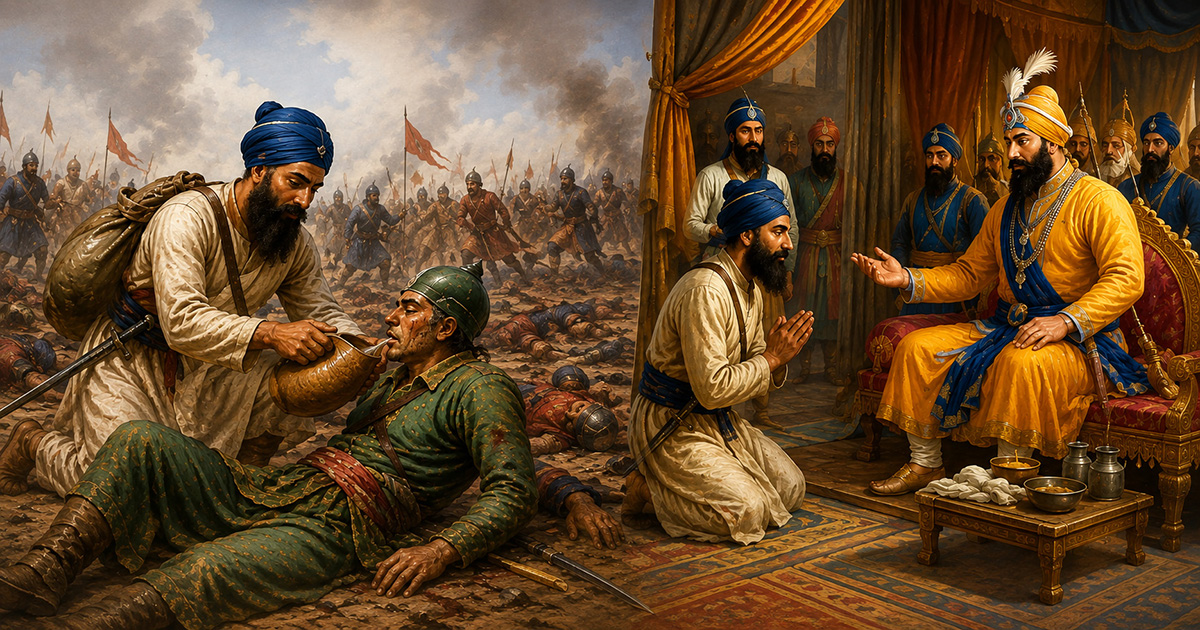
During this time, RSS workers played a central role in supporting the incoming karsevaks. They arranged food, water, medical aid, and shelter for the lakhs of Hindu devotees who had descended upon the town, turning the RSS into an indispensable logistical backbone of the movement. On December 6, 1992, the disputed structure in Ayodhya was brought down, triggering nationwide shockwaves. Just four days later, on December 10, 1992, the Congress‑led government of P. V. Narasimha Rao imposed a ban on the Rashtriya Swayamsevak Sangh (RSS) under the Unlawful Activities (Prevention) Act (UAPA).
The government’s core argument was that the RSS had played an indirect but decisive role in the demolition, and that the organization had become a threat to the security of the state and to social harmony. The then Home Minister, S. B. Chavan, publicly claimed that RSS activities were “spreading hatred and violence”. The official notification stated that the RSS’s ideology and its activists’ actions were inciting unrest in the country.
This was the third time that the RSS had been banned in independent India—first in 1948 after Mahatma Gandhi’s assassination, then in 1975 during the Emergency, and now in 1992, directly linked to the demolition of the disputed structure in Ayodhya. Critics of the Congress government accused it of using the ban to weaken the RSS, rather than acting purely on security grounds.
Many observers argued that the ban was driven more by political strategy than by security necessity. The Congress government saw the Ram temple movement as a serious challenge to its authority, and the demolition of the disputed structure only deepened the crisis. By imposing a ban on the RSS, the government hoped to curtail the movement’s momentum and weaken its ideological leadership. At the time of the announcement, the government claimed the ban would help control communal violence and restore order. Yet opposition leaders denounced it as an assault on democratic rights and an authoritarian overreach by the state.
Under UAPA, any ban on an organization must be reviewed by a special tribunal, and its validity must be tested against the law and available evidence. In this case, the Union government referred the notification to a tribunal headed by former Delhi High Court judge Justice P. K. Bahri. The tribunal heard arguments from both sides, recorded the statements of witnesses, and carefully examined the documents and evidence presented.
The process took time, as the tribunal sought to scrutinize every aspect of the case. The government’s “White Paper on RSS” and other official documents were put under detailed examination. The tribunal’s proceedings were widely seen as a test of India’s constitutional safeguards of whether the state could ban an organization without concrete proof of wrongdoing.
The tribunal found that the government’s allegations against the RSS were not substantiated by credible evidence. Most notably, it found no solid proof that the RSS had pre‑planned the bringing down of the disputed structure. The tribunal also pointed out that the government’s White Paper failed to demonstrate any direct role or prior planning by the RSS in the event itself.
Justice Bahri concluded that there was no sufficient basis to declare the RSS an “unlawful association”. He declared that the notification of prohibition was not based on facts and that it should therefore be set aside. On June 4, 1993, the tribunal formally lifted the ban on the RSS.
The Narasimha Rao government appealed to the Supreme Court, hoping to revive the ban. But the Supreme Court upheld the tribunal’s verdict, effectively endorsing the finding that there was no prima facie case against the RSS. This double judicial rejection dealt a serious political setback to the Congress government and elevated the RSS’s standing in the public eye.
The tribunal’s judgment was widely celebrated as a triumph of constitutional propriety and due process. The RSS hailed it as a victory of its ideology and claimed the ban had been imposed out of political spite and vendetta, not a genuine security concern. The Congress government had banned the RSS in the name of security and communal harmony, but the judicial system proved that the allegations rested on shaky ground. The ban lasted only about six months, and in many ways, the RSS emerged from the episode stronger and more visible than before.
This episode is often cited as a reminder that steps taken under political pressure rarely withstand rigorous legal scrutiny. Even today, when debates about banning organizations return to the public arena, the 1992–93 ban on the RSS under UAPA serves as a key example of how tribunals and the courts act as a constitutional check on executive power.