How Guruji Golwalkar Helped Convince Jammu & Kashmir's Maharaja Hari Singh to Join India in 1947?
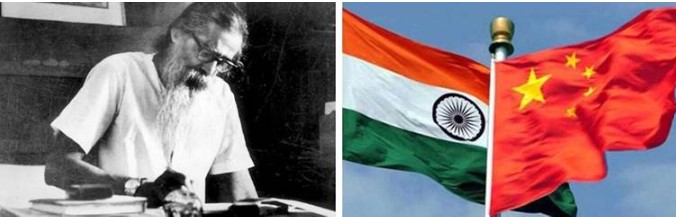
India’s Home Minister, Sardar Vallabhbhai Patel, had entrusted Guruji with a highly sensitive and urgent mission: to persuade Maharaja Hari Singh of Jammu and Kashmir to accede to India.

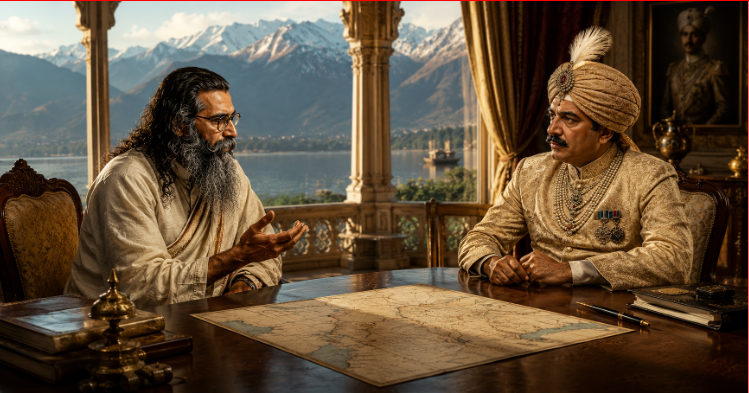
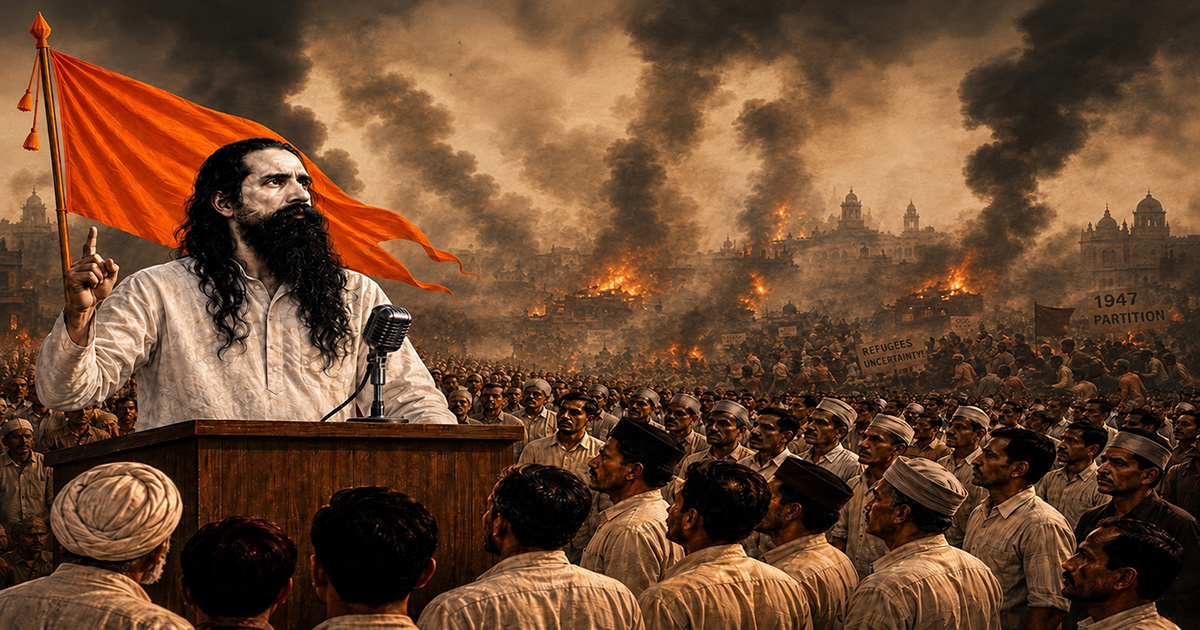
The meeting held between Guruji Madhav S. Golwalkar and Jammu and Kashmir's Maharaja Hari Singh | This image is AI-generated
India had been independent for barely two months, yet the country was still gripped by the uncertainty and turmoil of Partition. On October 17, 1947, at Delhi’s Safdarjung Airport, RSS Sarsanghchalak, Guruji Madhav Sadashiv Golwalkar boarded a special aircraft bound for Srinagar.
This was no ordinary political visit. India’s Home Minister, Sardar Vallabhbhai Patel, had entrusted Guruji with a highly sensitive and urgent mission: to persuade Maharaja Hari Singh of Jammu and Kashmir to accede to India. Later that day, Guruji’s aircraft landed in Srinagar. Without fanfare or public engagements, he proceeded directly to his scheduled destination.
The following morning, on October 18, 1947, Guruji arrived at the Srinagar royal palace. Present there were Maharaja Hari Singh, Crown Prince Karan Singh, and the Prime Minister of Jammu and Kashmir, Mehr Chand Mahajan. What followed over the next few hours would become one of the most consequential discussions in modern Indian history.
The Maharaja candidly explained his dilemma. “Guruji,” he said, “the people sitting in Delhi perhaps do not fully understand my situation. My state is surrounded by difficulties. Our principal roads and trade routes pass through Rawalpindi and Sialkot. Our only major air link is through Lahore. If I decide to join India, how will I manage the administration and economy of my state?”
He continued, “Both India and Pakistan are exerting tremendous pressure on me. Under these circumstances, I feel that keeping my state completely independent may be the safest course.”
Guruji listened attentively before responding in a calm but firm voice. “Maharaj, at critical moments in history, the path that appears safest often becomes the source of the greatest danger. Roads can be altered. New routes can be built. Railway lines can be laid. But if the security of the state itself comes under threat, what value will those roads ultimately have?”
He went on to say: “This is not merely an ordinary princely state. It occupies one of the most strategic positions on India’s northern frontier. Independence cannot survive on a declaration alone; it also requires the strength to defend it. Today, Maharaj, you are not merely deciding for the present. You stand at a turning point in history, where a single decision will shape the future of generations to come.”
Prime Minister Mehr Chand Mahajan, who was present during the discussion, strongly supported Guruji’s arguments. Gradually, many of the Maharaja’s doubts and fears began to fade. After the lengthy and intense discussion, Maharaja Hari Singh told Guruji: “I agree with your reasoning. I shall take action very soon.”
The Maharaja gave a clear indication that he was inclined towards accession to India. The message was promptly conveyed to Sardar Patel in Delhi. Guruji’s mission had succeeded. He returned to Delhi. But events soon began moving rapidly. As reports emerged that the Maharaja was leaning towards India, Pakistan acted swiftly. On October 22, 1947, Pakistan-backed tribal forces launched a sudden invasion of Jammu and Kashmir under the guise of tribal raiders.
The attack shattered any remaining hope that the state could remain independent. Jammu and Kashmir urgently required military assistance. However, the Government of India made it clear that troops could only be deployed after the state formally acceded to India. Faced with the crisis, Maharaja Hari Singh signed the Instrument of Accession on October 26, 1947, officially joining the Dominion of India.
The very next morning, on October 27, Indian troops were airlifted into Srinagar and began operations to defend the Valley. The course of history had changed. The conversation that took place behind closed doors in Srinagar in October 1947 became one of the most significant turning points in the story of India’s unity. For many, it remains a defining moment in the chain of events that ensured Jammu, Kashmir, and Ladakh became an integral part of India.
.jpg)