How Gopinath Bordoloi Defied Congress, Jinnah, and the British to Save Assam From Becoming a Part of Pakistan
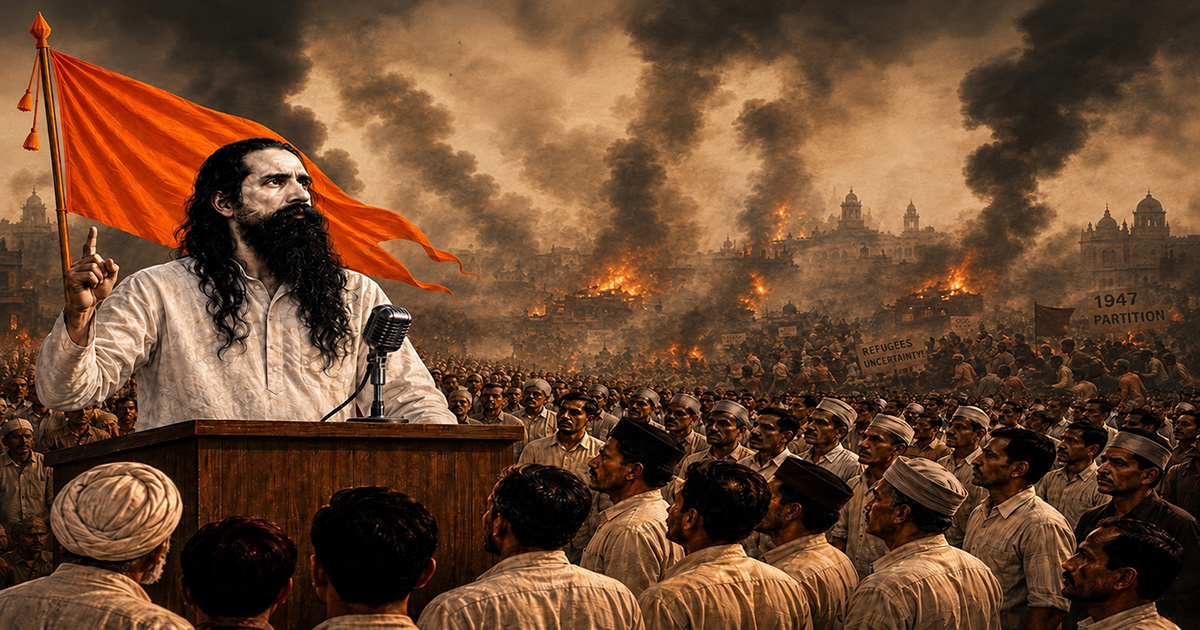
During the partition of 1947, one more region was at stake and was on the verge of becoming part of Pakistan: Assam.

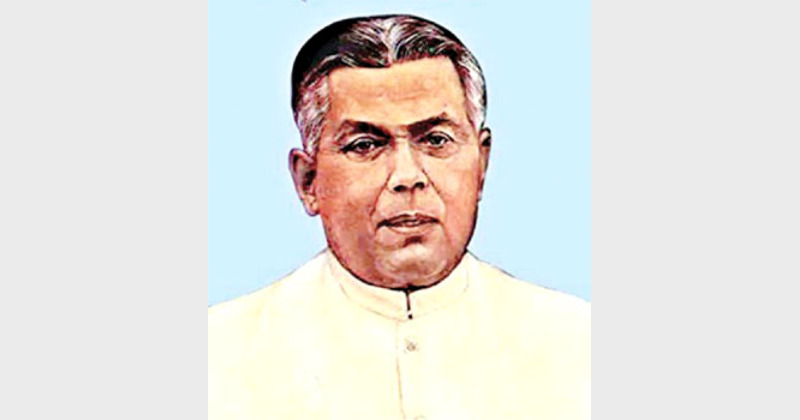
Gopinath Bordoloi, Assam Leader | Image Source: Organiser
When one thinks of the Partition of 1947, what immediately comes to mind is how brutally Punjab and Bengal were separated. Vivid imagery of trains filled with refugees, riots, broken families, and the birth of India and Pakistan comes to mind. However, only a few remember that one more region was at stake and was on the verge of becoming part of Pakistan: Assam. But a person saved this from happening: Gopinath Bordoloi. The man left no stone unturned to ensure that Assam did not absorb into Pakistan, and valiantly stood against Congress, the Muslim League, and the British Raj. Today, remembered as “Lokapriya” or “the lion of Assam,” it was Gopinath Bordoloi who ensured that Assam was included on the Indian map.
The British Cabinet Mission Arrives in India
The story began after World War II, in 1945, when Britain realized it could no longer rule India and sent the British Cabinet Mission to plan the transfer of power. Arriving in 1946, the Mission proposed grouping provinces into sections. Assam was placed with Bengal, raising fears of losing its political and cultural identity within a Muslim-majority bloc. These concerns grew because the large-scale migration of Bengali Muslim peasants had already changed Assam’s demographics. Muslims formed around 12–15% of the population in 1901, rising to 25.31% by 1941.
Recognizing this shift, the Muslim League began viewing Assam as vital to the future of eastern Pakistan. Under Syed Muhammad Saadulla, the migration accelerated further through the “Grow More Food” campaign, which promoted fresh settlements of immigrant cultivators, even in tribal areas. Critics argued that the campaign was less about food and more about expanding Muslim influence in Assam, eventually strengthening demands to link the province with East Bengal.
Gopinath Bordoloi’s Fierce Opposition and Conflict With Congress
However, Congress, led by Jawaharlal Nehru, did not realize the repercussions of grouping Assam with Bengal and was busy appeasing the Muslim League and the British Raj. Thus, the party accepted the Mission’s framework. For the Muslim League, on the other hand, it was to their liking for the creation of a separate Muslim nation, and hence, they also accepted the framework.
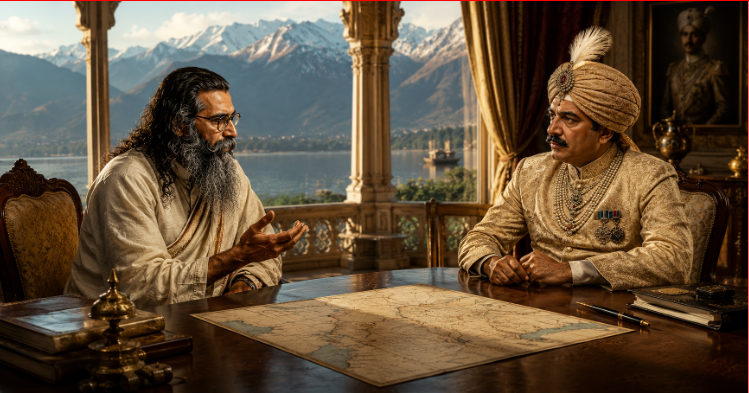
But this was not acceptable to Gopinath Bordoloi, who became the Premier of Assam, following the fall of Sir Syed Muhammad Saadulla. On April 1, 1946, Bordoloi met with the Mission and strongly opposed Assam’s inclusion in Group C. He stated that Assam could not be politically submerged under Bengal, arguing that Assam was already a province formed on linguistic and cultural lines and deserved to continue as an autonomous unit. However, the Mission refused to alter the groupings.
This became a major challenge for Bordoloi. So, he attempted to gain Congress’s support. In a memorandum to the Congress Working Committee (CWC) on May 19, 1946, he described the grouping proposal by the British as a “sinister proposal,” stating that if Congress continued to support it, this would be a betrayal of Assam. However, not relenting, Nehru instead criticized Assam’s “adamant” position and feared it would complicate national negotiations. Nehru even questioned the Assam Assembly’s understanding of the grouping issue, but Bordoloi sharply responded, saying that Assam had no confusion and, rather, it was Nehru’s speeches that were confusing the people.
With Nehru’s rejection, Bordoloi now looked for Mohandas Karamchand Gandhi’s support. So, he sent two Assam leaders to meet Gandhi—Bijay Chandra Bhagawati and Mahendra Mohan Choudhury. Following a conversation with these Assamese leaders, Gandhi came out in Assam’s support, saying that it should reject the grouping plan entirely and, if necessary, even withdraw from the Constituent Assembly. He added, “If you do not act correctly and now, Assam will be finished… Assam must not lose its soul.” With Gandhi’s intervention, the Congress leadership could no longer ignore Assam’s concerns.
With that began Bordoloi’s resistance movement across Assam. On June 15, 1946, “Anti-Grouping Day” was observed across Assam. Meetings, rallies, and processions were organized throughout the Brahmaputra Valley and even in remote interior regions. The agitation reached its most important moment on July 16, 1946, when the Assam Legislative Assembly passed a historic resolution moved by Bordoloi, rejecting the Cabinet Mission’s plan and instructing Assam’s representatives in the Constituent Assembly not to sit with Bengal to frame either Assam’s constitution or any joint Group C constitution.
At that time, Jinnah strongly opposed Assam’s resolution and continued insisting that Assam belonged within Pakistan. But Bordoloi remained unrelented, saying, “Jinnah may dream of bringing the moon down to earth, but separating Assam from India and merging it with Pakistan will remain only a dream.” With this, the Cabinet Mission collapsed, and when partition took place in 1947, Assam remained within India. Had Gopinath Bordoloi not resisted the Cabinet Mission’s grouping plan, the political geography of India could have been drastically different. The entire Northeast may have found itself cut off from India, fundamentally altering the country’s strategic, cultural, and territorial future.
.jpg)