When V.K. Krishna Menon Revolted Against the British Empire for Discrimination of 50,000 Indian Seafarers During World War 2
The strikes did not immediately end the deep wage discrimination faced by Indian seafarers. But they forced the British authorities to confront the harsh conditions under which these men worked and fought.

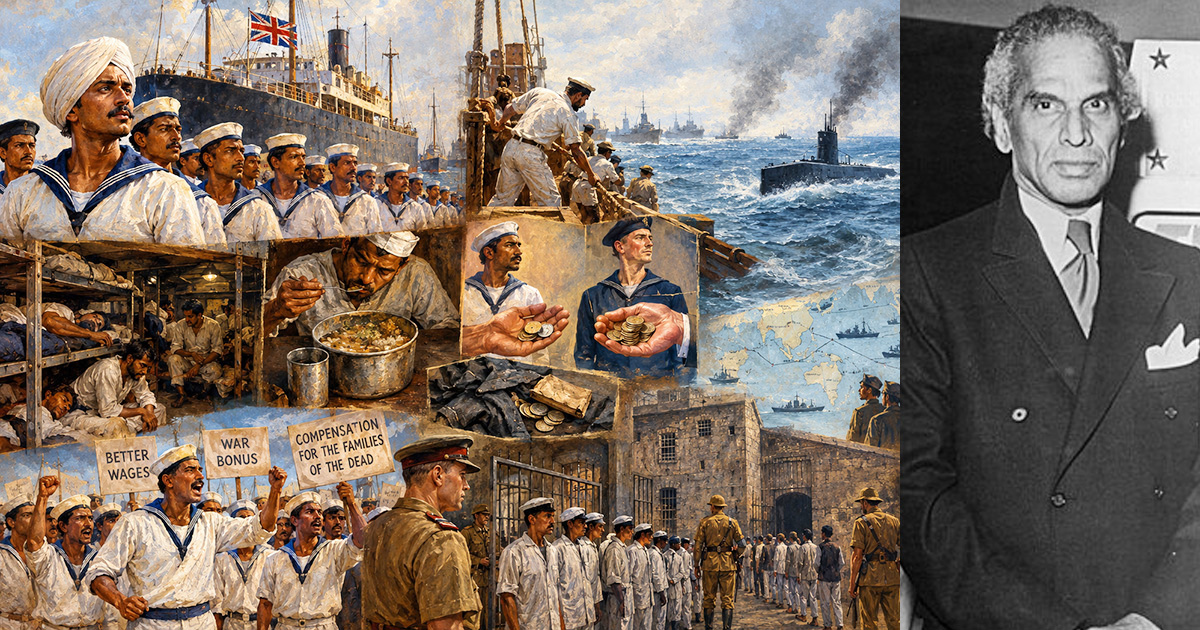
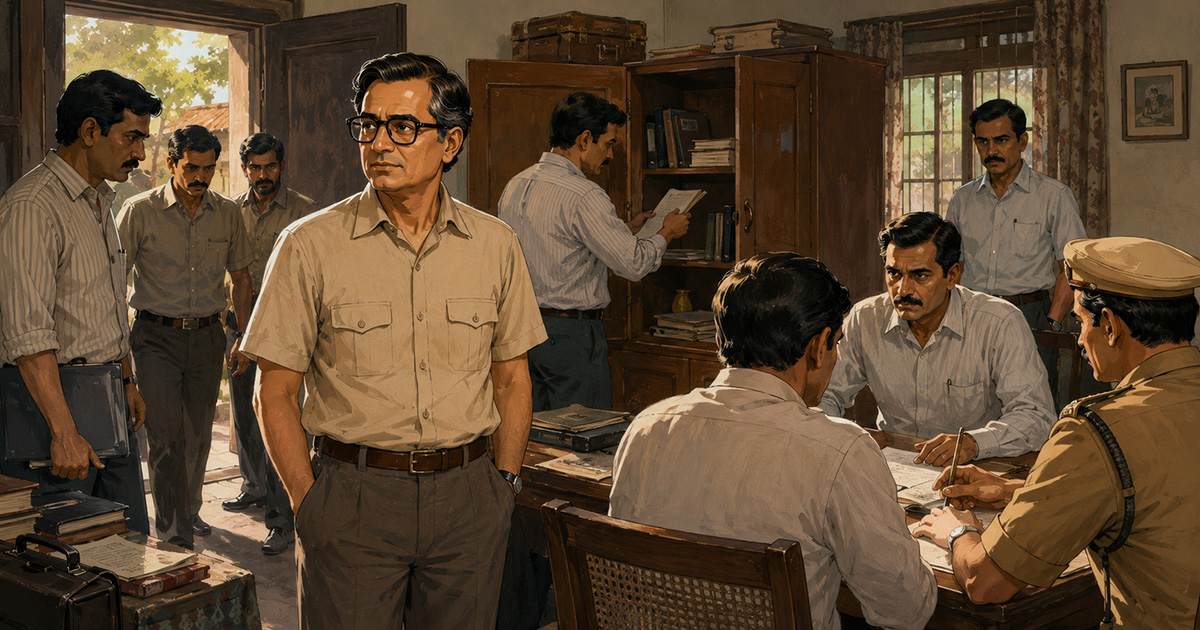
V. K. Krishna Menon's fight for the Indian seafarers | This image is AI-generated
In September 1939, the Second World War broke out. Britain, the country that had colonized India, had declared war. The nation had to ensure that supply lines continued, ships continued to sail, and cargo continued to move despite the war. The men who ensured this for Britain were the Indian seafarers, yet they were still being treated as cheap labour. But one man made sure to fight for them: V.K. Krishna Menon, who took the grievances of the Indian seafarers into the heart of British politics.
V.K. Krishna Menon, the man who fought for Indian seafarers’ rights | Image Source: The Print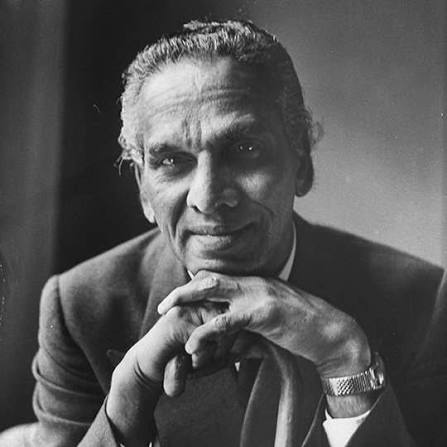
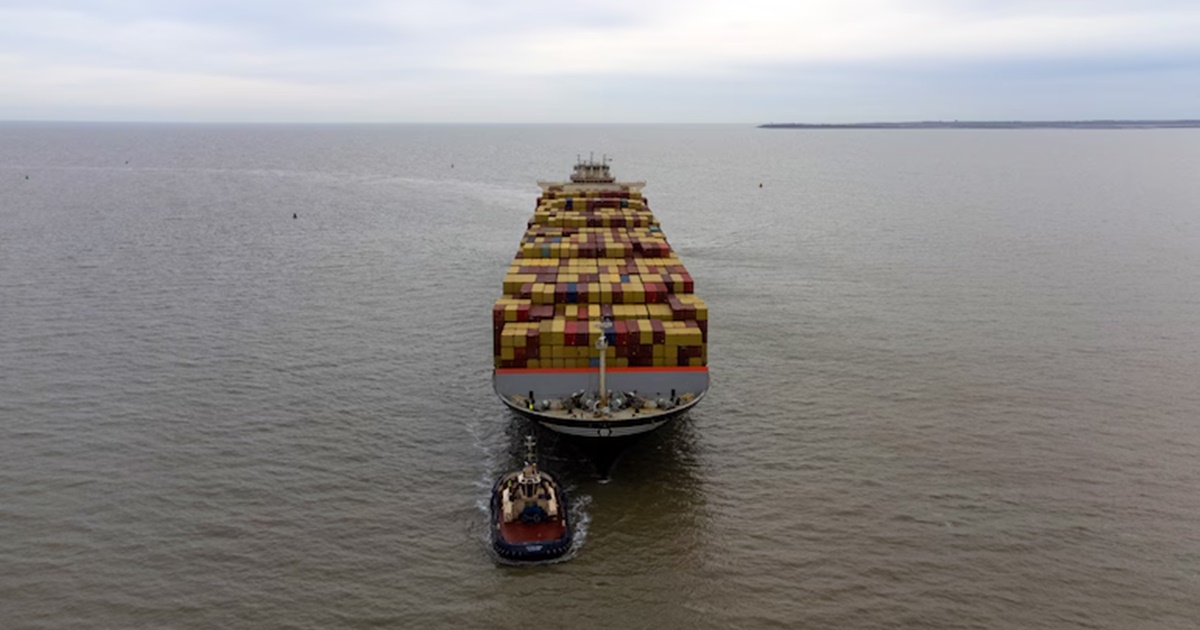
The story goes back to when the Second World War began in September 1939. More than 50,000 Indian seafarers, known as “Lascars”, were working aboard British merchant ships, forming more than a quarter of the British Merchant Navy. Yet they were paid dramatically less than European sailors doing the same work. An Indian sailor earned about £1 17 shillings (₹24.67) a month, compared with around £9 12 shillings (₹128) for a European crew. Indian seafarers also endured poorer food and clothing allowances, longer and less regulated working hours, cramped accommodation, and worse health conditions.
The war only deteriorated the condition further. Britain expected the Indian sailors to carry supplies for its allies through waters threatened by enemy German U-boats, but on old discriminatory terms. The men knew the risks, and they also knew what would happen to their families if they did not return home. So, Indian seafarers stood for their rights, demanding war bonuses, higher wages, and compensation in case they were killed. But instead of hearing their demands, the Raj struck back harshly. In late 1939 and early 1940, around 400 Indian seafarers were imprisoned in Britain, and the unrest had spread as far as Cape Town, Burma, and Australia.
Witnessing Indian seafarers risk their lives for the British war effort while being denied even basic equality, V.K. Krishna Menon was deeply disturbed by their treatment. He decided to use his political influence to support their demands. At 44, Menon was a prominent Indian nationalist in Britain and the driving force behind the India League in London, which was campaigning for India’s independence from British rule. The India League was itself an anti-colonial organisation, but it worked from within Britain to take India’s grievances to British politicians, workers, and the public. Menon had spent years building links with British political figures, particularly Labour MPs, and with sections of the British labour movement opposed to British rule in India. This gave him a way to take the grievances of Indian seafarers directly to people who could raise the issue in Parliament. Menon did not organise the strikes himself; instead, he helped give the seafarers’ demands a political voice in Britain. He raised their welfare concerns with Members of Parliament and worked alongside local welfare officers and others to put pressure on the authorities and shipowners.
Building on the same momentum, by 1942, Menon's activism expanded far beyond the docks.
He embarked on a nationwide political tour across Britain, speaking in cities including Glasgow, Cardiff, and Birmingham, echoing the demands of the Indian seafarers. During one of these tours, Menon was asked whether Indians would prefer Japanese rule over British rule. He rejected the question itself, famously replying it was like “asking a fish whether he wished to be fried in butter or margarine.” Clearly, for Menon, the choice was not between two foreign rulers; rather, India's future had to be decided by Indians themselves.
Menon's growing influence inevitably attracted the attention of British authorities. By late 1942, British intelligence closely monitored his activities. MI5 tapped his telephone calls, undercover detectives attended his meetings, and authorities even attempted to remove him from political activity through military conscription. Yet despite surveillance, censorship, and immense political pressure, Menon continued campaigning.
The strikes did not immediately end the deep wage discrimination faced by Indian seafarers. But they forced the British authorities to confront the harsh conditions under which these men worked and fought. Menon’s relentless work for the seafarers helped spur humanitarian relief efforts such as the Indian Comforts Fund, which provided Indian seamen and prisoners of war in Europe with parcels of tinned food and hand-knitted clothing, including scarves and balaclavas. Menon’s advocacy of the Indian seafarers’ struggle ultimately forced the Empire to acknowledge the men it had long treated as invisible. Krishna Menon successfully carried their fight into the corridors of British power, exposing the contradiction at the heart of the Raj: an Empire fighting a world war in the name of freedom, while denying freedom and equality to its own colonial subjects.
Note: The information stating V.K. Krishna Menon’s efforts for the Indian seafarers struggling during World War 2 under the British Raj has been taken from the book, “India at War: The Subcontinent and the Second World War”, authored by Yasmin Khan.