Bahirji Naik: Chhatrapati Shivaji Maharaj’s Master Spy Behind the Surat Raid
Surat was under the control of Mughal Subhedar Inayat Khan, who refused to pay the compensation that Chhatrapati Shivaji Maharaj demanded for the losses caused by Shaista Khan’s campaign.

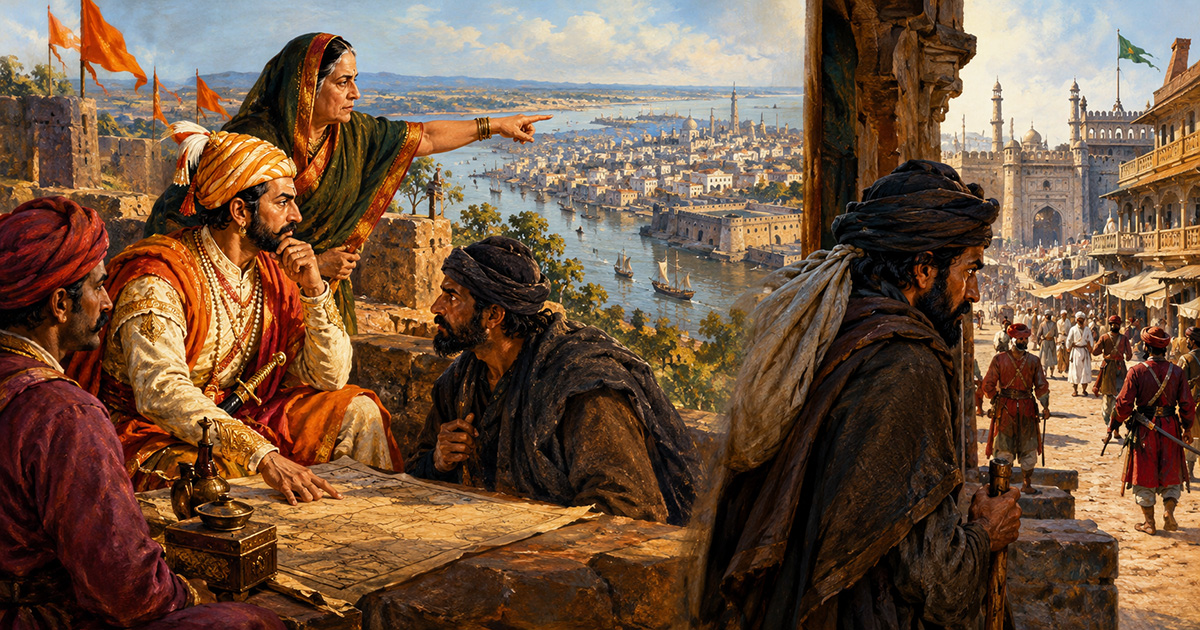
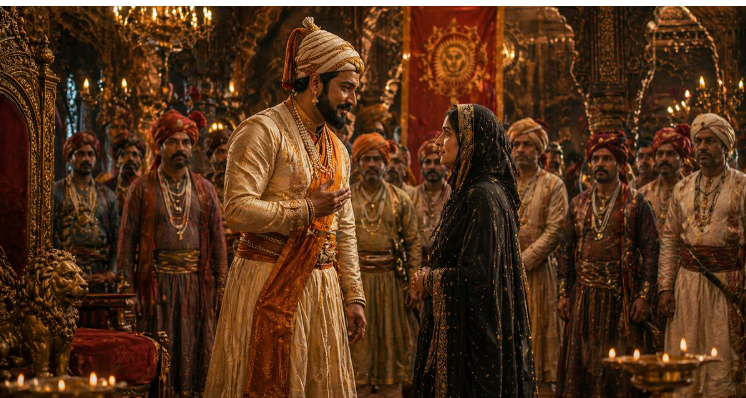
The Maratha strategy to attack Surat | This image is AI-generated
In 1664, Chhatrapati Shivaji Maharaj was preparing to strike Surat, one of the richest cities in the Mughal Empire. But before his army could enter the city, one man had to go in alone and discover its secrets. That man was Bahirji Naik.
But the plan to attack Surat had come after years of conflict. From 1660 to April 1663, Mughal General Shaista Khan had occupied Poona, while villages were plundered, crops destroyed, and homes burned. Even after the Mughal occupation ended, the damage to the Maratha homeland remained. Chhatrapati Shivaji Maharaj was deeply troubled. Seeing her son’s distress, Jijabai took him to a fort tower at Raigad and, pointing toward the rich Mughal port of Surat, she said, "Son, you should attack Surat, which is a treasure house. Defeat the Badshah and use its wealth to strengthen Swarajya."
Surat was under the control of Mughal Subhedar Inayat Khan, who refused to pay the compensation that Chhatrapati Shivaji Maharaj demanded for the losses caused by Shaista Khan’s campaign. Now, the plan depended on one thing: intelligence. Shivaji Maharaj turned to his chief intelligence officer, Bahirji Naik. “Bahirji, you are our best spy. The welfare of Swarajya depends on your skill,” Shivaji Maharaj said. Bahirji understood exactly what was expected of him.
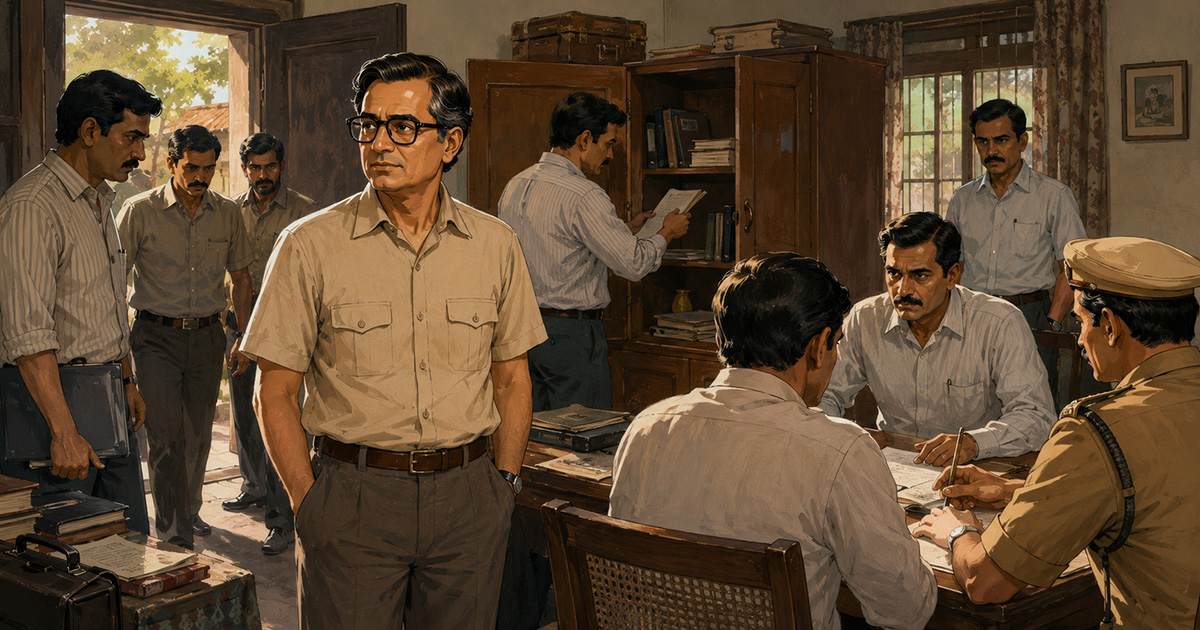
Disguised as a travelling fakir, Bahirji entered Surat in October 1663. To everyone around him, he appeared harmless. But he was carefully watching everything: the markets, wealthy merchants, mansions, warehouses, roads, guard posts, and Mughal positions. He studied the soldiers' movements and examined the city's defences. Then he discovered the weakness Shivaji Maharaj needed: The Mughal fort was strong and stood near the Tapti River, but the wealthy commercial city itself had no proper surrounding walls. Bahirji returned to Rajgad in November 1663 carrying no treasure. Instead, he carried something far more valuable: information. His report gave Shivaji Maharaj a detailed picture of Surat's layout, defences, guard arrangements, and richest targets. Now the Maratha army knew where to enter and where the enemy was vulnerable.
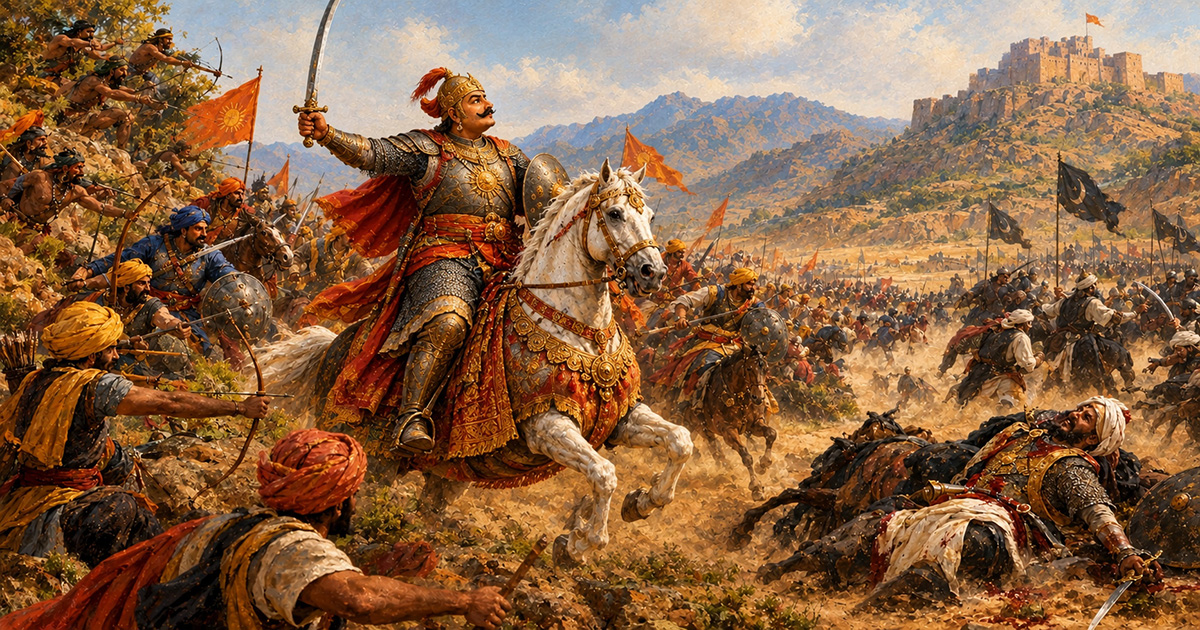
On 6 January 1664, Shivaji Maharaj reached Surat with his forces. The Marathas struck the city, and over the following days, enormous quantities of gold, silver, pearls, and diamonds were seized, valued at around one crore rupees. Then, the danger came from inside.
Inayat Khan sent an envoy to Shivaji Maharaj, pretending to negotiate. But the man was hiding a dagger. Suddenly, the man pulled out a hidden dagger and lunged at Shivaji. Bahirji was watching. In a split second, he reacted and stopped the attacker before the blade could reach Shivaji Maharaj.
The man who had entered Surat disguised as a humble fakir had first uncovered the city's secrets, then helped Shivaji Maharaj exploit its weaknesses and finally stood between his king and an assassin. Bahirji Naik's greatest weapon was never a sword. It was information.
And in the Surat raid, that information became the weapon that helped Shivaji Maharaj strike one of the Mughal Empire's richest cities. Bahirji Naik was the eyes and ears of Shivaji Maharaj.