26/11 Mumbai Terror Attack: How a Railway Announcer Saved Hundreds of Lives
Zende raised his voice in a warning to the passengers who kept piling into the station on local trains, urging them to take the rear exit instead of heading towards the main hall.

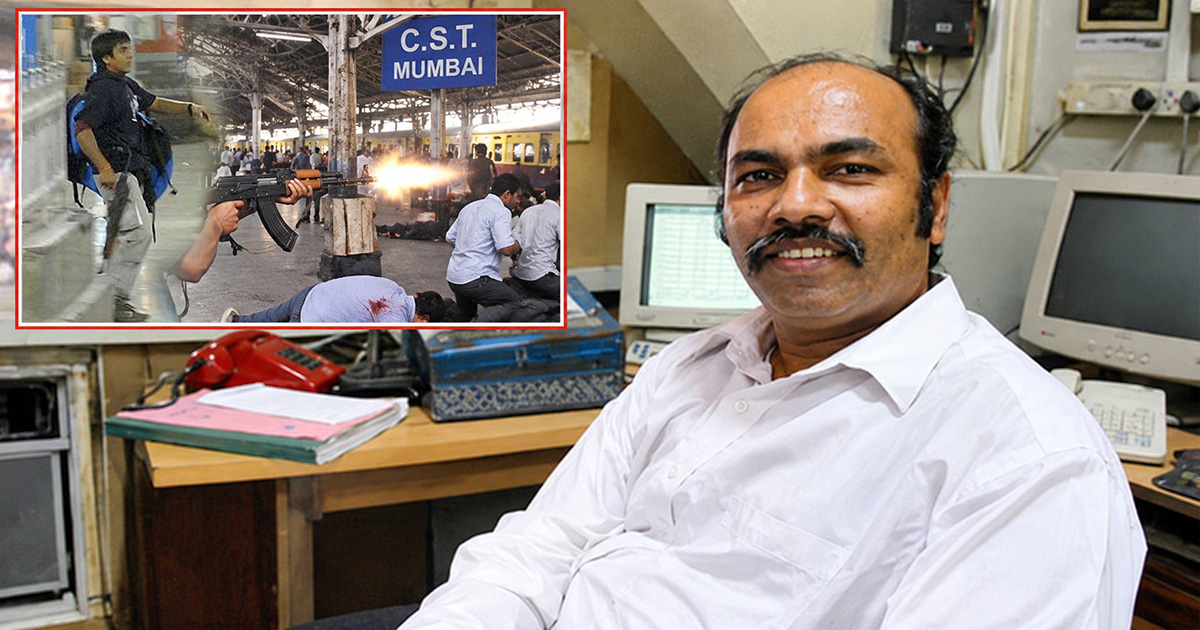
The announcer who saved hundreds of lives during the 26/11 terror attack | This image is AI-generated
During the night of November 26, 2008, the Chhatrapati Shivaji Maharaj Terminus (CSMT) was alive with the hustle and bustle of typical Mumbai. Trains came and went. The porters scurried about on different platforms. Office goers, students, and families moved about, making their way back home. Above the local line hall, tucked inside a small glass-fronted announcer, named Vishnu Dattaram Zende sat watching the various platforms, speaking into the microphone. Then at 9:55 PM, a thunderous sound and a blast drowned in the familiar noises of the station. For several seconds, it was difficult to grasp the nature of what was happening. Soon the people on the ground began to run.
Zende looked towards the long-distance section. A group of passengers was running towards the suburban side, some of them bleeding. He immediately alerted the railway police and security. Then he spotted 2 Pakistani Lashkar terrorists, one of them was Ajmal Kasab. Just right from his cabin, Zende could see the terrorists moving around the very station that he had been in charge of. The spot where he normally made his announcements stood transformed into a battleground. Yet, Zende did not panic. He thought of the people who were still to come.
That was the danger that others failed to comprehend. The local train had not stopped. Trains kept coming, picking up commuters unaware of the trouble at the station. A passenger alighting from a local train could not be aware of the exact location of the attackers. As someone escaped from one side, they could very well run towards the other. It was his thought, prompted from his vantage point, that made Zende pick up the microphone. Years of working in the railway premises had conditioned him to make the most of the facilities available. The public address microphone had been a part of his equipment for years. What he said through it, in Hindi and Marathi on that fateful night would be remembered for years to come.
Zende raised his voice in a warning to the passengers who kept piling into the station on local trains, urging them to take the rear exit instead of heading towards the main hall. He said, "Kripya dhyan dein. Station par aagey ki taraf kuch khatra hai. Aap log aagey mat aaiye. Kripya peeche ki taraf chale jaiye aur station se turant baahar nikaliye."
He repeated his warning every time a train came to a halt, a process that lasted for about 20 to 25 minutes. Passengers who heard the appeals of the announcer moved away from the trouble zone. The Supreme Court noted that the continuous announcement by Zende helped save countless lives and that people alighting at CST used the rear exit because of his warnings. The man from Mumbai did not have a gun; he had a microphone, the knowledge, and the wisdom of a man who knew how to act under pressure.
But then, the situation took a turn. The terrorists zeroed in on the announcer's cabin. Zende and his colleagues immediately took cover under the desk. The lights in the cabin were switched off. Then, the terrorists fired at the cabin, shooting at Zende's position. The place from which he had been directing the passengers to safety was itself in danger. He and his colleagues had to stay hidden under the desks for about an hour and a half, making contact with the police force by mobile phone, until the danger passed. The man who spent his nights giving directions to people was lying low, trying to save himself from the bullets of the terrorists who had breached the station.
When the terrorists left, Zende's night of survival was only beginning to draw to a close. The station was littered with the casualties of the wounded passengers, the anxious railway workers, and the broken city that was to open up once again in a few hours. Zende turned towards the public address system again. Railway workers, porters and staff were called to attend to the injured. The system was put to a different use as the people of the station came together to help those unfortunate souls who were caught up in the firing. It was yet another example of the man's impeccable instincts to help people that saved many lives on that fateful night. All through the night, his actions were prompted by his concern for the welfare of others.
When the events of 26/11 were taken up in the court of law, the Supreme Court appreciated the exceptional presence of mind and the devotion to duty of Zende. Long after his services were rendered, Zende was to receive a fitting reward for the night of survival he had experienced. Yet, perhaps the most touching tribute to his services was the fact that he had managed to keep his voice steady all through the night, providing directions to people who had no clear idea of what was happening at the station. Armed with little more than the presence of mind and an instinct for helping others, Vishnu Zende kept his voice audible over the din of the guns, providing directions to the confused and frightened passengers, leading them away from the trouble that was only metres away from where they stood.