Capturing of Salher Fort: A Look Inside Chhatrapati Shivaji Maharaj’s Strategy Against the Mughals

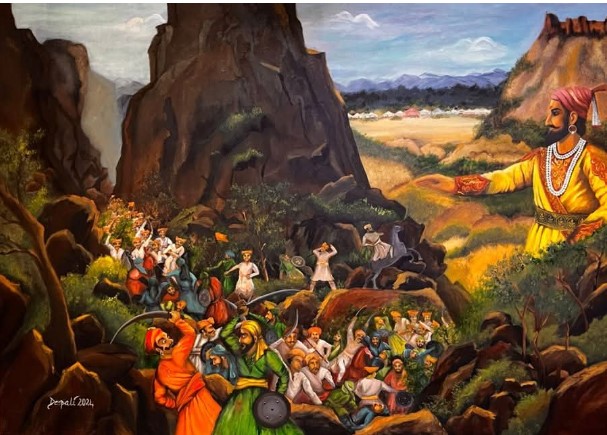
January 5, 1671, is considered a monumental day in the history of Swarajya as it was on this day that Chhatrapati Shivaji Maharaj’s forces captured Salher Fort, wresting it from three-decade-long Mughal control during the Baglan (near Nashik, Maharashtra) campaign. The fall of Salher sent shockwaves all the way to the Mughal court in Delhi, resulting in one of the most significant confrontations of the era, the Battle of Salher in February 1672. On the night of 4 January, 1671, believing the mountain itself was their shield, on Salher’s black cliffs, the Mughal garrison went to sleep. By sunrise the next day, Maratha saffron was flying over the same walls the Mughals had trusted for 30 long years. How did the Marathas capture this fort? This story is an answer to this question.

Salher Fort | Image Source: Sahasa
Chapter 1: Isolate Salher
Maratha commanders Prataprao Gujar, Anandrao Makaji, and Moropant Pingle first went after the forts that fed and protected Salher, Aundha, Patta, Trimbak, and other Mughal posts around Baglan. Each captured fort cut a road, broke a supply line, or removed a lookout, leaving Salher more isolated even as its flags still flew.
Moving with 15,000–20,000 men through the rugged Sahyadris, Maratha contingents harassed Mughal patrols, intercepted messages by the time they turned their full attention to Salher. They ensured that Salher, which was guarded by Fathullah Khan, could expect little help from outside.
Chapter 2: Mission Salher: Surprise was Their Strategy in Darkness
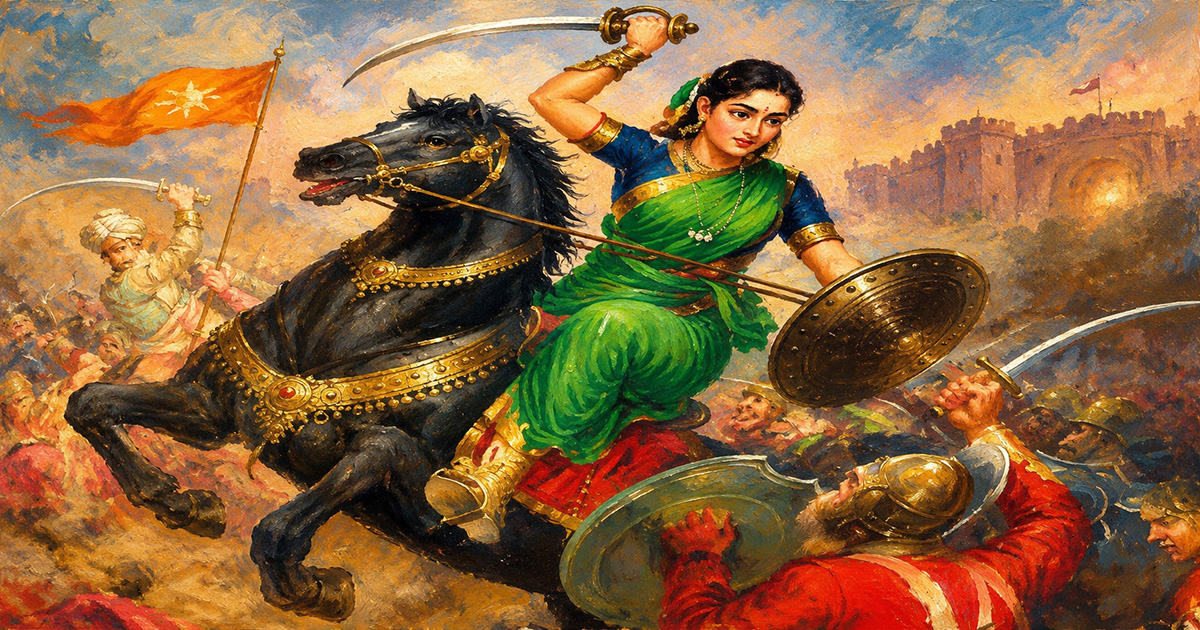
In the last hours of the night before 5 January 1671, small groups of Maratha warriors began to climb the fort. Using rope ladders on the steepest and least-guarded faces of the fort, they inched up the rock in darkness, trusting local guides, muscle memory, and the knowledge that surprise was their only real ally against a numerically strong Mughal Army.
By the time the first Mughal soldiers sensed movement, it was too late. Instead of meeting the attackers at the base, they found them already spilling over the walls, turning the secure interior of the fort into a battlefield.
A fierce fight erupted inside the fort, with Fathullah Khan being killed in combat. With no one to lead after Fathullah Khan’s death, the Mughal defenders faltered. His brother-in-law, who was in charge, chose to surrender the fort to the Marathas as he had no hope for help or victory.
Chapter 3: A Mountain that Changed Masters
When the sun finally rose over Baglan on 5 January, an orange flag was flying high. That single night’s operation sent shockwaves all the way to Aurangzeb’s court in Delhi, setting the stage for the massive Mughal counter-attack, and this led to the open-field Battle of Salher.
Why was Salher Important for the Marathas?
For the Mughals, Salher was not just a remote hill fort; it was their northern choke point on Chhatrapati Shivaji Maharaj’s ambitions. From this height, they watched caravans, taxed traders, and blocked Maratha movement toward the rich belts of Khandesh and Gujarat, turning every road north into a risk for Swarajya.

The Battle of Salher | Photo source: Facebook/Archaeological Survey of India
Chhatrapati Shivaji Maharaj understood that as long as Salher remained in Mughal hands, his access to cities like Surat and his expansion into Baglan, strategically located as a major communication route between Gujarat, the Deccan plateau, Khandesh (Tapi river located between Ajantha and Satpuda range), and Nashik, would always be under threat. So, he did not begin with a direct assault on the fort. The capture of Salher opened his access to other parts of Bharat.
.png)


.jpg)