Adas Station Massacre 1942: Ramanbhai Patel’s Martyrdom in the Quit India Movement

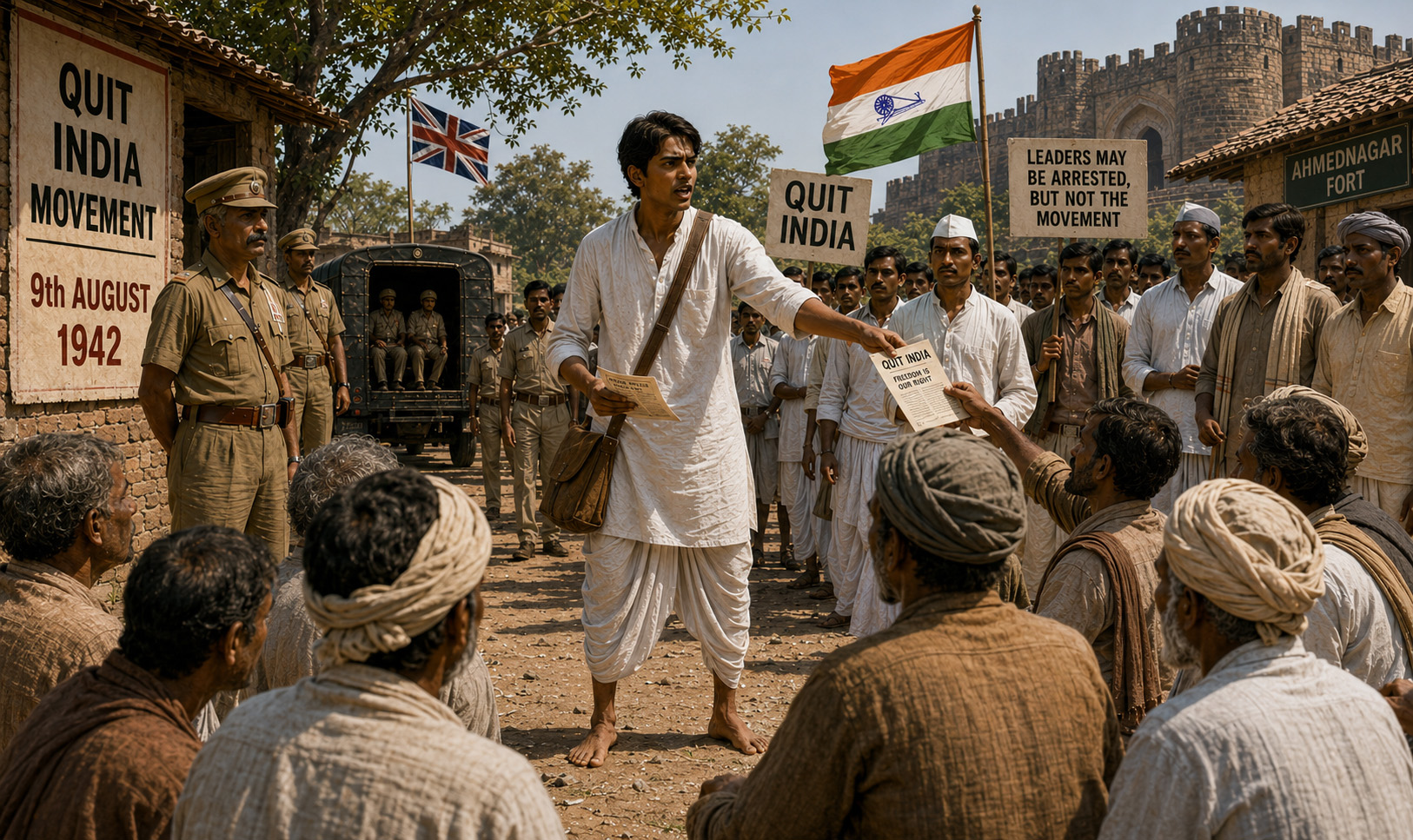
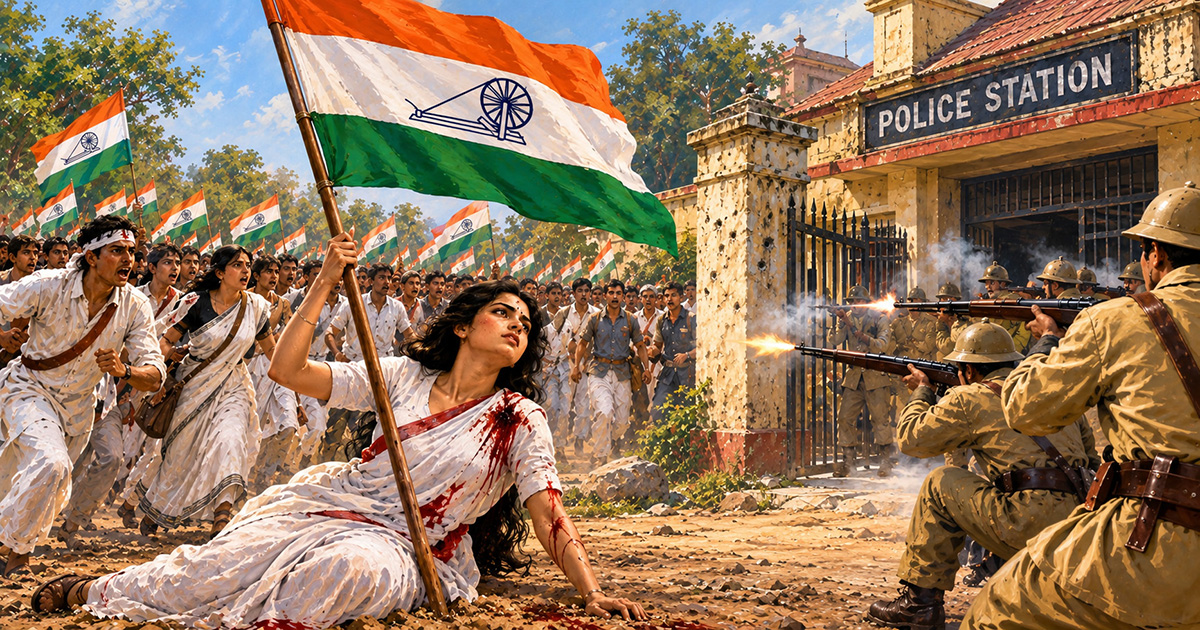
The Adas Station Massacre | This image is AI-generated
On August 9, 1942, the Quit India Movement erupted across Bharat. The British moved swiftly to crush the uprising, and one of their first targets was Sardar Vallabhbhai Patel. The British viewed Patel as one of the movement's key organizers and feared his ability to mobilize mass resistance across the country. Just a day earlier, at Bombay's Gowalia Tank Maidan, he had delivered a powerful speech urging Indians to support civil disobedience and the struggle for complete independence. Anticipating a crackdown, Patel had also helped prepare the movement's organizational framework to continue even if senior leaders were jailed. Considering him a major force behind the campaign, the British arrested him at 5:00 AM and imprisoned him in Ahmednagar Fort.
As news of Patel’s arrest spread, students across Gujarat resolved to carry forward the struggle. Secret groups were formed, underground literature was printed, and the message of Quit India continued to spread despite British repression. As the group of 34 young patriots from Baroda marched from village to village, one figure stood out: Ramanbhai Purshottambhai Patel of Dharmaj. He was not a famous leader, nor a man with weapons, but a student carrying fragile sheets of paper that held the fire of freedom. Before leaving Vadodara, Ramanbhai had spoken quietly to his brother. He said he was joining the freedom struggle and was not sure of his return. If something happened to him, his brother should take care of his one-year-old son. Those words, heavy with foresight, became prophetic. Day after day, Ramanbhai walked barefoot under the scorching sun, distributing pamphlets, urging villagers to rise, and reminding them that the arrest of leaders did not mean the end of the movement. At every stop, he, along with others, distributed pamphlets, urged villagers to defy colonial rule, and reminded them that the arrest of leaders did not mean the end of the movement.
For days, Ramanbhai worked tirelessly, often skipping meals and rest. The risk of arrest followed him everywhere, yet he and the other revolutionaries pressed on, driven by conviction, unity, and the unshakable belief that India’s freedom was worth any sacrifice. By the evening of August 18, 1942, the exhausted students reached the small railway station of Adas, and their feet ached from miles of walking. What they did not know was that the British police had already tracked their movements. Soon, armed policemen surrounded the station. The British police had been tracking them. To the colonial rulers, these students were not patriots; they were “rebels.” The empire feared their words more than bullets.
As Ramanbhai and other revolutionaries continued distributing pamphlets to passengers at Adas, a heavily armed police squad suddenly surrounded the platform. Rifles gleamed under the fading light. The commanding officer barked, “Surrender your literature! Kneel before the Crown!”
But Ramanbhai and his friends did not kneel. They locked arms, forming a human wall of defiance. Their voices rose in unison: “Quit India! Down with British rule!” The order was given. Shots rang out. Bullets tore through the air, piercing the chests of unarmed students.
Ramanbhai fell near the railway tracks, his blood staining the soil of Adas. Four of his companions collapsed beside him, their voices still shouting freedom slogans even as life slipped away. Passengers screamed. Villagers cried out in horror. But the British rifles did not stop. They fired indiscriminately, determined to silence the chants of liberty. It was not a battle. It was a massacre of innocence. The British Empire, armed to the teeth, had murdered unarmed students whose only crime was distributing pamphlets and chanting slogans. The slogans grew louder with every warning. The students looked directly into the barrels of rifles, refusing to bow. Their courage enraged the officer, who saw in their eyes a truth the empire could never erase: that India’s youth had conquered fear.