When Illness of a Fictional Grandmother Moved an Entire Nation to Tears: The Untold Story of India's First Television Serial, "Hum Log"
Broadcast on Doordarshan in 1984, Hum Log was India's first family television serial to portray the joys, struggles, and relationships of an ordinary middle-class household.

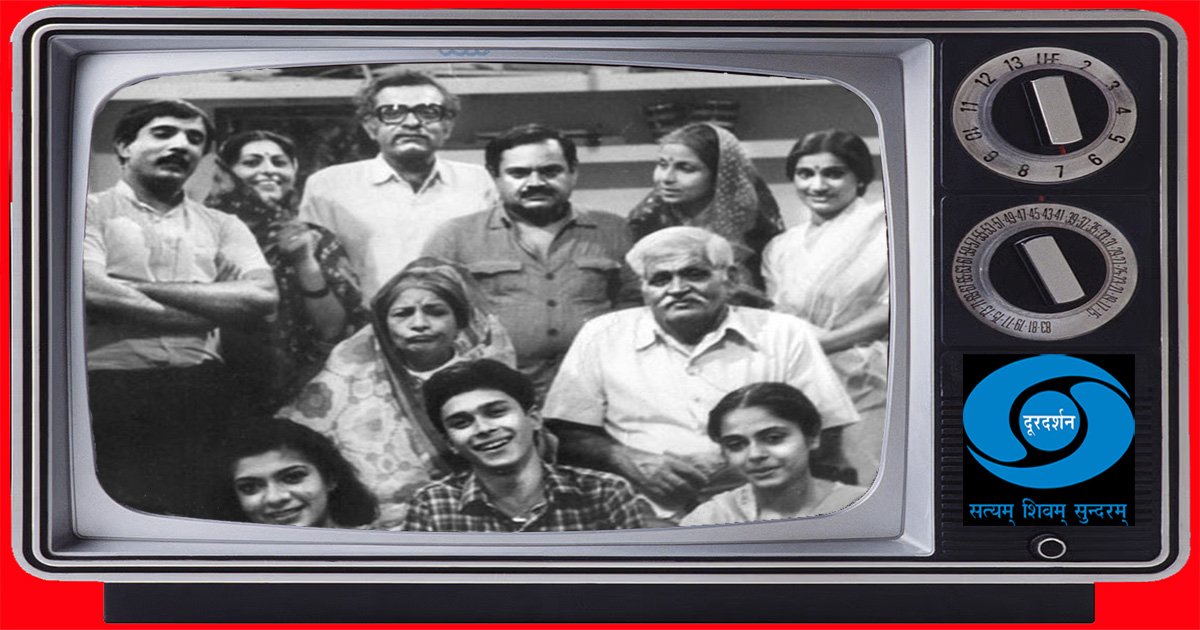
The cast of Doordarshan's show, 'Hum Log' | Image Source: IMDb
Today, when a major actor passes away, the media and social media discuss the news for a few days. People pay tribute, share old memories, and then, with time, life returns to normal. But there was once a time when the illness of a fictional television character left the entire country deeply emotional. People were not merely saddened—they wrote thousands of letters to the show's producers and writer, pleading with them to save the character. The offices of Doordarshan were flooded with letters, and every one of them carried the same request: "Please don't remove Dadi from the story." The character was Dadi Imarti Devi from India's first popular television serial, Hum Log. Actress Sushma Seth brought the role to life with such powerful and heartfelt acting that Dadi became a member of millions of Indian families.
Broadcast on Doordarshan in 1984, Hum Log was India's first family television serial to portray the joys, struggles, and relationships of an ordinary middle-class household. Writer Manohar Shyam Joshi and director P. Kumar Vasudev created every character with such simplicity and realism that viewers saw reflections of their own families on screen.
Among them, the most beloved was Dadi Imarti Devi. She was the eldest and most experienced member of the family, whose advice, affection, and warmth reminded every viewer of their own grandmother. Sushma Seth's natural performance made the character so convincing that Dadi was no longer just someone appearing on television—she became every household's own grandmother. Midway through the serial, the story took a turn that deeply moved the nation.
In one episode, it was revealed that Dadi had cancer. The moment viewers heard the news, they feared that the serial would now portray her illness and eventually end her character by showing her death. At that time, the emotional connection between Hum Log and its audience was so strong that viewers simply could not accept this possibility. As a result, Doordarshan headquarters, the producers, and writer Manohar Shyam Joshi began receiving an overwhelming number of letters. Thousands of viewers appealed to them not to remove Dadi from the story. Many people also expressed their emotions over the telephone. There was no social media and no online campaigns in those days.
Yet, through nothing more than handwritten letters, viewers proved that Dadi was not a fictional character to them, but an elderly member of their own family. This unprecedented response demonstrated that Hum Log was far more than an entertainment programme. It had become a part of people's lives. Children saw their own grandmothers in Dadi.
Young people regarded her advice as the wisdom of life. The elderly saw their own reflection in her character. That is why, when her illness was shown in the serial, viewers did not see it merely as a part of the script—they experienced it as the suffering of someone from their own family. Perhaps for the first time in the history of Indian television, audiences responded in such overwhelming numbers to the fate of a fictional character and conveyed their emotions directly to the creators. The character of Dadi Imarti Devi eventually became the greatest identity of the serial.
A total of 156 episodes of Hum Log were broadcast. Through her remarkable performance, Sushma Seth gave the character an unforgettable identity. When the serial ended on 17 December 1985, many viewers even staged protests to express their emotional attachment to the show. In those days, Hum Log was watched by nearly 50 million people. Its impact was so profound that Sushma Seth was later widely regarded as the ideal choice for portraying mothers, grandmothers, and elderly matriarchs in Indian films.
Hum Log proved that television was not merely a medium of entertainment—it could also become a powerful force that connected the emotions of society. At a time when there was neither the internet nor social media, viewers made their voices heard solely through letters, proving that even a fictional character could become an inseparable part of people's lives. The storyline surrounding Dadi's cancer wrote a unique chapter in the history of Indian television—when the illness of a fictional character brought an entire nation to tears.
That is why, even four decades later, Hum Log and its beloved Dadi remain immortal memories of the golden era of Indian television—memories that time can never fade.