'Penang 20': The Secret Mission of the Indian National Army for Which 21-Year-Old Satyendra Chandra Bardhan Went to the Gallows Smiling
Three young Indian revolutionaries—Satyendra Chandra Bardhan, Abdul Qadir, and Fauja Singh—were brought to the gallows one by one.


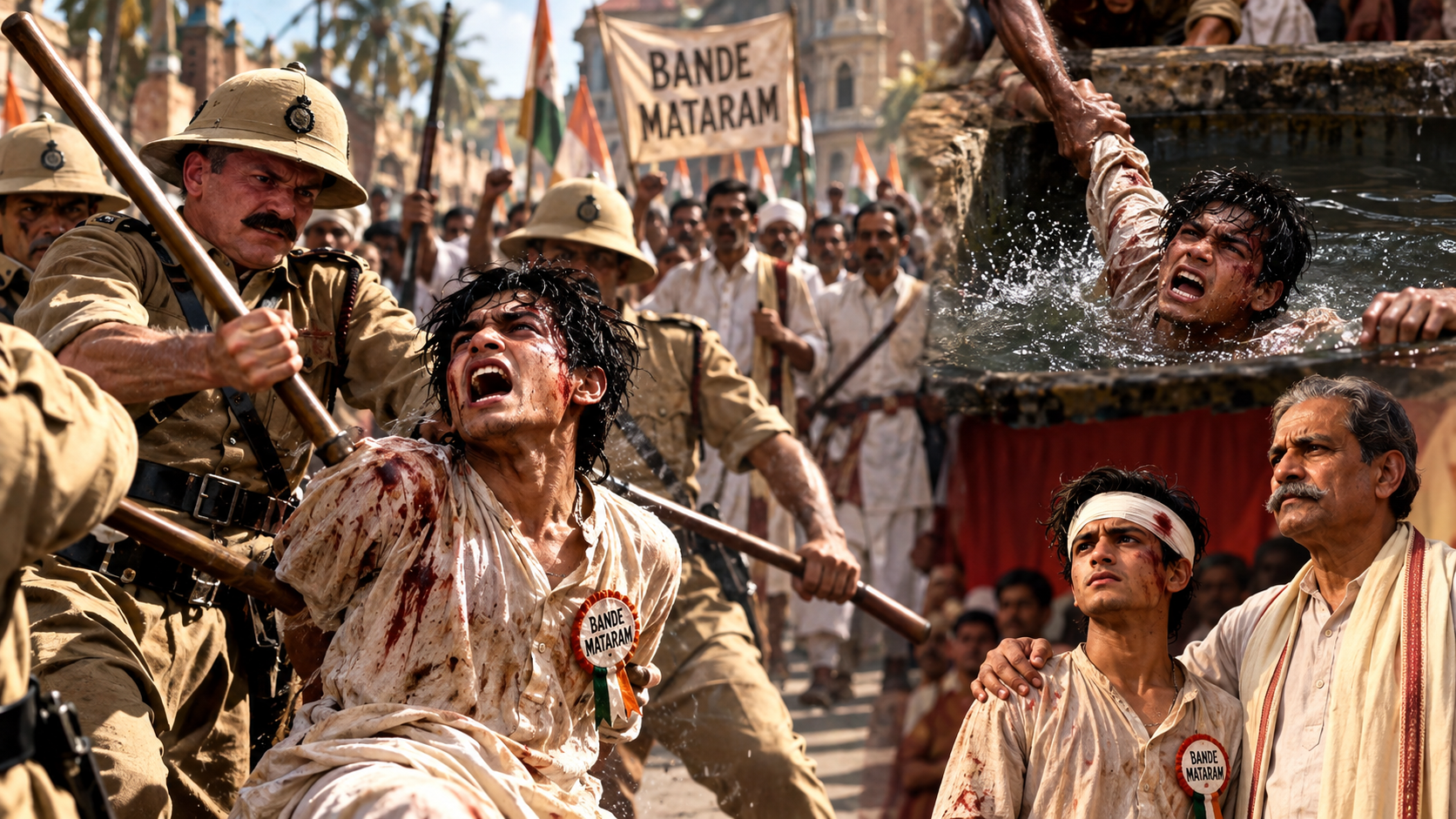
Satyendra Chandra Bardhan | This image is AI-generated
10 September 1943, Madras Central Jail (present-day Chennai). It was morning. The British prison authorities had completed all preparations for the execution. Within a short while, three young Indian revolutionaries—Satyendra Chandra Bardhan, Abdul Qadir, and Fauja Singh—were brought to the gallows one by one. Among them, the youngest was 21-year-old Satyendra Chandra Bardhan. When asked about his final wish, he made no personal request. Instead, he loudly proclaimed "Vande Mataram" and "Bharat Mata Ki Jai." Moments later, all three were hanged.
In the eyes of the British Government, they were not patriots but "enemy agents" under the Enemy Agents Ordinance, 1943, who had been sent by Japan and the Indian National Army (INA) to weaken British rule in India from within. But the story of these three men did not end at the gallows. They were part of the covert operation that history remembers as "Penang 20."
The story begins on 15 February 1942. On that day, the Japanese Army captured Singapore. In the battle, nearly 80,000 British, Australian, and Indian soldiers became prisoners of war, including about 45,000 Indian soldiers.
Among these Indian prisoners was Captain Mohan Singh of the 1st Battalion, 14th Punjab Regiment of the British Indian Army. Mohan Singh believed that if these Indian soldiers were organised not for the British but for India's freedom, a national army could be created. With the support of Major Iwaichi Fujiwara, a Japanese intelligence officer, he began organising the Indian prisoners of war, and in September 1942, the first Indian National Army (INA) was established. However, due to differences with the Japanese military leadership, this first INA had become almost inactive by December 1942.
Thereafter, on 4 July 1943, Netaji Subhas Chandra Bose arrived in Singapore, assumed leadership of the Indian National Army (INA), and on 5 July 1943, reorganised it as the Azad Hind Fauj (INA).
For this purpose, during the first half of 1942, Penang Island in Malaya (present-day Malaysia) was developed into a secret training centre. Following the fall of Singapore, between March and August 1942, nearly 20 Indian youths were selected at the Azad Hind School in Penang under the supervision of the Japanese military intelligence organisation, Fujiwara Kikan (F-Kikan). This group later became famous in history as the "Penang 20." Among them were Satyendra Chandra Bardhan, Vakkam Abdul Khader, Fauja Singh, Anandan, Boniface Perera, and C. G. K. Reddy. Their objective was to establish a secret intelligence network inside India.
For several months, these young men were trained not as ordinary soldiers but as secret intelligence agents. They were taught how to operate wireless transmitters, use Morse code, cipher codes, read maps, identify sea routes, use explosives on a limited scale, send secret messages, evade British surveillance, live under false identities, and gather intelligence.
During training, even the true identities of the agents were known only to a handful of people. The agents were never given complete information about the entire network. Thereafter, between the last week of September 1942 and the last week of October 1942, the first 20 Penang agents were sent to India in three separate groups.
Two of these groups travelled by Japanese submarines through the sea route, while the third entered India on foot through the Arakan (present-day Myanmar)–Imphal route.
The first group landed on the night of 27 September 1942 near Tanur on the Malabar Coast (present-day Kerala) using rubber boats. It included Vakkam Abdul Khader, Anandan, and three of their companions. The second group, which included Satyendra Chandra Bardhan, landed near the Okha–Dwarka coast in Kathiawar (present-day Gujarat). Rubber boats were launched nearly five miles (about eight kilometres) from the submarine into the sea. After battling the waves throughout the night, they finally reached the Indian coast.
The third group, which included Fauja Singh and other agents, was to enter India through the Arakan–Manipur border. After reaching India, these agents were to spread across Bengal, Odisha, Madras, Bombay (now Mumbai), Karachi, and various parts of the western coast.
Their first task was to identify individuals within the Indian Army, the Railways, the Posts and Telegraph Department, ports, and among local revolutionaries dissatisfied with British rule. Thereafter, they were to establish small secret centres and regularly transmit intelligence to the INA Headquarters in Southeast Asia through wireless transmitters. This intelligence included information on British troop movements, naval activities, the condition of airfields, railway routes, weapons supplies, and military installations. This was not merely a spying operation.
Netaji's ultimate strategy was that when the INA entered India through the northeastern frontier, particularly via Manipur and Assam, this pre-established underground network would simultaneously disrupt railway lines, telegraph communications, military logistics, and the British administrative machinery.
At the same time, Indian soldiers sympathetic to the cause were to be encouraged to revolt. The mission was implemented during the final months of 1942 and the beginning of 1943. The agents were landed in small groups along the Indian coastline by submarine and small boat. Some groups were to enter through the Odisha coast, others through the Malabar coast, and still others through the eastern coastal regions.
The orders were clear: Every agent would move in a different direction. No agent would know the complete contact network of another group. However, the British intelligence agencies—particularly the Intelligence Bureau (IB), Criminal Investigation Department (CID), and Military Intelligence—were already on high alert.
The British feared that if the Penang 20 succeeded in establishing its network, it could create a large-scale armed underground movement (spy ring) against British rule throughout India. As a result, many agents were arrested immediately after reaching India.
Several wireless sets, coded documents, and contact signals also fell into British hands. The British Government did not treat the case as an ordinary criminal trial. At the time, the Second World War (1939–1945) was underway, and Britain was at war with Japan. Accordingly, the arrested agents were charged under the Enemy Agents Ordinance, 1943, as well as Section 121 of the Indian Penal Code (waging war against the King), along with several other serious offences.
The British prosecution argued that these men had entered India with Japanese assistance to wage a secret war against the British Empire. The trial was conducted swiftly, and the opportunities for defence were extremely limited. Ultimately, the court sentenced Satyendra Chandra Bardhan, Abdul Qadir, and Fauja Singh to death.
On 10 September 1943, all three were hanged at Madras Central Jail. Several other agents associated with the same operation received life imprisonment and other severe punishments. The Penang 20 did not succeed in achieving its declared objective. However, the mission demonstrated that the Indian National Army was not merely a fighting force on the battlefield. It was also working on the strategies of modern intelligence warfare, communication networks, and organised internal resistance against British rule.