The Night Muzaffarabad Fell: Krishna Mehta’s Escape from the Black Day of Kashmir
Pashtun tribal lashkars had crossed the border from Pakistan into Jammu and Kashmir, initiating an invasion that would leave the Muzaffarabad region devastated.

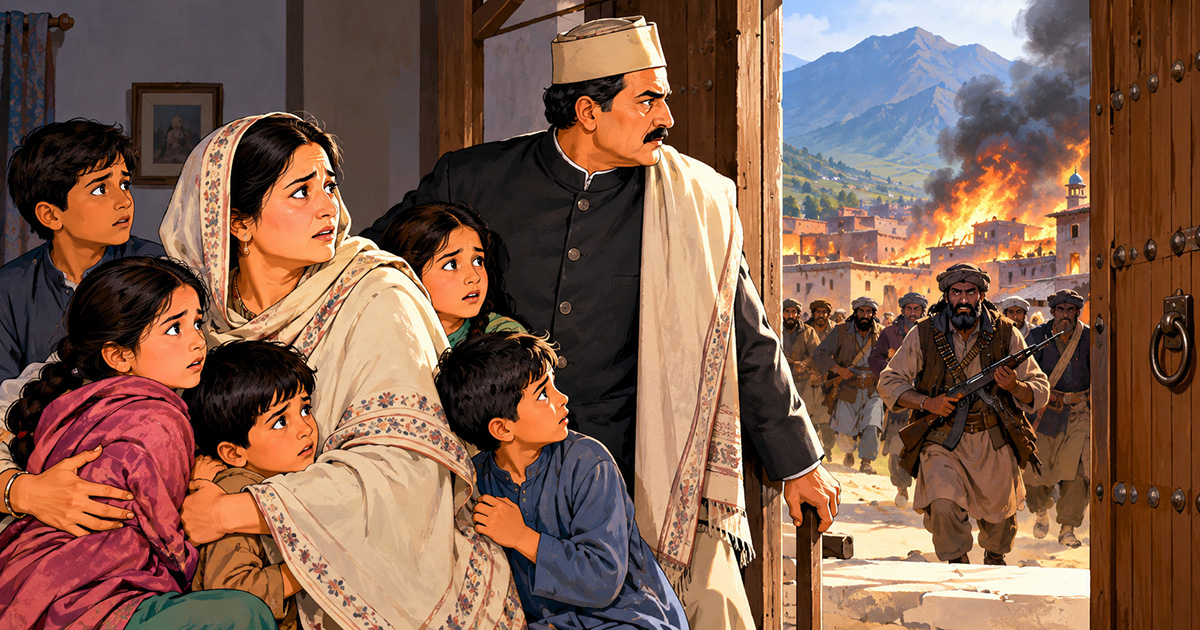
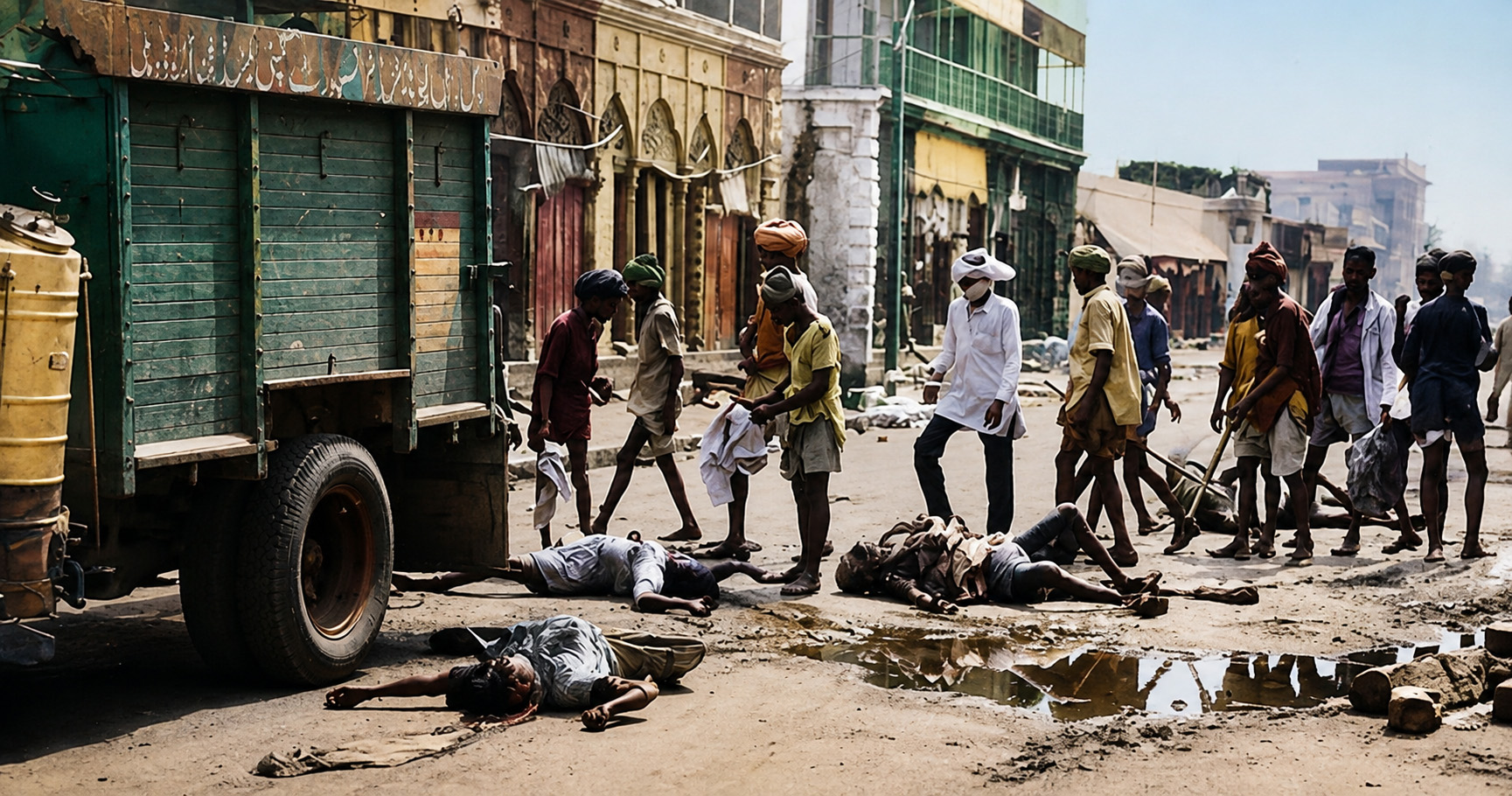
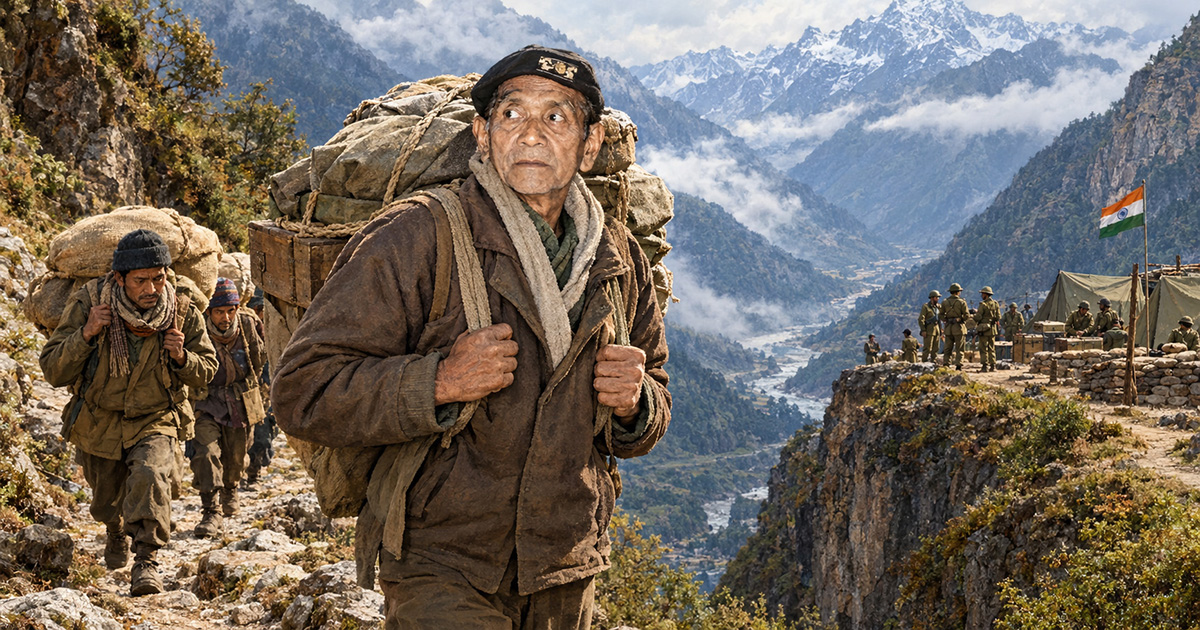
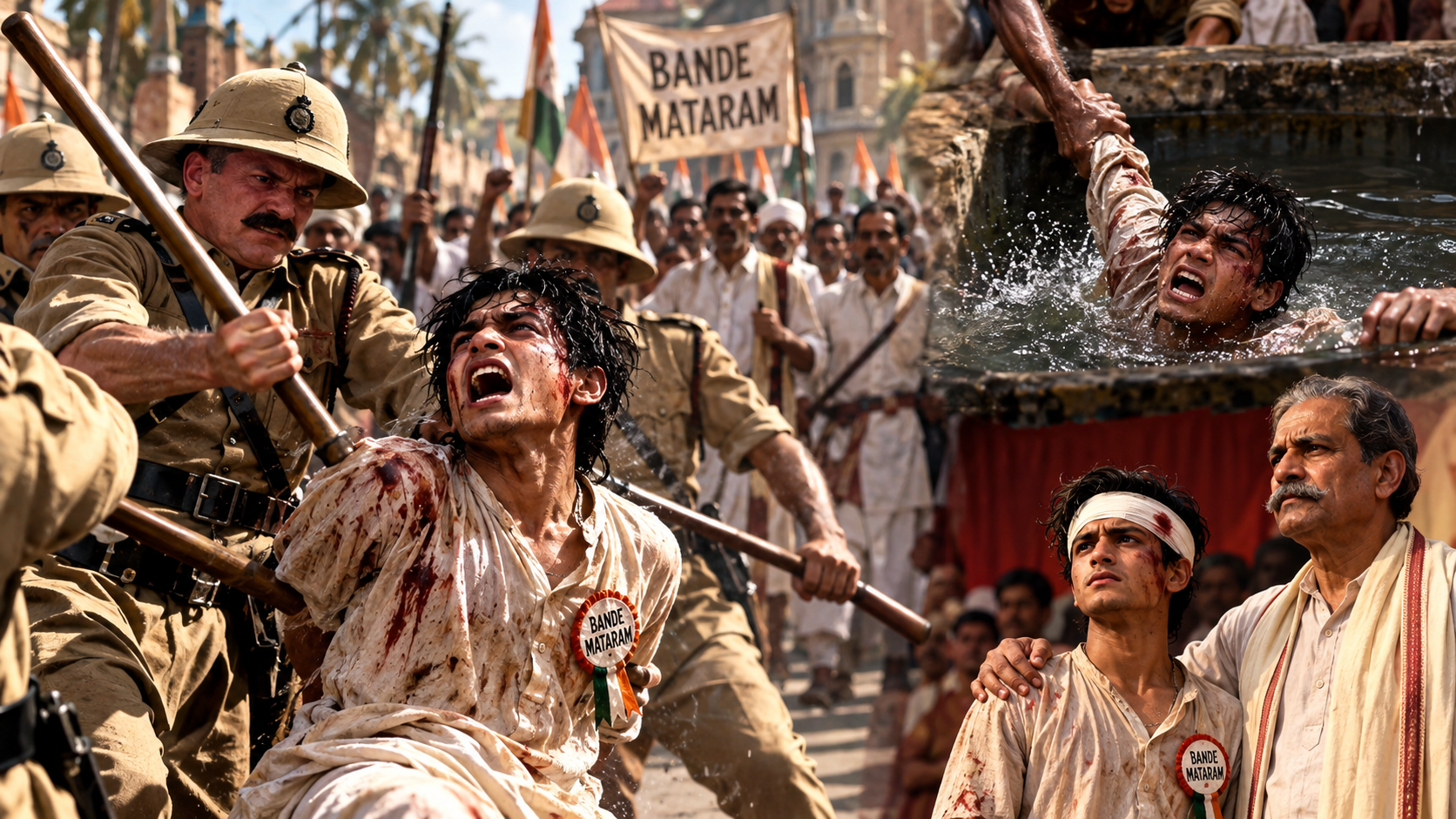
The black day for Krishna Mehta | This image is AI-generated
On October 22, 1947, Muzaffarabad (currently in POJK) was still unaware of the horrific events that were about to unfold. Pashtun tribal lashkars had crossed the border from Pakistan into Jammu and Kashmir, initiating an invasion that would leave the region devastated. Muzaffarabad would soon witness houses burning, families fleeing, and people dying. However, for Krishna Mehta, history would make its first appearance, not in the form of an attack or even a military action. Instead, it would come knocking on the doors of her home, threatening the lives of Krishna Mehta and her six children.
Krishna Mehta was living in Muzaffarabad with her husband, Duni Chand Mehta, the Wazir-e-Wazarat, or the most senior executive authority in the region. However, the blissful evening turned into a horrific moment as the news of the impending attack by the Pashtun Muslim invaders reached the district. For Duni Chand Mehta, it was his responsibility as the most senior administrator that made him stay back to address the needs of the helpless and fearful residents of Muzaffarabad. He could not leave them when the whole district was in chaos, and the enemy was at the gates.
It was a decision that ultimately cost his life and his family. When the Pashtun Muslim invaders stormed the district, the administrative machinery was paralysed, and the Mehta family was caught in the crossfire. The Pashtuns confronted Duni Chand Mehta and demanded that he convert to Islam and give up his powers as the district officer. But Duni Chand Mehta firmly refused to abandon his dharma in exchange for his life. He was eventually shot dead by the Pashtun Muslim extremists. In a matter of hours, Krishna Mehta went from being a privileged wife of the region’s chief executive to a bereaved widow with six children to look after.
She had no time to grieve. Krishna Mehta gathered her children and began her perilous journey, searching for safe shelter. They went from door to door in the town, but none would open their homes to a family of six. The town had become unsafe, and the people living there were scared. The house where the family had lived for years had become a site of horror. The husband and father of the family had been murdered. All that was left was for Krishna Mehta to protect her children and ensure they had food to eat and water to drink. She remembered this period as one when she and her children had wandered from one uncertain shelter to another, always pursued by the enemy.
However, their luck ran out, and Krishna Mehta and her six children were captured by the lashkars. Their ordeal, which had seemed like a perpetual flight from one place to another, came to an abrupt halt. They were now held hostage. Krishna Mehta had lost her husband, her home, and now, even her freedom. Krishna Mehta and her six children were captured by the lashkars and taken into captivity. They were moved from one place to another under the control of their captors, with Krishna constantly fearing for the safety of her children and facing repeated pressure to convert to Islam. During this period, she encountered other Hindu and Sikh families who had also been caught in the violence and displacement sweeping across the region.
It was in these camps that Krishna Mehta realized the scale of the disaster that had befallen the region. Her own memoir, “This Happened in Kashmir”, published in 1984 and later reprinted as ‘Kashmir 1947: A Survivor’s Story’, is a firsthand account of the genocide of innocent Hindu and Sikh families that was taking place in the region. It was a genocide that saw women and children abducted, forcefully converted into Islam, and made to endure unspeakable atrocities. The memoir recounts the horrors Krishna Mehta witnessed herself, including non-Muslim women being forced to recite the kalma to moulvis.
Krishna Mehta also spoke of the Domel veterinary hospital, which had taken in hundreds of Hindu families. When the lashkars reached Domel, the women, facing the prospect of abduction and dishonor, took to the Domel Bridge and threw themselves into the river below. At the Dutiyal camp, she spoke of other Hindu and Sikh women, who, along with their children, had been kidnapped and forced to live as wives of their kidnappers. These were experiences that stuck with her, but she had lived through them. These were people who had shared the same terror as her children and herself.
Even as her own life was in danger, Krishna Mehta refused to give up. There were many threats she had to contend with, not the least of which was losing her faith. She was constantly told to convert to Islam. However, despite the threats to her life and her beliefs, she continued to bolster the morale of the other Hindu and Sikh women in the camp.
Finally, Krishna Mehta and her children’s time in captivity came to an end when the Indian army, on the morning of 27 October 1947, the day after the Instrument of Accession was accepted, began its advance on the lashkar positions, forcing them to withdraw. It was now safe for Krishna Mehta and the other Hindu and Sikh residents of Muzaffarabad to begin their journey to India. After months of wandering, they finally reached the Kurukshetra refugee camp.
When Krishna Mehta reached Kurukshetra camp, all she thought about was her own plight. She had lost her husband, her home, and her freedom. However, upon reaching the camp, she was faced with the sight of numerous other women and children who had suffered at the hands of the attackers. She quickly rallied to their aid, helping them settle down. The woman who had survived the horrors of captivity was now determined to help those around her, trying to make their lives as comfortable as possible.
Years later, in 1962, Krishna Mehta, who served as the first female Member of Parliament from Jammu and Kashmir ( Rajya Sabha ), would always remember the face of a woman who had lost her husband and escaped from death. The memories would forever be etched in her mind, along with the countless widows and orphans who had endured untold hardships and upheaval.