Beaten, Thrown Into Water Tank… Yet Young Revolutionary Chittaranjan Guha Defied the British with ‘Bande Mataram’
In April 1906, a young Bengali student was beaten by British police. Yet, he did not once beg the police to stop. He did not fight back either. All he did was shout the same two words, “Bande Mataram.”

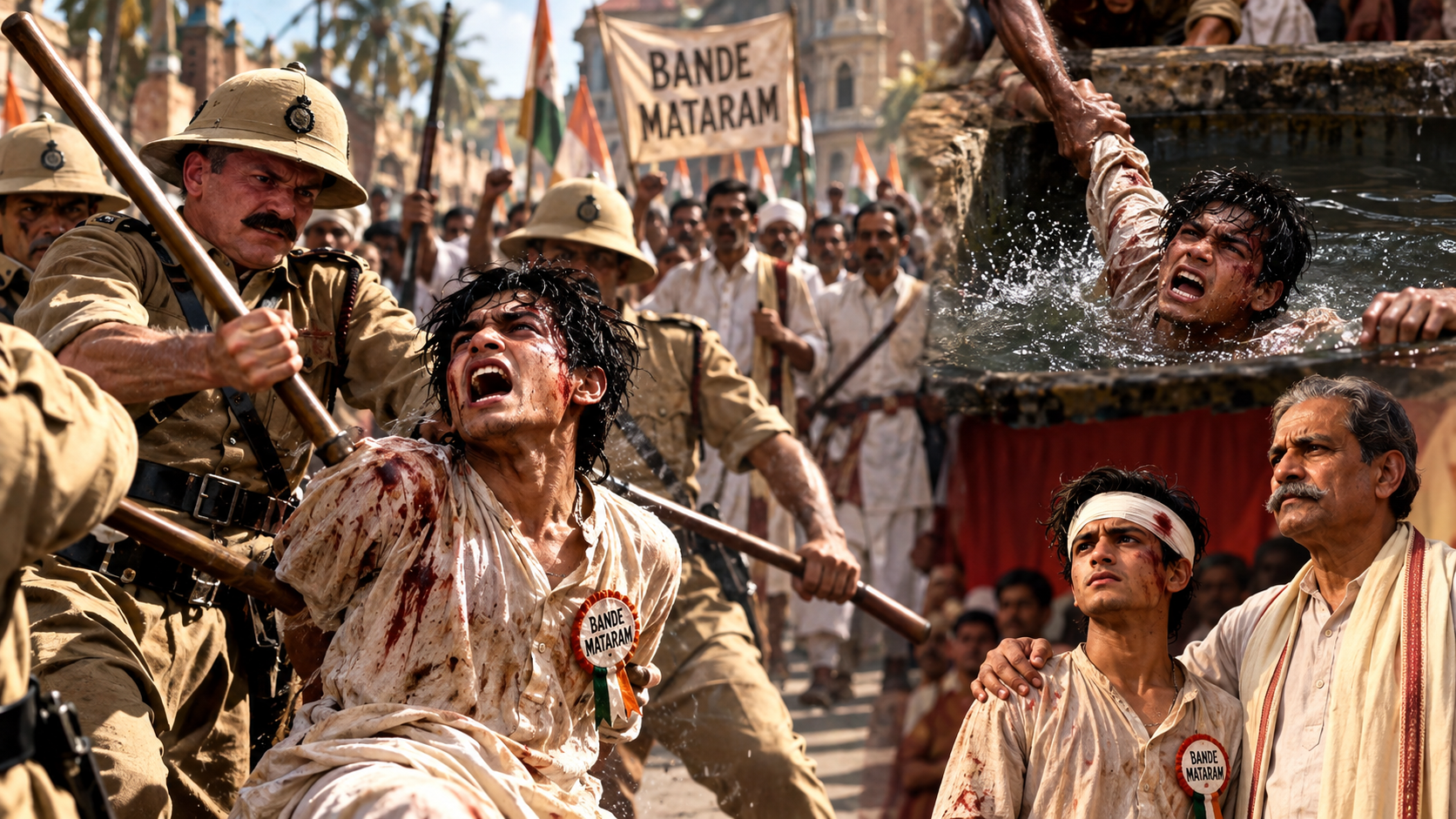
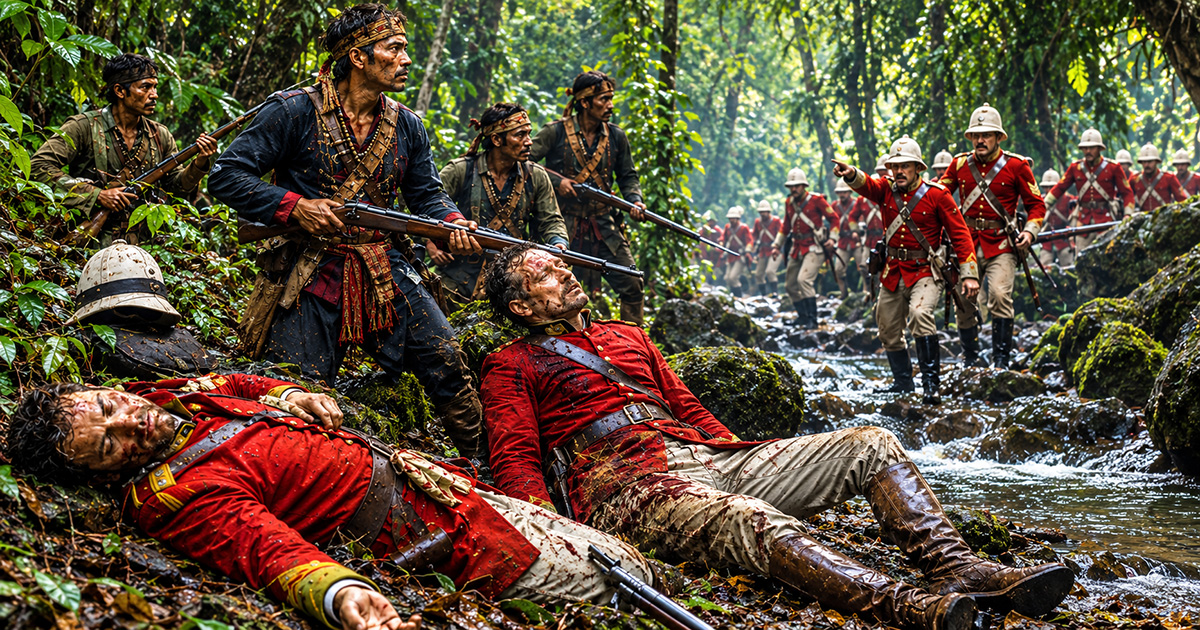
Chittaranjan Guha, beaten, thrown into a well by British officials | This image is AI-generated
In April 1906, a young Bengali student was beaten by British police. Yet, he did not once beg the police to stop. He did not fight back either. Instead, every time the lathi came down on his body, he shouted the same two words — “Bande Mataram.” The atrocities did not stop here. He was then thrown into a water-filled tank and left struggling for his life. But even after being pulled out, the words that came out of his mouth were “Bande Mataram”. This young man was Chittaranjan Guha, the person behind Bengal's Swadeshi movement.
To understand why those two words mattered so much to a young student in 1906, one has to go back to the storm that had engulfed Bengal after the Partition of 1905. Lord Curzon's decision to divide Bengal had triggered widespread anger across the province. What began as resentment soon developed into the Swadeshi and Boycott movements. Indians pledged to reject foreign goods, support indigenous industries and challenge colonial policies through meetings, processions and public mobilisation. At the centre of this awakening was Bande Mataram, invoked by Bankim Chandra Chatterjee for Bharat, which later transformed into the rallying cry of the nationalist movement.
The British administration quickly understood the power of the slogan. In Eastern Bengal and Assam, the colonial authorities attempted to prevent people from shouting “Bande Mataram” on public streets. Restrictions were imposed through what came to be known as the “Bande Mataram Circular”. But nationalist leaders refused to accept. Legal experts argued that the colonial government had no lawful basis to prohibit the slogan.
In April 1906, the movement reached a decisive moment. At the Barisal Provincial Conference, Nationalist leaders resolved that the delegates would exercise their legal right to chant “Bande Mataram” during the official procession through the streets of Barisal. Yet they were equally determined that the demonstration would remain peaceful. Most importantly, they were told not to retaliate if the police attacked them.
Among the young revolutionaries accompanying the procession were members of the Anti-Circular Society, a student organisation that had emerged in opposition to government efforts to keep students away from nationalist politics. One of them was Chittaranjan Guha, the young son of Monoranjan Guha, a well-known Swadeshi worker and powerful speaker.
On the afternoon of April 14, 1906, the procession began its march from the compound of Raja's Haveli towards the conference pandal. Senior leaders proceeded at the front, while the young members of the Anti-Circular Society brought up the rear. Everything remained peaceful. However, the police presence was unusually heavy. Officers were armed with lathis, and an Assistant Superintendent of Police was on horseback.
As the revolutionaries proceeded, the older delegates were allowed to pass without being attacked. However, when the young revolutionaries made their way, they were charged at.
Without any warning, they attacked the young men at the rear of the procession. The students were beaten, and their Bande Mataram badges were forcibly torn off their clothes. Chittaranjan Guha was among those caught in the assault. The young student was struck repeatedly with lathis. In the chaos of the attack, he was knocked into a nearby tank filled with water. For a moment, his body disappeared beneath the surface. He was stunned and was in danger of drowning before fellow delegates managed to pull him out.
But the beating had not broken him. The young men had been ordered not to retaliate, and Chittaranjan followed that instruction. He did not attack the policemen. He did not raise a weapon against them. Instead, he answered the violence in the only way he could.
He shouted “Bande Mataram.” Every blow intended to silence him was met with the same cry. The incident led to the halting of the procession.
Later that day, when the conference resumed, Chittaranjan's father brought him onto the platform. The young revolutionary stood before the gathering with his head wrapped in a bandage, the marks of the police assault still visible on his body. Beside him stood Monoranjan Guha, who recounted the ordeal his son had endured.
For those gathered at Barisal, the sight was difficult to forget. Here was a young student who had been beaten and thrown into a water-filled tank simply for taking part in a nationalist procession. Yet despite the violence inflicted upon him, he had refused to surrender the slogan that had become the voice of the Swadeshi movement — “Bande Mataram”.
Later, the image of Chittaranjan standing beside his father became associated with the spirit of the Barisal movement. Artists captured the scene on canvas, and the father and son became powerful symbols of the determination of Bengal's young nationalists.
Chittaranjan Guha's story is therefore not the story of a revolutionary who fought the British with a gun or a bomb. It is the story of a young man who faced colonial violence without retaliating and chose instead to make his voice his weapon.
And that was precisely the spirit the British administration was struggling to defeat.
Disclaimer: The information given in this story has been taken from the book, “A Nation in Making”, authored by Surendranath Banerjee.