The Battle for Hindi in British Courts: How Madan Mohan Malaviya Fought to Change the Rules in 1900
Among the lawyers in those Allahabad courtrooms was a young man who was beginning to notice this divide. His name was Madan Mohan Malaviya.

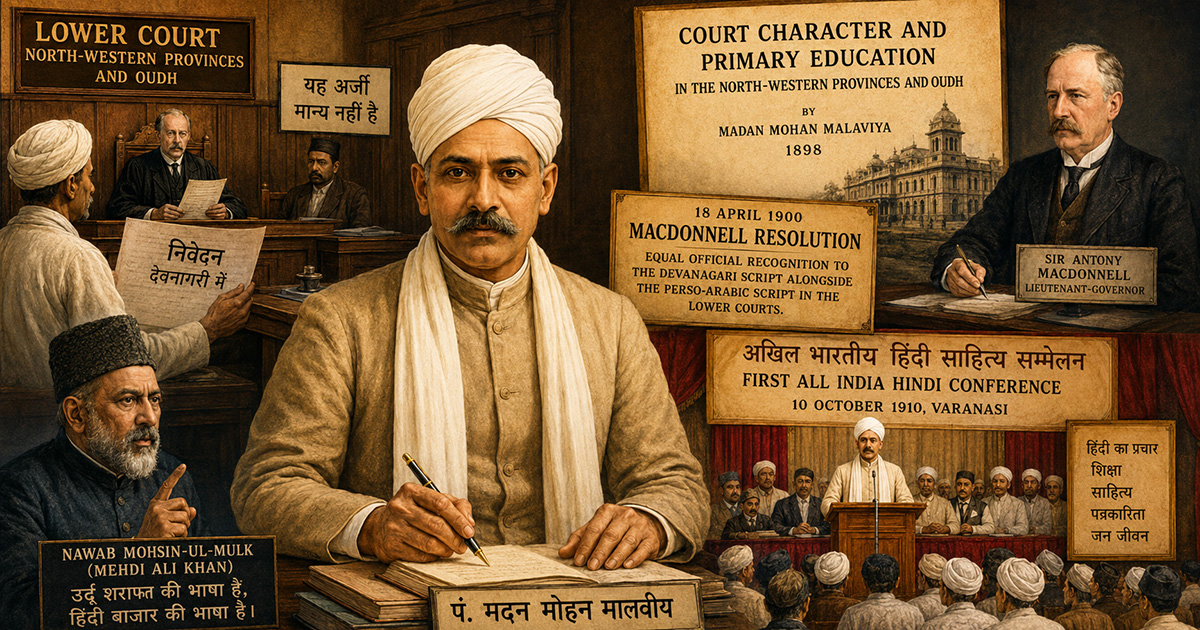
Madan Mohan Malaviya, the man who brought Hindi in British-era courts | This image is AI-generated
A Hindi-speaking farmer from a village in the North-Western Provinces walked into a district courtroom carrying the papers of the land his family had cultivated for years. He had come to defend his family land against an illegal rent hike and an eviction attempt by a wealthy landlord. But the papers before him were written in Urdu in the Persian script—a script he could not read. He could only speak Hindi and write in Devanagari. To put his case before the court, he was forced to hire a court petition writer (katib or munshi) outside the courtroom. He explained his side in the language he knew, while the scribe listened, nodded and wrote his petition in Persianized Urdu in the Nastaliq script.
The farmer trusted the scribe and, unable to read the document, placed his thumbprint where he was told. But the corrupt scribe, allegedly bribed by the wealthy landlord's agents, had written the opposite of what the farmer had said. When the judge read the Persian-script document, it appeared that the farmer had accepted the landlord's demands and could not pay the rent. His case was immediately dismissed, and his family was legally evicted from their ancestral land based on a “confession” he had never actually made.
Among the lawyers in those Allahabad courtrooms was a young man who was beginning to notice this divide. His name was Madan Mohan Malaviya. Practising law in Allahabad, he saw poor farmers and villagers come to court seeking justice, only to find themselves trapped by a language and script they could neither read nor write. The problem stayed with him. He refused to accept that this should remain the norm. For months, he immersed himself in colonial government reports, education surveys and administrative records, looking closely at the contradiction he saw in British policy: while government schools increasingly taught children through the Devanagari script, the lower administration and courts continued to function largely through Persian-script Urdu. What began as a problem he encountered in the courtroom soon became a cause he decided to challenge.
Mahamana Pandit Madan Mohan Malaviya | Image Source: Malviya Teacher Training Programme
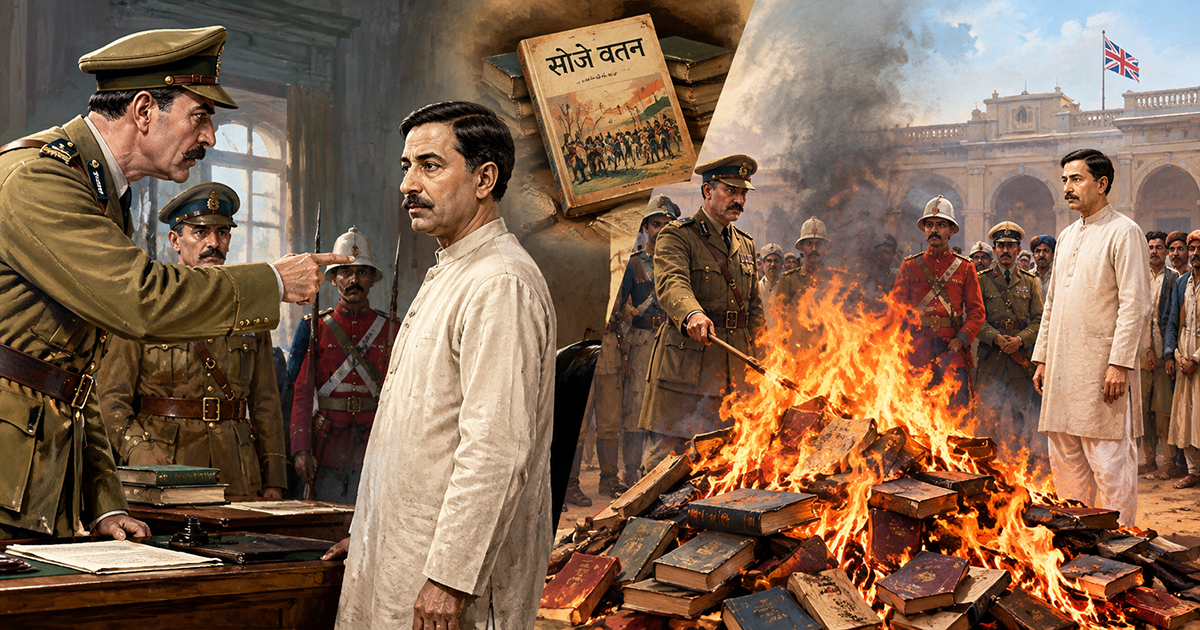
He took that cause beyond the courtroom. After months of research, Malaviya compiled his arguments and evidence in Court Character and Primary Education in the N.W. Provinces & Oudh. In 1898, he led a delegation of scholars and public leaders to present the memorandum to Lieutenant-Governor Sir Antony MacDonnell. The campaign continued for nearly two years. Then, on 18 April 1900, came the breakthrough: MacDonnell issued the landmark MacDonnell Resolution, granting equal official recognition to the Devanagari script alongside the Perso-Arabic script in the lower courts and administration of the North-Western Provinces and Oudh.
But Malaviya knew that changing the rules of the courtroom was only the beginning. If Hindi was to have a lasting place in public life, it needed schools to teach it, writers to develop it, newspapers to spread it and institutions to carry it forward. That vision took another step on 10 October 1910, when Malaviya presided over the First All India Hindi Conference, the Akhil Bharatiya Hindi Sahitya Sammelan, in Varanasi. Nearly 300 delegates and 42 newspaper editors from across British India gathered under his leadership. What began with a battle over the language of the courtroom had grown into a wider movement to promote Hindi through education, literature, journalism and public life.