Why Did Dhanpat Rai Become ‘Premchand’? The British Seized and Burned 500 Copies of His Book
Through his stories, he began giving voice to the poverty, injustice, and suffering he saw around him under British rule.

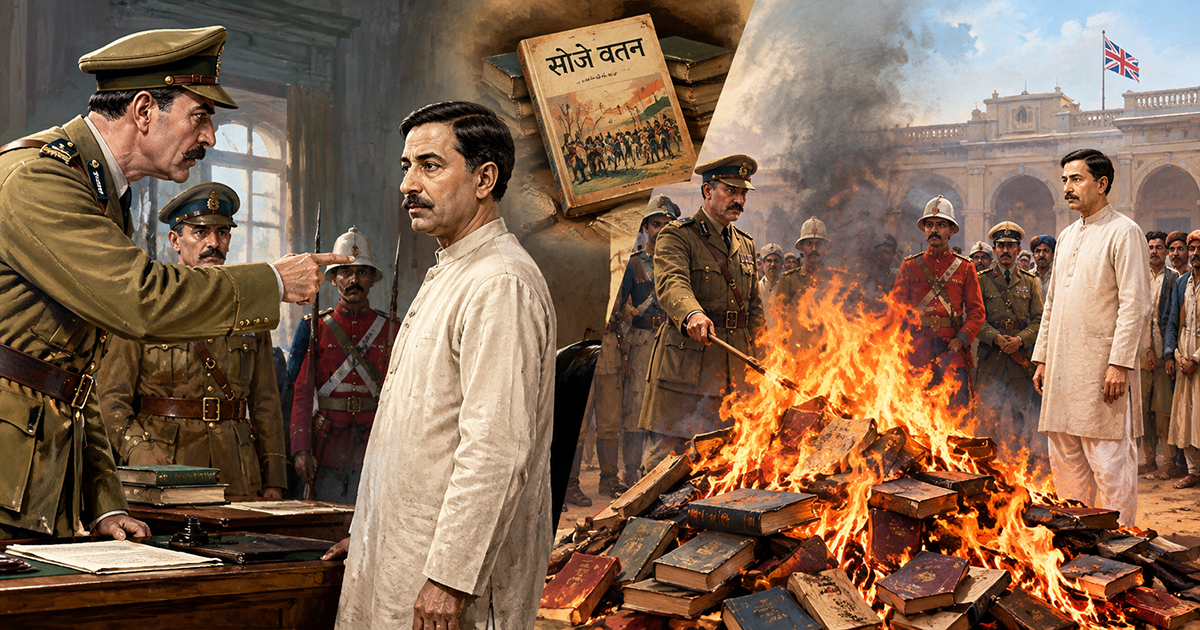
Munshi Premchand's books were burnt by the British | This image is AI-generated
The year was 1909. Dhanpat Rai, working as a sub-inspector in the education department of Hamirpur district in Uttar Pradesh, used to fulfill his government responsibilities throughout the day. However, once the day's official duties ended, the pen in his hand took on a different purpose. Through his stories, he began giving voice to the poverty, injustice, and suffering he saw around him under British rule. Years later, the same Dhanpat Rai would become one of India's most celebrated writers, known to the world as ‘Premchand’. But how did Dhanpat Rai become Premchand?
In the early days of his writing, starting from 1901, Dhanpat Rai used to write stories in Urdu under the pen name 'Nawab Rai'. Later, in 1908, he published his first collection of five stories named 'Soze Watan'. 'Soze Watan' means 'Sorrow of the Nation' or 'Lament of the Nation'. Patriotism, the longing for freedom, and the pain of an enslaved India were very effectively expressed in his stories. It also appealed to Indians to stand up for their motherland. However, this story collection soon caught the attention of British officials.
Considering his stories to be anti-government, the administration decided to take action against Dhanpat Rai. While he was working in Hamirpur in 1909, he was ordered to appear before the District Collector within 24 hours. There, he was questioned about his writings, threatened with having his hands chopped off for rebelling by writing a book, and given a stern warning not to write such material in the future. Not only that, an order was issued to seize about 500 copies of 'Soze Watan' and publicly burn them. This incident proved to be a major blow in Dhanpat Rai's life.
The name 'Nawab Rai' had now come under the radar of the British administration, but there was the unsettling urge to portray the reality of society. Therefore, continuing to write under that name could have been dangerous. At such a time, his close friend and the editor of the magazine 'Zamana', Munshi Dayanarayan Nigam, advised him to adopt a new pen name. Following that, Dhanpat Rai adopted the name 'Premchand'. This was not merely a change of name; a new chapter of his literary journey had begun.
Meanwhile, the Indian independence movement across the country had taken an intense turn. Finally, on June 23, 1921, due to the influence of the Non-Cooperation Movement, Dhanpat Rai decided to resign from his government job. Leaving a secure job was not an easy decision, but the freedom he gained after making that decision allowed him to begin portraying every bitter truth of society through his pen without any hesitation. Now his life was completely and solely dedicated to writing and social work.
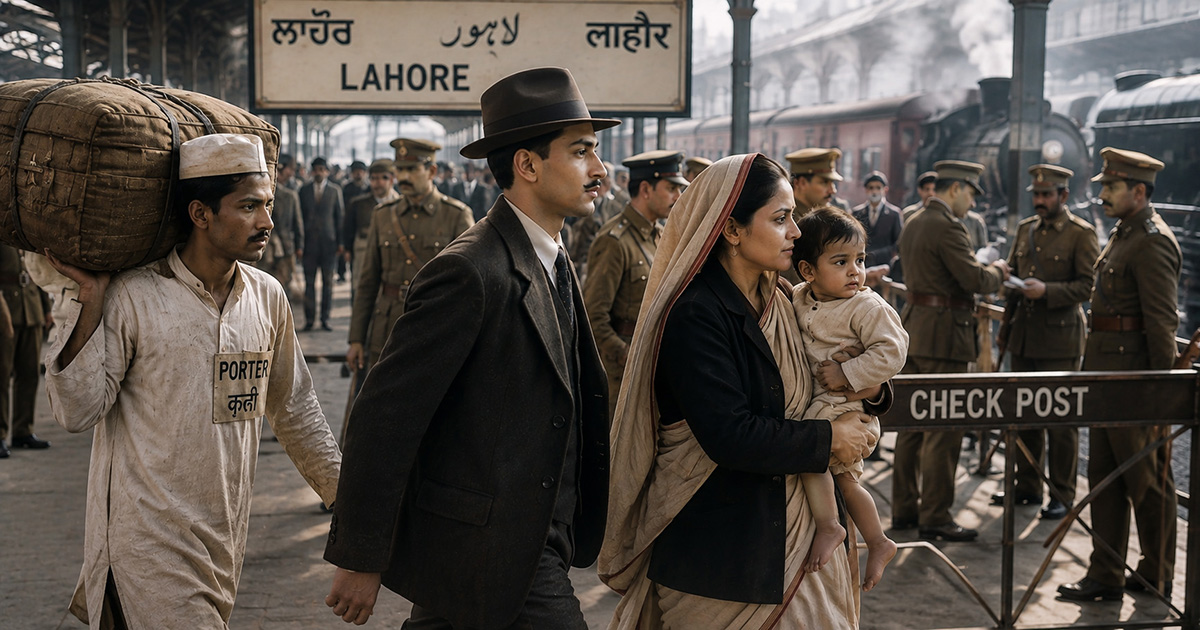
To keep writing without getting caught, Premchand built a secret, underground human courier network. He would write his radical anti-colonial stories on scrap paper and hide them inside ordinary packages of household items. He then had trusted friends travel physically by train to manually deliver the manuscripts to independent publishers in different districts, completely bypassing the heavily monitored British postal system.
Under the name 'Premchand', he very effectively portrayed the pain of the poor, farmers, women, Dalits, and the underprivileged under British rule through his literature. Striking out against the dowry system, the caste system, superstition, and social inequality, he wrote immortal novels such as 'Sevasadan', 'Nirmala', 'Gaban', 'Karmabhumi', and 'Godan', along with about 300 stories. Due to his realistic and socially enlightening writing, he was honored as the 'Emperor of Novels' (Upanyas Samrat) and 'Emperor of Stories' (Katha Samrat).
In this way, the ban imposed by the British government on a story collection and the pen name changed thereafter became immortal forever in the history of Indian literature. The name Dhanpat Rai faded away with the passage of time, but the name 'Premchand' is still respectfully regarded today as a symbol of truth, sensitivity, and social consciousness in the Indian literary world.