Battle of Tarain 1191: How Prithviraj Chauhan Defeated Muhammad Ghori?
The conflict began with the fort of Bhatinda. Ghori had captured this stronghold because it acted as the ultimate military gateway into the heart of North India.

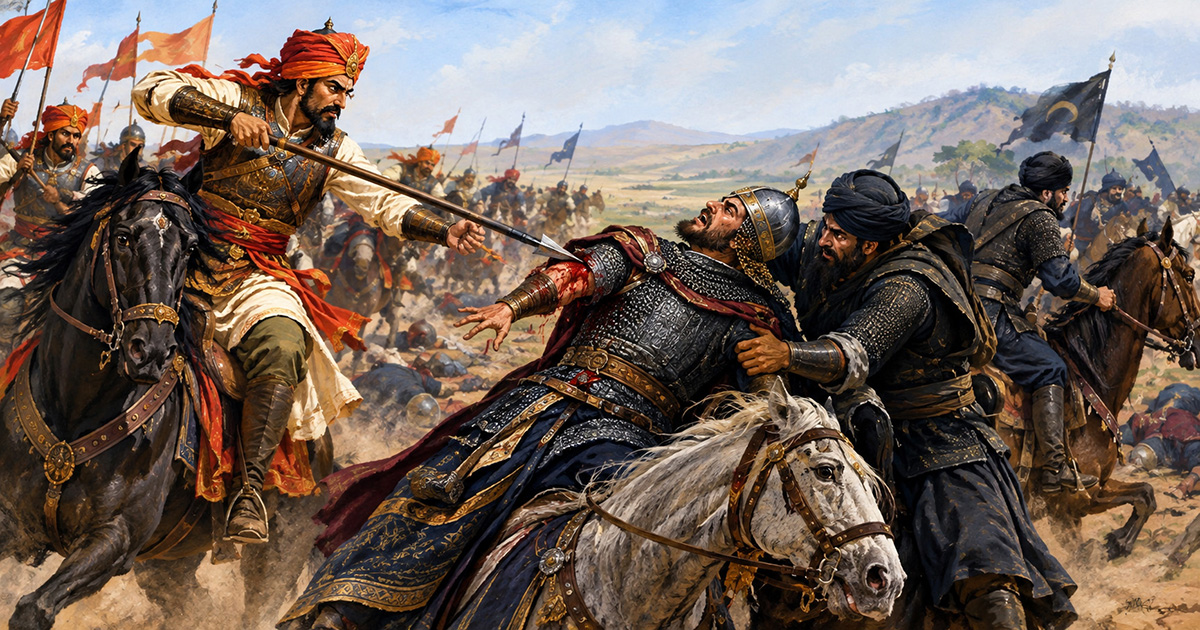
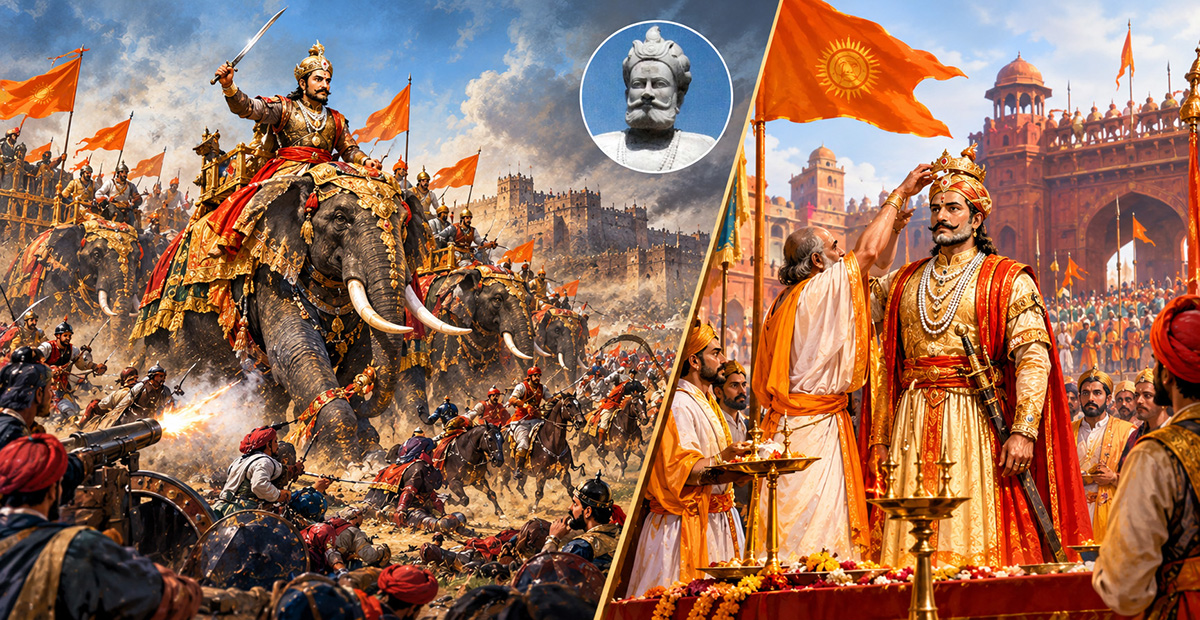
The Battle of Tarain | This image is AI-generated
The year was 1191. A battle was about to unfold on the plains of North India whose outcome would be remembered for centuries to come. On one side stood Prithviraj Chauhan, the powerful ruler of Ajmer and Delhi; and on the other side was Muhammad Shihabuddin Ghori, an ambitious invader who had arrived from Central Asia. Both knew that a confrontation was now inevitable.
The conflict began with the fort of Bhatinda. Muhammad Ghori had captured this stronghold because it acted as the ultimate military gateway into the heart of North India. Whoever held its walls controlled the direct invasion route to Delhi. Having secured the fort and left a garrison of soldiers behind, Ghori began his return march. But then he received news that Prithviraj Chauhan was already advancing with a vast army to recapture this vital shield. Upon hearing this, Ghori turned his army around without waiting for additional reinforcements. Before the battle, both sides arranged their forces. Prithviraj’s army consisted of around 50,000 soldiers, including large numbers of cavalry and infantry, as well as camels and elephants. Prithviraj himself was positioned in the centre alongside the elephants. He was accompanied by his brother Hariraj, Govindraj Tomar of Delhi, and numerous experienced commanders. On the other side, Muhammad Ghori had around 35,000 cavalrymen. His army was smaller in number but equipped with swift Turkish horses, armour, and advanced military techniques such as mounted archery. The two armies eventually came face to face on the plains of Tarain, near Thanesar.
The atmosphere on the plains of Tarain was tense. Suddenly, the sound of conch shells echoed from the Rajput camp. It was the signal to attack. Within moments, the Rajput cavalry surged forward with lightning speed and crashed into both flanks of the Turkish army. The assault was so fierce that the formations of the Afghan, Khokhar and Khalji contingents began to waver. Rajput swords and spears struck relentlessly. Before long, the Turkish frontlines began to collapse. As the battle intensified, the Ghurid army began to crumble. One after another, amirs and soldiers abandoned the battlefield, but Muhammad Ghori stubbornly refused to accept defeat. Desperate to regain control, the invading commander launched a direct attack on the Rajput front, where Govindraj Tomar, the ruler of Delhi, was fighting from atop his elephant.
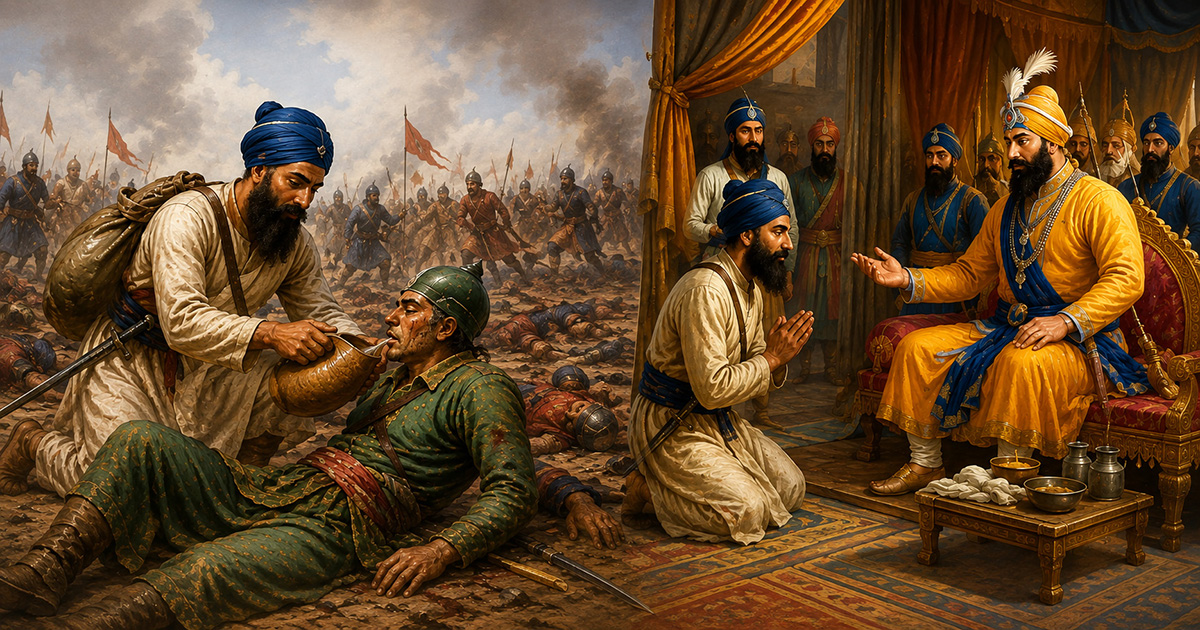
The two warriors soon came face to face. Ghori struck Govindraj with his spear, driving it into Govindraj's face and breaking two of his teeth. But even after suffering the brutal blow, Govindraj refused to back down. Wounded but undeterred, he struck back with tremendous force. His spear pierced Ghori’s arm, throwing the invader from his horse and leaving him seriously wounded. For a moment, the man who had invaded northern India lay helpless on the battlefield, his army already collapsing around him. Seeing their commander wounded and the battle slipping away, the Ghurid soldiers began to flee in panic. A Khalji soldier eventually rushed to Ghori’s rescue, lifted the wounded commander onto a horse and carried him away from the battlefield, saving him from almost certain capture.
With their commander retreating, the remaining Ghurid forces lost whatever morale they had left. The Rajputs, meanwhile, pressed their advantage. Prithviraj Chauhan ordered his cavalry to pursue the fleeing invaders and ensure that they did not escape easily. The Rajput warriors charged after the retreating Ghurid army, pursuing them for nearly 40 miles, according to accounts. Ghori escaped not because he had won the battle, but because the swift Khorasani and Turkmen horses of his surviving cavalry allowed him to outrun the pursuing Rajputs. His army had been decisively defeated, and the invading commander was forced to flee the battlefield wounded and humiliated.
The First Battle of Tarain ended in a resounding victory for Prithviraj Chauhan and the Rajputs. Bhatinda Fort was later recovered by the Chauhans after a prolonged siege. Most importantly, Ghori was not captured because Prithviraj had spared him; he escaped amid the chaos of his army’s retreat. On the plains of Tarain, Rajput resistance had stopped Ghori’s advance. Victory conches echoed across the battlefield as the defeated invader fled westward. Prithviraj Chauhan had not merely defeated Ghori—he had driven the invading army from the field and pursued it deep into its retreat. That day, the battlefield belonged to the Rajputs.