IFS Day: The Woman Whom the UPSC Chairman Tried to Stop from Joining the IFS Became India’s First Woman Diplomat: The Story of C. B. Muthamma’s Struggle
This was a time when the Indian Foreign Service (IFS) had been established only two years earlier (9 October 1946), and the presence of women in the service was almost negligible.

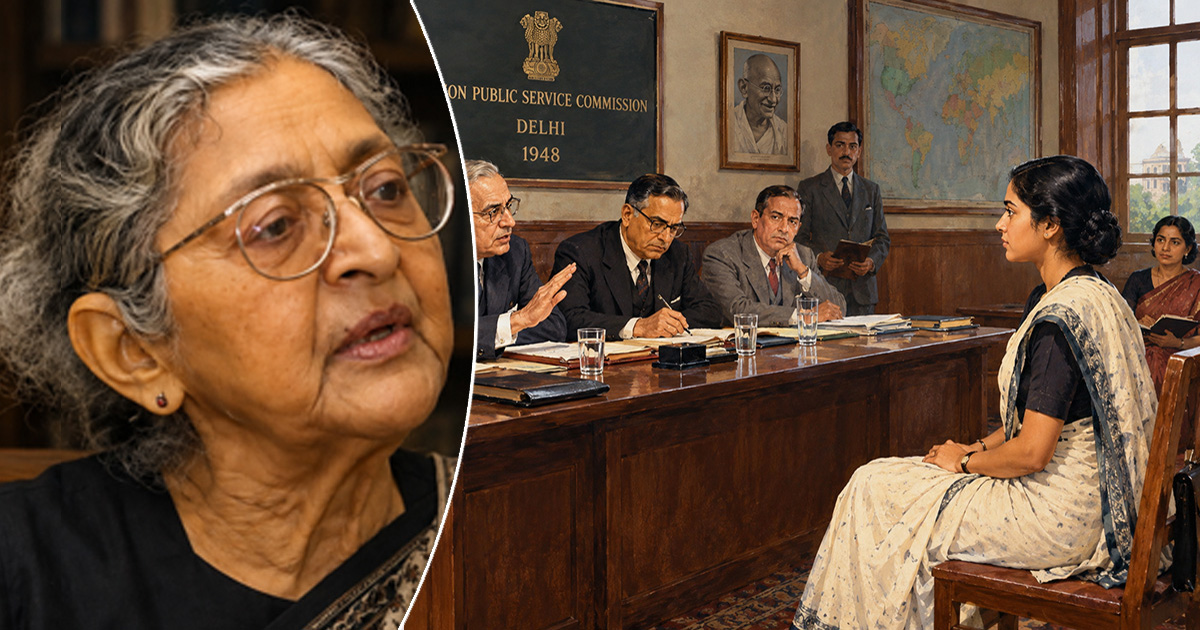
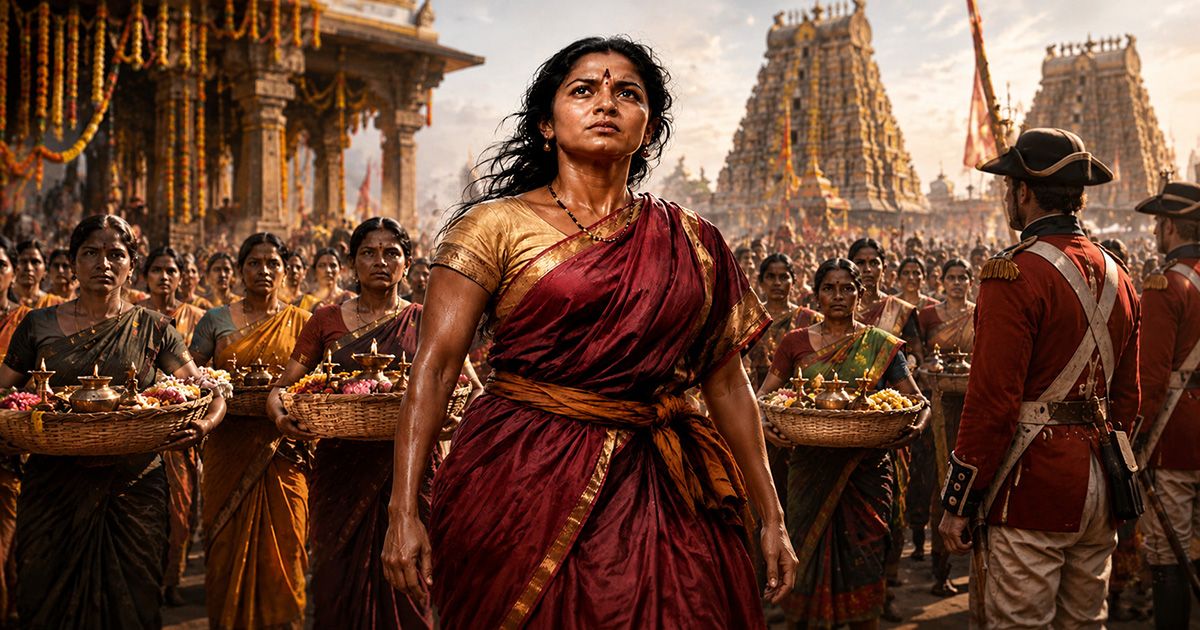
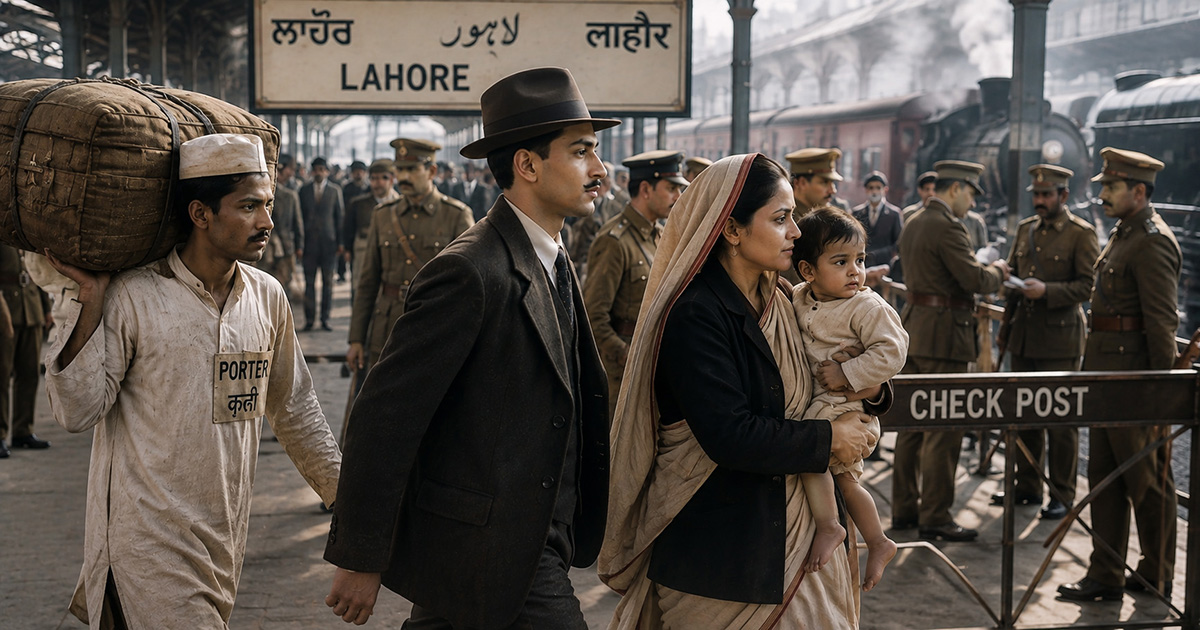
Chonira Belliappa Muthamma, the first woman to join the Indian Foreign Service | This image is AI-generated
In 1948, in Delhi, a woman arrived at the Union Public Service Commission (UPSC) office for an interview. Her name was Chonira Belliappa Muthamma (C. B. Muthamma). This was a time when the Indian Foreign Service (IFS) had been established only two years earlier (9 October 1946), and the presence of women in the service was almost negligible. Muthamma had reached this stage after performing exceptionally well in the written examination. But in the interview room, the question before her was not merely about her qualifications. She was facing a system that had already assumed that the Foreign Service was not a suitable place for women. Muthamma was told that she should choose another service. But she refused to change her mind. She wanted to join the Indian Foreign Service.
During the interview, the then UPSC Chairman, who served under the then interim Congress government, tried to discourage Muthamma from joining the Foreign Service. Muthamma refused to back down. The other members of the board were then reportedly told to give her lower marks so that she could not be selected for the Indian Foreign Service. For those sitting in the room, perhaps it was merely a question of marks, but for Muthamma, it was a decision that would determine her entire career. Despite receiving low marks in the interview, she had good scores from her written examination. Those marks ultimately proved decisive in the final selection. The door that had been tried to be closed to her could not be completely shut. In 1949, C. B. Muthamma joined the Indian Foreign Service, and history recorded that India had its first woman IFS officer.
But entering the service was not the end of the story. The real test was about to begin. Muthamma had to establish herself in a profession that had long been considered a man’s domain. Representing India abroad was not merely about holding a government position. It required awareness of India’s image in every conversation, national interest in every decision, and diplomatic understanding in every interaction. Instead of stepping away from these responsibilities, Muthamma made them an integral part of her work. From Paris in France to Hungary, Accra in Ghana, The Hague in the Netherlands, Rangoon in Myanmar, and London in the United Kingdom, her career allowed her to work across different countries and circumstances.
As the years passed, Muthamma’s name became established not merely as that of a woman officer, but as that of an experienced diplomat. She became India’s voice in the countries to which she was posted. With every new responsibility, she continued to challenge the perception that diplomacy was a difficult field for women. But the most extraordinary episode of her life emerged years later. After retiring from service in 1982, she documented her experiences in her book Slain by the System: India’s Real Crisis. In it, she also revealed the story of that old interview. According to her, years later, she met the same UPSC Chairman, who admitted that during the interview he had asked the board members to give Muthamma lower marks so that she would not be selected for the Indian Foreign Service. What had once been used to try to obstruct her career had now become the most shocking part of her story of struggle.
It may be noted that C. B. Muthamma faced continuous gender discrimination throughout her diplomatic career. Despite working in the Foreign Service for many years, when she was overlooked for appointment as an ambassador, she challenged the decision by approaching the Supreme Court of India in 1979 against the Government of India. Muthamma argued that the rules governing the Foreign Service discriminated against women. The Solicitor General representing the Government of India, Soli Sorabjee, argued that there could be a risk of confidential information being leaked by women ambassadors after they got married. The court then asked why the same risk would not arise after male ambassadors got married. A bench headed by Justice V. R. Krishna Iyer struck down the discriminatory provisions applicable to women officers and upheld Muthamma’s position.
Muthamma’s life was not merely a story of entering the Foreign Service. During her nearly 32-year diplomatic career, she continuously proved that an officer’s ability cannot be measured by gender. She became India’s first woman career ambassador and handled important responsibilities in different countries. At the time she entered the Foreign Service, there were many invisible barriers for women in government services. Muthamma did not rely on any grand slogan to fight those barriers. She made her work her answer. With every posting, every responsibility, and every challenge, her journey moved forward. In the later years, she also became a vocal voice against gender discrimination in government services and brought her experiences into the public domain.
Born on 24 January 1924 in Kodagu, Karnataka, Muthamma passed away on 14 October 2009, but she left behind a legacy in which both struggle and achievement can be seen together. The door that opened in 1949 was not only for C. B. Muthamma. After her, the path gradually opened wider for women seeking to enter the Indian Foreign Service as well.