Babu Ram Hari: The Journalist Sentenced to 21 Years of Kala Pani for Two Articles and A Poem
The story begins in 1908, when the Swarajya newspaper was looking for an editor. An advertisement was published saying: “Swarajya requires an editor who is prepared to accept two dry rotis, a glass of water and ten years’ imprisonment as a reward for each editorial.”


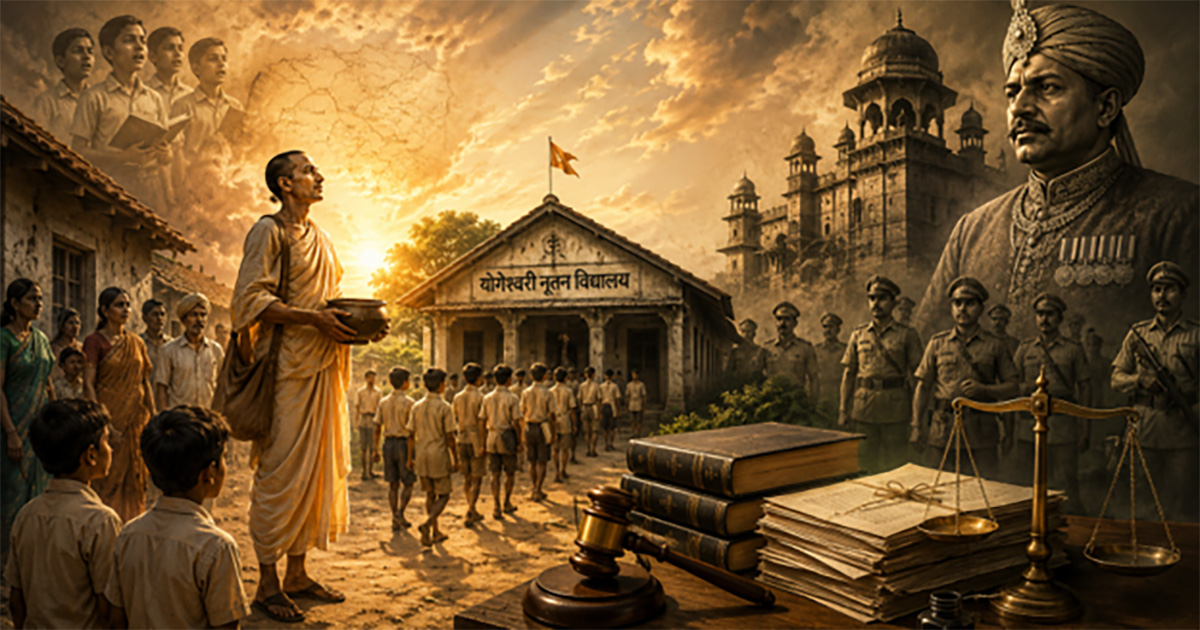
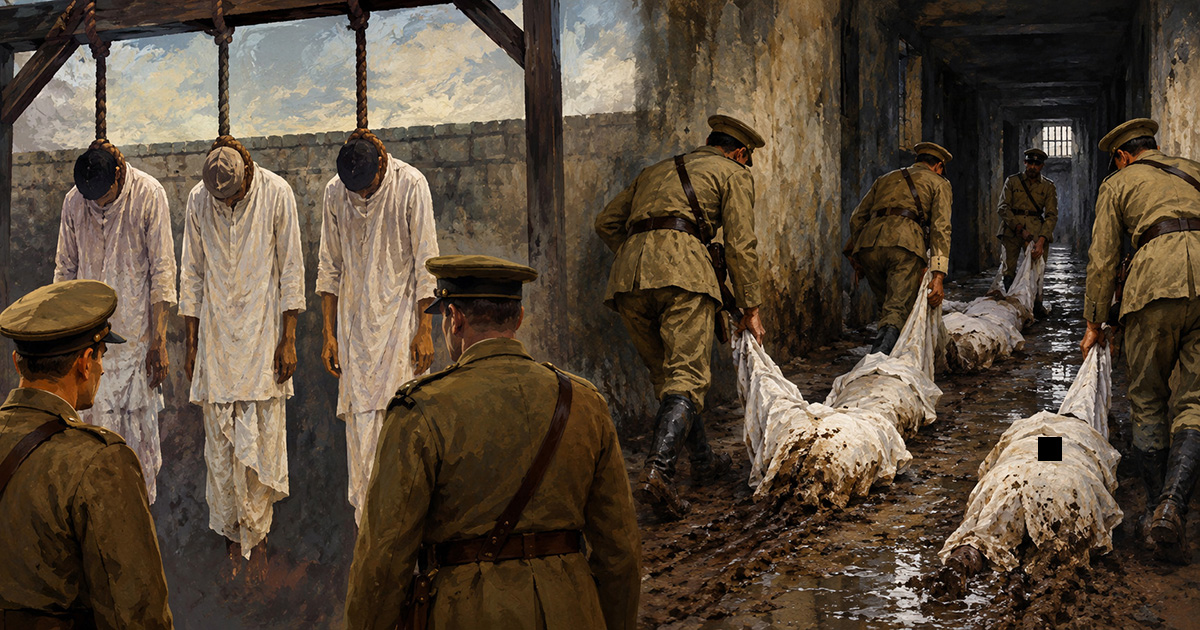
Journalist Babu Ram Hari sentenced to 21 years of Kala Pani imprisonment for penning 3 articles | This image is AI-generated
One morning in 1909, a ship was preparing to depart from the Calcutta port. A young journalist, wearing chains on his hands and feet, was being taken aboard the ship. His name was Babu Ram Hari. This journalist, who came from Qadian village in Gurdaspur district of Punjab, had committed only one “crime”—three articles. Because of these articles, he was being sent to the Cellular Jail in the Andamans. His sentence was 21 years of Kala Pani—that is, imprisonment in what is today known as the Cellular Jail in the Andaman and Nicobar Islands.
To understand how Babu Ram Hari’s pen took him all the way to Kala Pani in 1909, we need to go back to the period when the nationalist Urdu weekly Swarajya, published from Allahabad, was regarded as one of the boldest nationalist newspapers of its time. The story begins in 1908, when the Swarajya newspaper was looking for an editor. An advertisement was published saying: “Swarajya requires an editor who is prepared to accept two dry rotis, a glass of water and ten years’ imprisonment as a reward for each editorial.”
This was because the newspaper’s editors had been going to prison one after another. Journalists such as Shanti Narayan Bhatnagar, Ramdas Suraliya and Hotilal Varma had already been sentenced to rigorous imprisonment in 1908 on charges of sedition. Following this advertisement, Babu Ram Hari, who came from Qadian village in Gurdaspur district of Punjab, took charge of the newspaper in 1908. Babu Ram Hari had only been serving as editor for a short time. He had published only 11 issues, but three editorials published in them became, in the eyes of the British government, his greatest “crime.” Following this, Babu Ram Hari’s pen too became a victim of the British government’s sedition laws.
Of those three issues, the first was “Bomb or Boycott” (22 August 1908). After the Partition of Bengal in 1905, the Swadeshi and Boycott movements were underway. At the same time, some revolutionary groups were adopting the path of bombs and violent actions. Babu Ram Hari’s argument was that if the government continued to suppress the peaceful demands of the people, closed the legitimate avenues of protest and kept increasing repression, some sections of society could choose extremist methods. British officials believed that this article was not a criticism of those throwing bombs, but rather an attempt to justify their actions by presenting them as a natural consequence of the circumstances.
The second was the article “The Tyrant and the Exploited.” What was the main argument of the article? This article focused on economic exploitation. Babu Ram Hari said that India’s wealth was flowing to Britain. Farmers were burdened by debt and taxes. The condition of workers was poor. The people should organise themselves for their rights. These ideas were in line with the “Drain of Wealth” theory of that period, which leaders such as Dadabhai Naoroji were also raising. The British Government believed that the article was creating discontent among the people. By describing British rule as “tyrannical” and Indians as “exploited,” an attempt was being made to spread hatred against the government.
And the third was “Political Ode” (a patriotic poem and editorial). It was a nationalist poem and editorial in which subjugation (slavery) was described as painful, the desire for freedom was expressed, and an independent India was envisioned. Such writings were common in the nationalist press of that period. The British court argued that the poem was arousing nationalist sentiments among the people. It could weaken loyalty towards the British Raj. Therefore, it too was presented in court as evidence of sedition.
None of these three articles contained a direct appeal such as “take up arms.” But in the eyes of the British Government, they created public discontent against British rule.
On this basis, Babu Ram Hari was arrested in 1908. He was tried in Allahabad under Section 124A of the Indian Penal Code (IPC), which dealt with sedition. The court treated each of his three articles as a separate offence. He was sentenced to seven years of rigorous imprisonment for the first article, seven years for the second, and seven years for the third—making a total sentence of 21 years of rigorous imprisonment. The court also ordered that these sentences would run consecutively rather than concurrently. Thus, under Section 124A, a journalist was sentenced to a total of 21 years of Kala Pani for writing just three articles.
The then Governor of the United Provinces, Sir John Hewett, also believed that it would not be appropriate to keep people like Babu Ram Hari in ordinary prisons in India, as they could influence other prisoners. For this reason, the decision was taken to send him to the Cellular Jail in the Andamans.
In 1909, he was sent to Kala Pani from the port of Calcutta aboard a huge sea vessel named SS Maharaja. After a journey of around ten days, Babu Ram Hari, along with other prisoners, reached Port Blair. Despite the inhuman torture and loneliness of the prison, Babu Ram Hari never bowed down. Even behind the walls of Kala Pani, the hope of freedom remained alive in his heart. During his imprisonment, he wrote: “When India becomes free, ‘Hari’ too will celebrate his freedom!”
According to historical records, during that period, Section 124A became one of the most effective weapons of the British government for suppressing opposition to its rule. When the Indian Penal Code (IPC) was passed on 6 October 1860 and came into force on January 1, 1862, it did not contain a separate provision dealing with sedition. Later, Section 124A was formally added to the IPC in 1870 through the amendment introduced by Sir James Stephen under Act XX of 1870. It would go on to become one of the most powerful legal weapons used by the British against leaders of the freedom movement, writers, and journalists.
The merciless grip of Section 124A and that dark prison across the seas may have robbed Babu Ram Hari of every moment of his youth, but the echoes of his pen were etched forever into the pages of history. Babu Ram Hari is remembered among those journalists who paid the price for their words with the best years of their lives.