Just Four Students Made One Announcement, and the Entire Sikh Community United on One Platform: The Story Behind Formation of Sri Guru Singh Sabha
Following the Second Anglo-Sikh War, British administration, missionary education, and Western institutions expanded rapidly across the province.

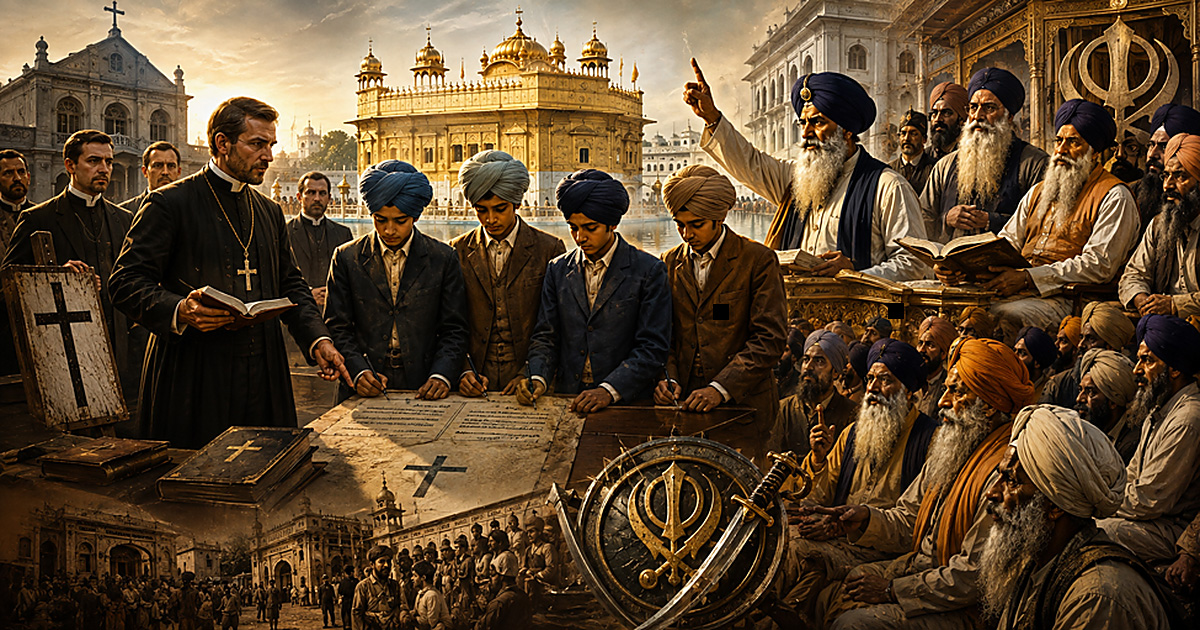
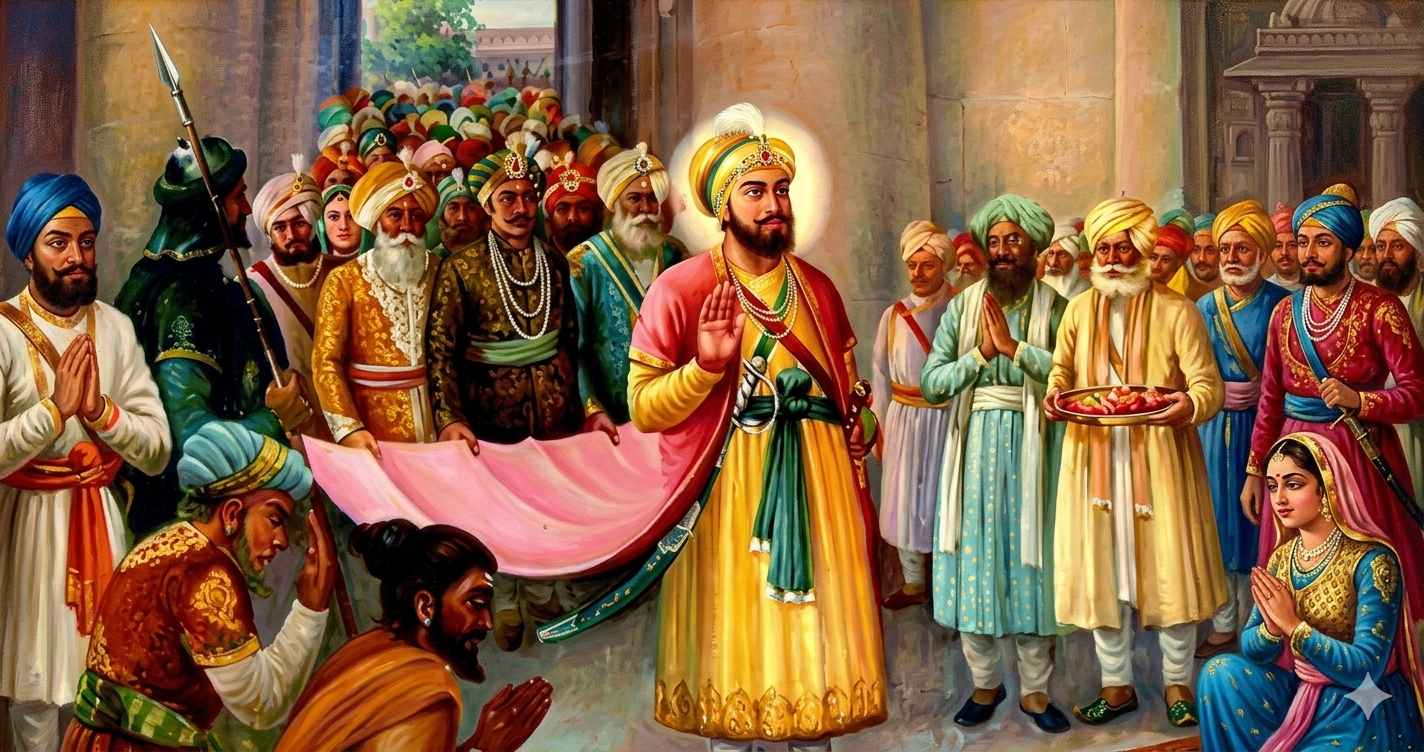
When the conversion of four young Sikh students led to the formation of the Sri Guru Singh Sabha | This image is AI-generated
February 1873, Amritsar. No one had any idea that within a few hours, a piece of news would spread across the city that would change the course of Sikh history for years to come. It was neither a declaration of war nor the death of a king. It was the announcement made by just four students: Aya Singh, Atar Singh, Sadhu Singh, and Santokh Singh. They were studying at the Amritsar Mission School and publicly declared that they were going to renounce their ancestral Sikh faith and embrace Christianity. Although the number was only four, the announcement shook the very soul of the Sikh community. The question was not merely why four students were changing their religion. The real concern was this: if educated Sikh youth themselves began moving away from their faith, what would happen to future generations?
Within a short time, the news spread from the streets of Amritsar to Sri Darbar Sahib and the Akal Takht. Parents were deeply worried, granthis were stunned, and Sikh scholars were alarmed. The decision of four students was no longer a matter concerning only four families—it had become a question about the future of the entire Sikh community. However, this incident did not happen overnight. It was the result of nearly twenty-four years of transformation in Punjab. To understand it, one has to go back to March 29, 1849.
Following the Second Anglo-Sikh War, the British East India Company annexed Punjab on that day, bringing the Sikh Empire to an end. In the years that followed, British administration, missionary education, and Western institutions expanded rapidly across the province. In 1853, the first major Christian school in Amritsar—the Amritsar Mission School—was established. Along with modern Western education and English, it also provided regular instruction in Christian theology. Over the next two decades, missionaries built an extensive network of schools and missionary centres in Amritsar, Lahore, Tarn Taran, Ajnala, Jandiala, Sialkot, and several other towns. By 1870, the Christian Vernacular Education Society had also established a Normal School in Amritsar to train teachers.
This was not merely the expansion of education; it was also the expansion of religious influence. The British government extended support to missionary institutions, while Christianity was actively propagated through Western education. Sikh families enrolled their children in these schools; their children would obtain modern education. Among them were four young Sikh students—Aya Singh, Atar Singh, Sadhu Singh, and Santokh Singh. The school environment, Christian teachers, and continuous interaction with missionaries left a deep impression on the minds of these students. As a result, in February 1873, they suddenly announced publicly that they would abandon their ancestral Sikh faith and receive Christian baptism.
The news spread like wildfire throughout Amritsar and sent shockwaves across the Sikh community. As soon as it reached the vicinity of Sri Darbar Sahib and the Akal Takht Sahib, Sikh leaders sprang into action. The parents and family members of the four students immediately rushed to the school. Against this backdrop, an emergency historic meeting was convened at Guru Bagh, Amritsar, on July 30, 1873, under the guidance of the Akal Takht Sahib. The gathering was attended by Sikh scholars, religious leaders, sardars, and prominent citizens.
Among those present were Sardar Thakur Singh Sandhanwalia (1837–1887), Baba Khem Singh Bedi (1832–1905), Kanwar Bikrama Singh (1835–1887), and the renowned historian Giani Gyan Singh (1824–1884), along with many other leading Sikh figures. During the meeting, it was unanimously resolved that an organisation should be established to protect the Sikh faith, promote its history, and confront the growing ideological challenges facing the community. This historic decision eventually led to the formation of the Sri Guru Singh Sabha.
Subsequently, on October 1, 1873, the first formal meeting was held in front of the Akal Takht in Amritsar. At this meeting, Sardar Thakur Singh Sandhanwalia was appointed as the first President, Giani Gyan Singh as Secretary, Sardar Amar Singh as Assistant Secretary, and Bhai Dharam Singh as Treasurer. This body came to be known as the Sri Singh Sabha.
The Singh Sabha became the first Sikh organisation to adopt a written constitution, bringing transparency and a system of rules to its functioning. This step laid a strong foundation for future democratic Sikh institutions and the Gurdwara Reform movements. The objective of the Sabha was not only to prevent conversions, but also to restore Sikhism to its original purity and traditions, counter Christian missionaries and other conversion activities, and promote the Gurmukhi script and Punjabi language, among other objectives. It is worth mentioning that, through the efforts of Sikh scholars, those four students were saved from conversion, and the Singh Sabha Movement that emerged from this incident ushered in an unprecedented period of revival in Sikhism. The movement gave a new direction to Sikh religious discipline and education.
This incident was considered particularly significant at the time because Sikh families were sending their children in large numbers to missionary schools to receive modern education. In such circumstances, the announcement by the four students of the Amritsar Mission School was not seen merely as a personal decision. Sikh scholars and community leaders felt that it could be a sign of a major challenge in the years to come. But the bitter truth is that the struggle that began in 1873 has still not ended. Even today, the same missionary networks, social divisions, and identity crisis continue in Punjab, contributing to conversions. Today, there is once again a need for Sikh society to learn from history and strengthen its roots, education, and outreach system so that future generations can take pride in their identity.