The Mughals Crossed Every Limit of Cruelty, But He Challenged Death Itself: The Terrifying Story of Banda Singh Bahadur’s Martyrdom
Months of starvation, captivity, and torture had weakened his body, but there was no fear in his eyes. He was Banda Singh Bahadur.

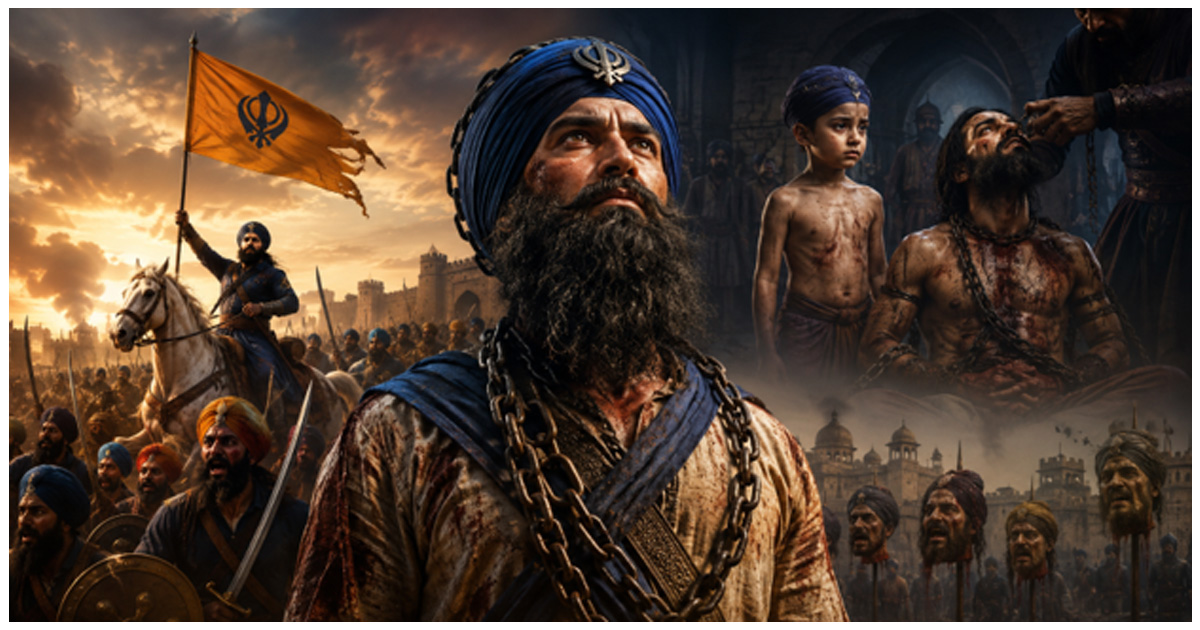
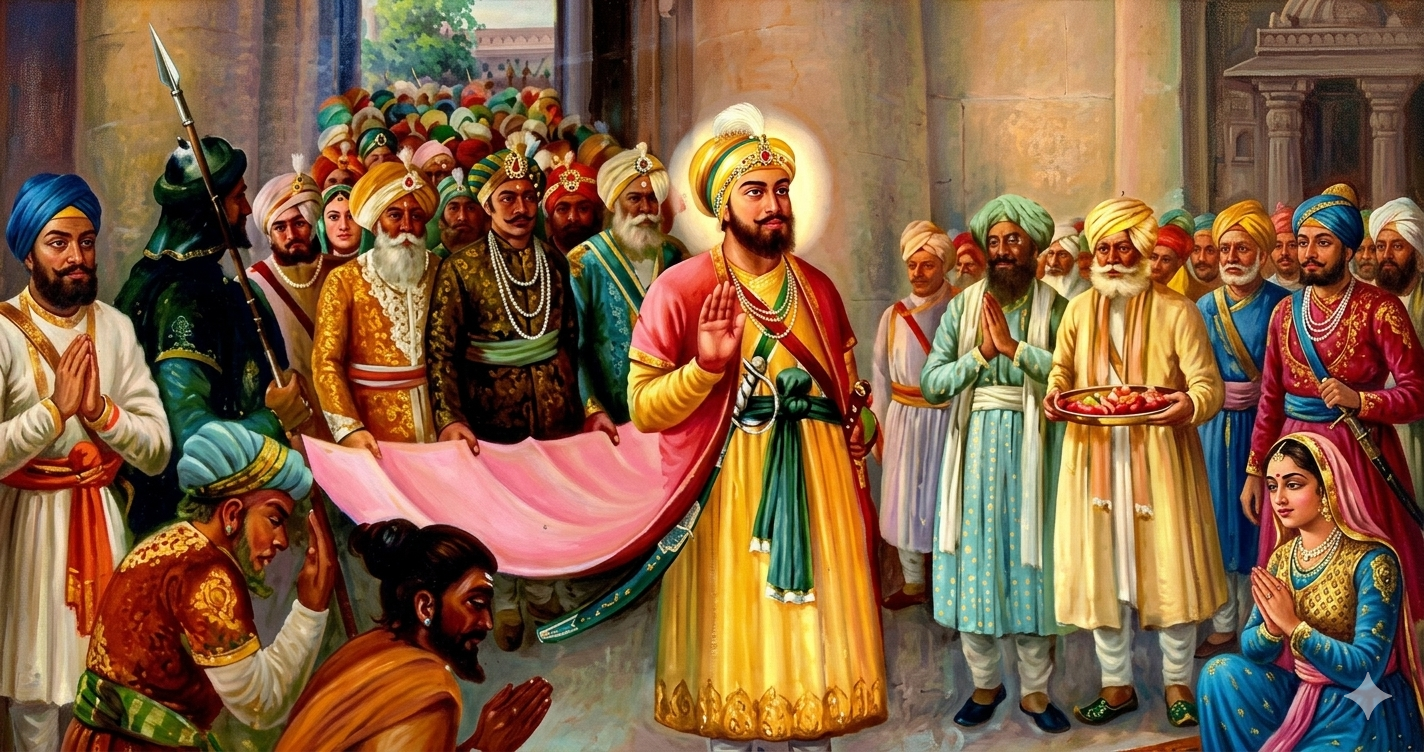
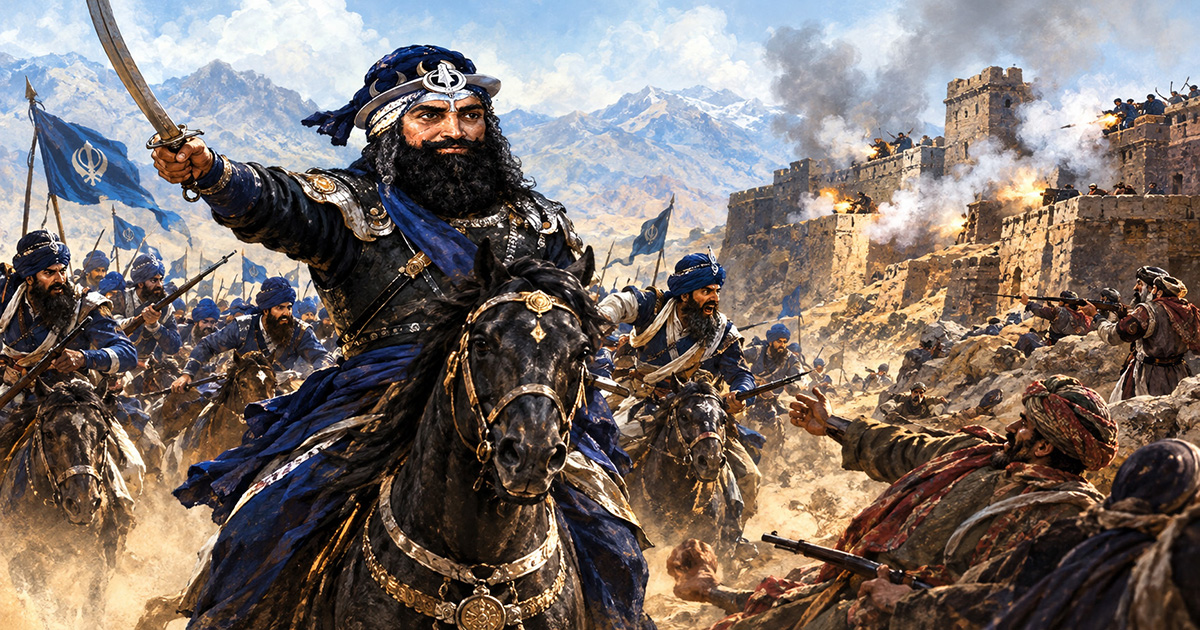
Banda Singh Bahadur | This image is AI-generated
One morning in June 1716, there was a strange silence in the air of Delhi, along with the summer heat. Mughal soldiers stood guard along the road leading toward Mehrauli. Among them, a prisoner shackled in iron chains was being led forward. Months of starvation, captivity, and torture had weakened his body, but there was no fear in his eyes. He was Banda Singh Bahadur, the same man who had just a few years earlier openly challenged Mughal authority in Punjab.
Just a few years earlier, this same Banda Singh had come to Punjab from a completely different life. He was born as Lakshman Dev in Rajouri on 27 October 1670, and later came to be known as Madhodas Bairagi. In 1708, he met Guru Gobind Singh in Nanded. That meeting changed his life. He called himself the Guru’s “Banda” and, after being initiated into the Khalsa Panth, set out for Punjab. There, he brought farmers, villagers, and ordinary people together under his leadership.
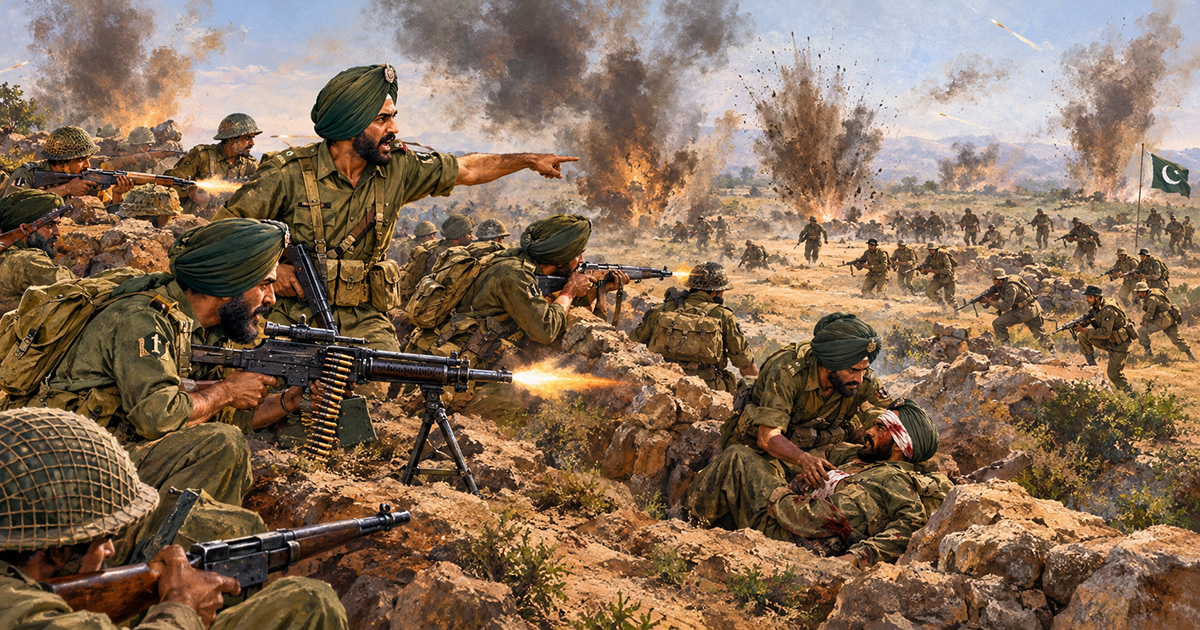
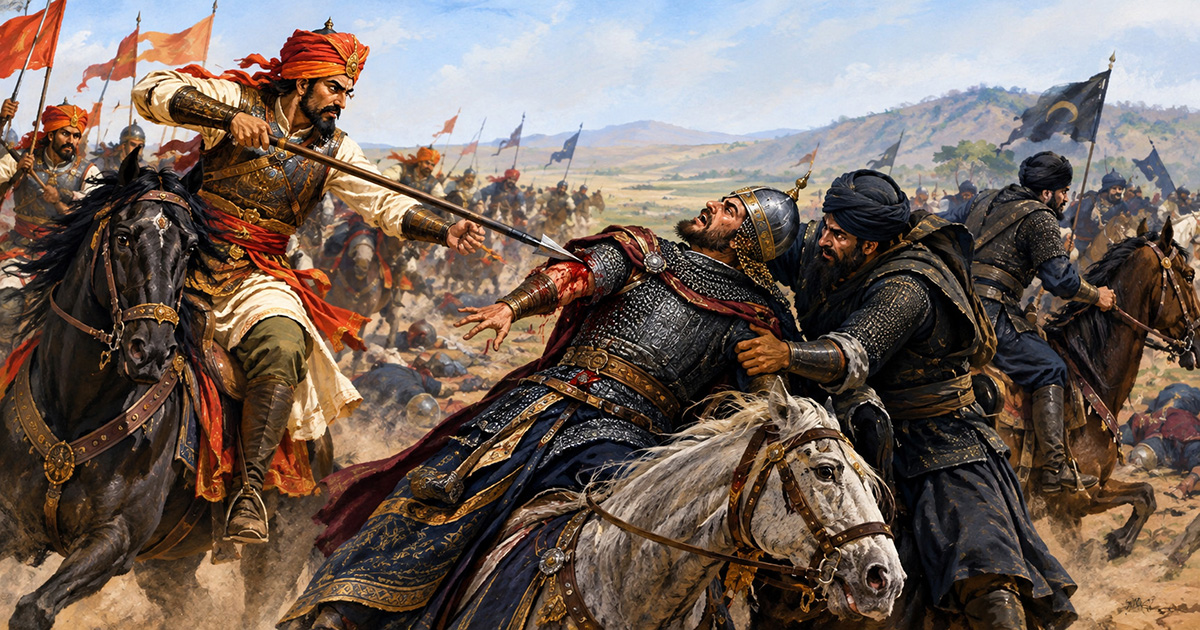
Then, in the summer of 1710, his army advanced toward Sirhind. On 12 May, the Mughal army and Khalsa warriors faced each other on the battlefield of Chappar Chiri. The sound of cannons echoed through the air. The battlefield was filled with dust. The Sikh warriors, fighting the Mughal army with ordinary weapons, were unwilling to retreat. Wazir Khan was killed in the battle, and two days later, on 14 May, Sirhind came under Khalsa control.
After the victory at Sirhind, events began changing rapidly. Banda Singh took steps toward giving farmers rights over the land and had coins issued as symbols of his authority. For the Mughal officials, this was no longer merely a rebellion. Their authority had been challenged across large parts of Punjab. Orders began coming from Delhi to crush Banda Singh. But each time, amid pressure from the Mughal army, he managed to escape with his companions.
Finally, in 1715, the army of Abdus Samad Khan surrounded him in a small fortified settlement at Gurdas Nangal. Thousands of soldiers were outside; inside were Banda Singh and his companions.
The siege continued for a long time. The Mughal army blocked every route through which food and fodder could reach the fort. When the food supplies ran out, horses and other animals were killed and eaten. Then even leaves and the bark of trees became food. Their bodies were wasting away from hunger. Disease was spreading. But no call for surrender came from the fort.
After eight months, on 7 December 1715, Mughal soldiers were able to enter. Banda Singh and his surviving companions were shackled in chains.
After this, Banda Singh was taken to Delhi not merely as a prisoner, but as a warning to those who dared to challenge Mughal authority. When the procession reached the capital at the end of February 1716, the severed heads of Sikhs were carried on spears ahead of it. Behind them, hundreds of prisoners walked in chains. Banda Singh was locked inside an iron cage.
The purpose of parading the procession through the streets of Delhi was clear—to show the people that no one could stand against the power of the emperor. But the fear that the Mughals expected to see was absent from the faces of the prisoners in the procession. According to contemporary accounts, none of the prisoners expressed a desire to abandon their faith to save their lives. In March 1716, approximately one hundred Sikh prisoners were publicly executed every day.
Then came the day when it was Banda Singh’s turn.
On 9 June 1716, he was taken to Mehrauli, near the shrine of Khwaja Qutbuddin Bakhtiyar Kaki. His young son, Ajai Singh, was brought before him. The Mughal executioners used the child as a means of breaking the father’s resolve. Banda Singh was ordered to kill his own son, but he refused. The child was then brutally killed in front of him. After this, the executioners turned toward Banda Singh.
His eyes were gouged out, his body was tortured with heated iron, and his limbs were cut off. Persian court accounts and contemporary letters written by British officials contain references to these final tortures and his death.
But the man whom the Mughal authorities wanted to present through the streets of Delhi as a symbol of fear ultimately became a symbol of his own steadfastness. A few years earlier, Lakshman Dev of Rajouri had met Guru Gobind Singh. Now, even in his final moments, that same man did not waver from his faith.
On 9 June 1716, his body was destroyed, but his story did not end there. On that hot afternoon in Delhi, an empire had killed a prisoner, but the memory of Banda Singh Bahadur lived on in the history of the Sikh power that emerged in the years that followed.