Sikh New Year: The Unwavering Story of Mai Bhago

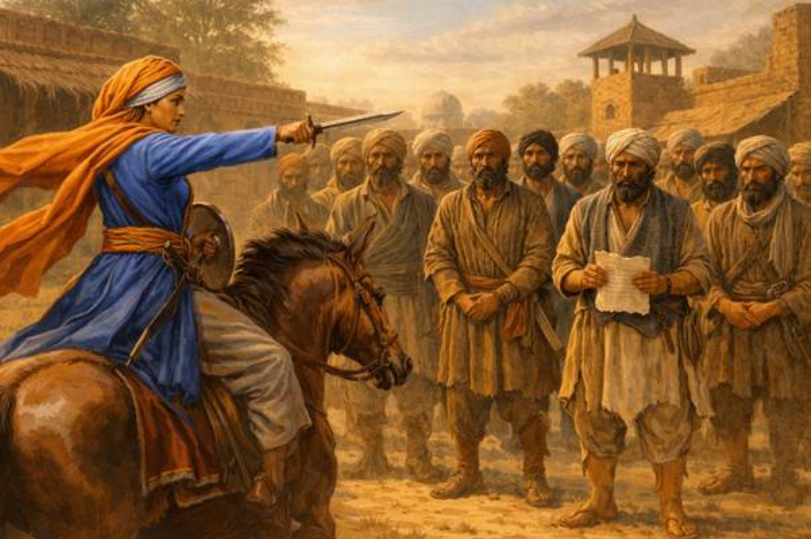
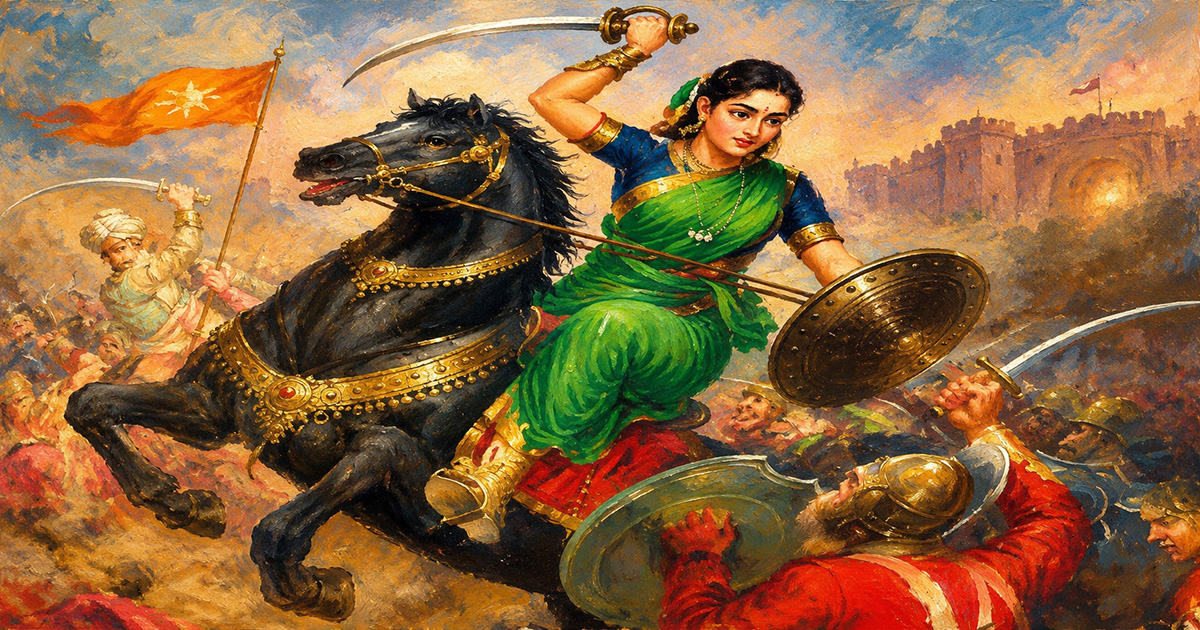
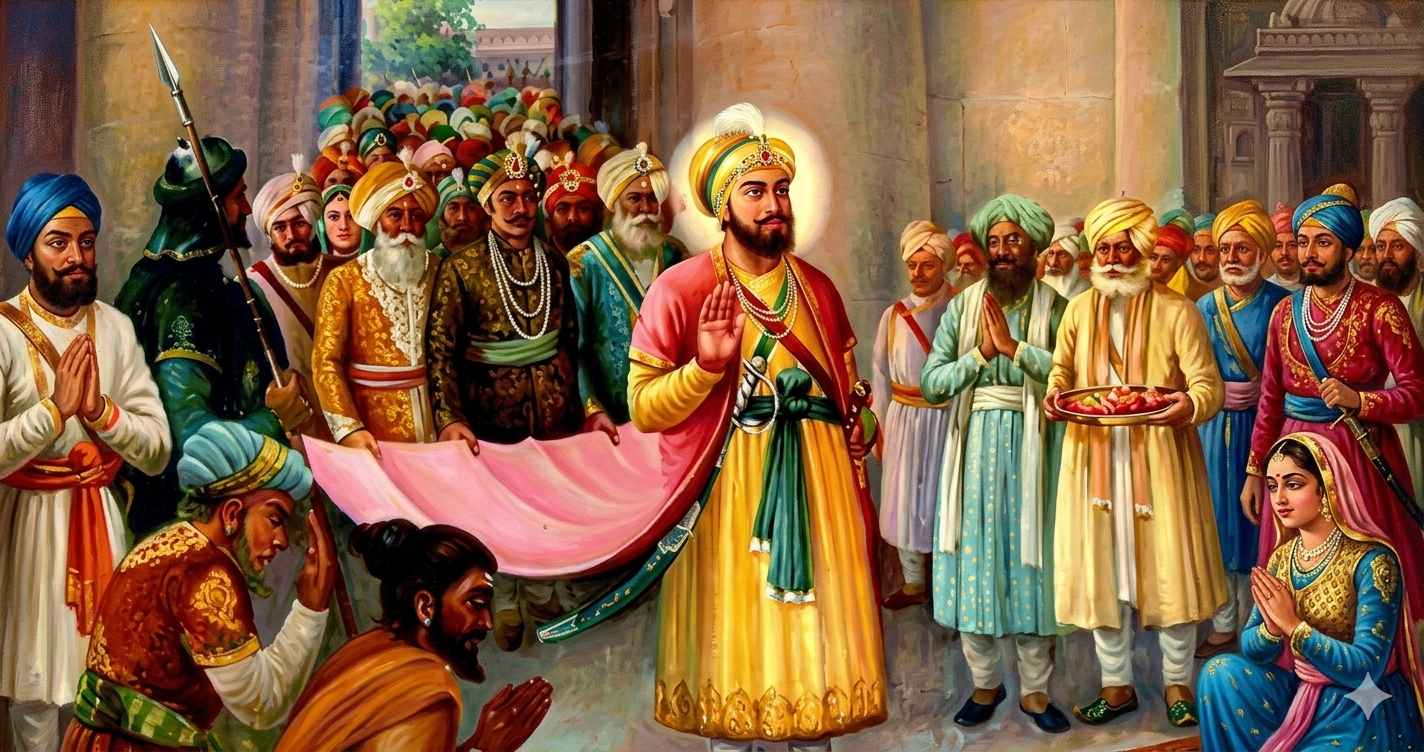
This image is AI-generated
Every year, Sikhs across the world celebrate Sikh New Year on March 14, a day that marks not only the beginning of a new year in the Punjabi calendar but also the rebirth of courage, equality, and unshakable faith. The creation of the Khalsa in 1699 stands at the heart of this festival. One such story is that of Mai Bhago, a woman whose courage transformed a moment of fear into a moment of liberation.
Mai Bhago was born in the village of Jhabal Kalan in present-day Amritsar district. She belonged to a respected Sikh family. Her father, Bhai Mallo Shah, was a devoted Sikh, and from childhood she was raised with strong faith and discipline. She was later married to Nidhan Singh of Patti. Though she lived in a time when women were expected to remain within the home, Mai Bhago learned horse riding and the use of weapons. She grew up listening to stories of Sikh bravery and sacrifice, and those stories shaped her character.
In 1705, the Sikhs faced one of their hardest times. Guru Gobind Singh and his followers were under heavy attack from Mughal forces. The fortress of Anandpur Sahib had been surrounded for months. Food was scarce, and the warriors were exhausted. In this difficult situation, forty Sikhs, worn by hunger and fear, lost courage and left the Guru. Before leaving, they signed a letter declaring that they were no longer his followers.
When Mai Bhago heard this, she felt deep sorrow. She could not accept that brave Sikhs would abandon their Guru in his hour of need.
She did not remain silent. Mai Bhago went to the forty men and spoke to them with honesty and strength. She reminded them of their promise to stand for truth and justice. She asked them, “How can you call yourselves Sikhs if you forsake your Guru in his hour of need?”
Her words struck deeper than any sword. They awakened the courage that still lived within those men. Filled with shame but also renewed determination, the forty Sikhs decided to return. But they did not return simply to seek forgiveness; they returned to fight. And Mai Bhago herself rode with them.
The battle that followed at Muktsar Sahib was fierce. The small group of Sikhs fought bravely against a much larger Mughal army. One by one, the forty warriors fell in battle. Because they returned with true faith and sacrifice, Guru Gobind Singh blessed them and called them the “Chali Mukte” or the Forty Liberated Ones.
Mai Bhago survived the battle. She later remained with Guru Gobind Singh and continued to live a life of devotion and courage. She was respected not only as a warrior but as a symbol of unwavering faith.
Vaisakhi is not merely a date on the calendar. It is the celebration of courage that refuses to surrender to fear. It is the harvest of inner strength that grows from faith. And it reminds us that the call to stand for truth can come to anyone, man or woman, at any moment.
Mai Bhago’s bravery did more than bring forty men back to battle. It showed that the spirit of the Khalsa is not limited by gender, position, or circumstance. Her life teaches us that true faith is proved not in comfort, but in courage.
So when we celebrate the Sikh New Year on March 14, let us remember not only the Panj Pyare, but also Mai Bhago, the fearless woman who revived the spirit of warriors.
.jpg)