“Black Pepper Was Very Pungent”: How Indian Soldiers Outsmarted British Censorship in WW 1 Through Coded Language in Letters
This is the story of how Indian soldiers in World War I outsmarted British censorship to stay connected with home in India.

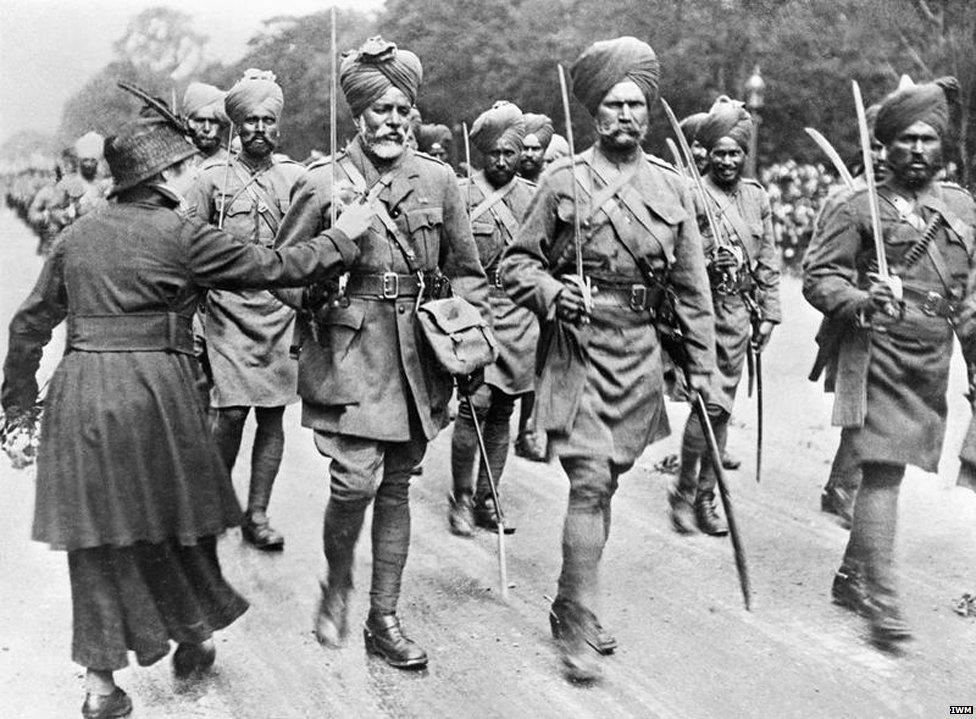
Indian soldiers in World War 1 | Image Source: BBC
The year is 1917. Somewhere in the trenches of France, an Indian soldier, fighting in World War 1, sits down to write a letter home. He wants to tell his family about everything: The freezing cold, the constant gunfire, and the harsh conditions of war. But he contemplates because he knows that every word he writes will be translated, read, and scrutinized by the British authorities. His letter is not private. And yet, despite this, Indian soldiers did not stop writing. Instead, they found ways to get their message through. This is the story of how Indian soldiers in World War I outsmarted British censorship to stay connected with home in India.
The Censoring of the Indians Caught in the War
When the First World War, also known as the Great War, began in 1914, the Indian troops, already a well-established force under British command, were among the first to be mobilized. Within weeks, Indian troops arrived in Marseilles, France, where they were quickly deployed to the Western Front. The Indian soldiers were thrust into a war that was not only geographically distant but also alien in its scale and brutality. However, over the course of the conflict, nearly 1.5 million Indian soldiers fought valiantly; of them, more than 8,000 Indian soldiers lost their lives, and many more were wounded. By late 1915, most of these troops were withdrawn from France and redeployed to the Middle East, particularly Mesopotamia, where they continued to fight under equally harsh and unfamiliar conditions.
Amid this chaos and near-death experience, letters were their only means of connection to their homes in India. Stationed thousands of miles away in France and Mesopotamia, cut off from their families, the Indian soldiers turned to writing letters to maintain emotional ties with their loved ones. By March 1915, as the WW1 entered its second year, Indian soldiers were writing between 10,000 and 20,000 letters every week. However, this process was complicated by the fact that most of these soldiers were illiterate. According to the 1911 Census, only about 11 percent of Indian men could read and write, and in regions like Punjab (from where most of the men were recruited), this figure dropped to just 6.3 percent.
As a result, soldiers often dictated their letters to scribes. Hence, on the contrary to how intimate and private the act of writing a letter should be, it was rarely one. Instead, it was a public display where letters were read aloud and written by others. One soldier, Kumar Gul, expressed deep frustration over this lack of privacy, lamenting that he could not even receive confidential news about his female relatives because "they read out our letters to our officers, and then they discuss the contents."
If the lack of privacy was troubling, what followed was far more restrictive. The British authorities had established a systematic censorship mechanism known as the Indian Mail Censorship, spearheaded by British official Evelyn Howell, to monitor the letters sent by Indian soldiers. Every letter was opened, translated into English, and scrutinized for content that might be considered problematic. Initially, this system was designed to intercept seditious material that could threaten colonial authority, but its scope soon expanded significantly. In this environment, writing a letter became an act that involved risk. Soldiers were acutely aware that their words were being monitored, and this awareness fundamentally shaped how they communicated — they soon began outsmarting the British by evading censorship.
Coded Letters As a Tool of Survival

Indian soldier writing a letter home | Image Source: My Learning
In the face of absolute control, Indian soldiers adapted their language in ways that allowed them to communicate meaning without attracting the attention of British censors.
Using Coded Language: One of the most common techniques was the use of coded language, often drawn from everyday life. For instance, soldiers began referring to troops using spices. “Black pepper” was used to describe Indian soldiers, while “red pepper” referred to British troops. In one letter, a soldier remarked, “black pepper was very pungent, whereas the red pepper was not so strong,” subtly conveying that Indian troops were fighting more fiercely than their British counterparts. This framing allowed soldiers to express sentiments that would otherwise have been suppressed. In some cases, soldiers even signaled that the letter contained hidden meaning by including phrases such as “think carefully on this,” urging the recipient to read beyond the surface.
Embedding Cultural References: More sophisticated forms of communication emerged through the use of cultural references. Soldiers incorporated Punjabi proverbs, Urdu poetry, and religious idioms into their letters, embedding meaning in expressions that were deeply rooted in their own cultural context. Words like izzat (honour), dharm (faith), and shaheed (martyrdom) were widely used by the Indian soldiers as their meanings were not easily accessible to British officials for quite long.
Hidden Meanings: At times, this coded language took on darker forms. The brutal conditions of the war led some soldiers to seek ways of escaping the front lines, and since openly discussing such intentions was impossible, they resorted to indirect communication. One particularly chilling example involved the phrase “eat the fat, but preserve the bone carefully.” This actually was an instruction on how to inflict a non-fatal injury in order to secure a discharge from duty.
Identity Manipulation: Some soldiers employed deliberate deception to bypass censorship. They manipulated identity itself as a means of communication. In one instance, a Muslim soldier pretended to be a Hindu dhobi (washerman) while requesting bhaiwali seeds, which could be used to produce surreptitious inflammation on the body to avoid deployment. To ensure no scrutiny is invited and leave zero errors, he even closed his letter using "Ram Ram to all Hindus". This strategic use of identity was designed to mislead the censor while ensuring that the intended message reached its recipient.
Direct Engagement With Censor: Perhaps the most remarkable aspect of this entire system was the way in which some soldiers chose to engage directly with the censor. Aware that their letters were being read, they addressed the censor within the letter itself, politely requesting that only the objectionable portions be removed rather than discarding the entire letter. Soldiers such as Teja Singh, Dilbar, and Driver Lal Din adopted this approach, effectively negotiating with the very authority that sought to control their communication.

An example of how the letters were partly censored and passed | Image Source: Wikipedia
Among the many letters that have survived, one written by a Punjabi-Muslim, Kala Khan, in 1917 stands out for its subtlety and emotional depth. He writes: “You enquire about the cold? I will tell you plainly what the cold in France is like when I meet you. At present I can only say that the earth is white, the sky is white, the trees are white, the stones are white, the mud is white, the water is white, one’s spittle freezes into a solid white lump, the water is as hard as stones or bricks, [and] the water in the rivers and canals and on the roads is like thick plate glass. What more am I to say?”
On the surface, this appears to be a descriptive letter. However, if we read it carefully, the most significant line is the one in which he states that he will explain the reality “when I meet you.” This acknowledgment of what cannot be written as he writes, “What more am I to say?” is perhaps the most powerful expression of all. Kala Khan does not attempt to conceal meaning through elaborate codes; instead, he shapes it in a way that allows the letter to pass through censorship. In doing so, he demonstrates a profound understanding of the limits imposed upon him and an equally profound ability to navigate those limits.
The Irony of Preservation

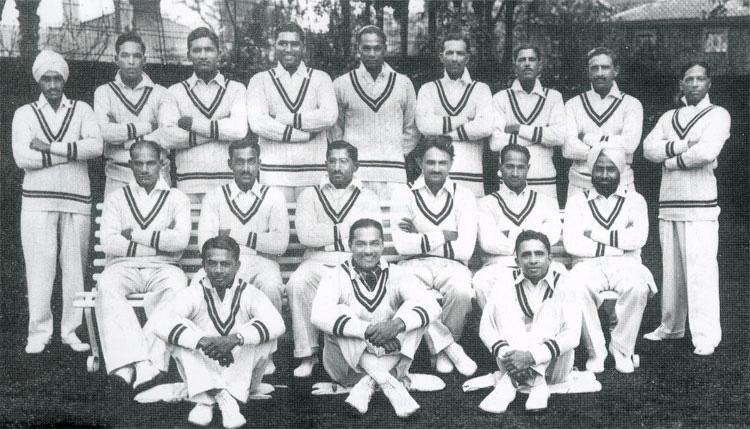
The Indian troops caught in the World War 1 | Image Source: BBC
In the end, what makes these letters remarkable is not just what they say, but how they were written. Indian soldiers in the First World War were not free to speak, yet they refused to remain silent. They adapted to a system that monitored every word, and within those constraints, they created a language that could travel safely across continents and back to their home in India. The survival of these letters, however, presents a striking irony. The very system that was designed to control and suppress communication has become the primary reason why these letters could be read today. Because the British censors preserved and archived these letters as part of their surveillance efforts.