Neither Sword, Nor Gun... Just Chapati! Know How 'Chapati Movement' Kept British Raj Awake

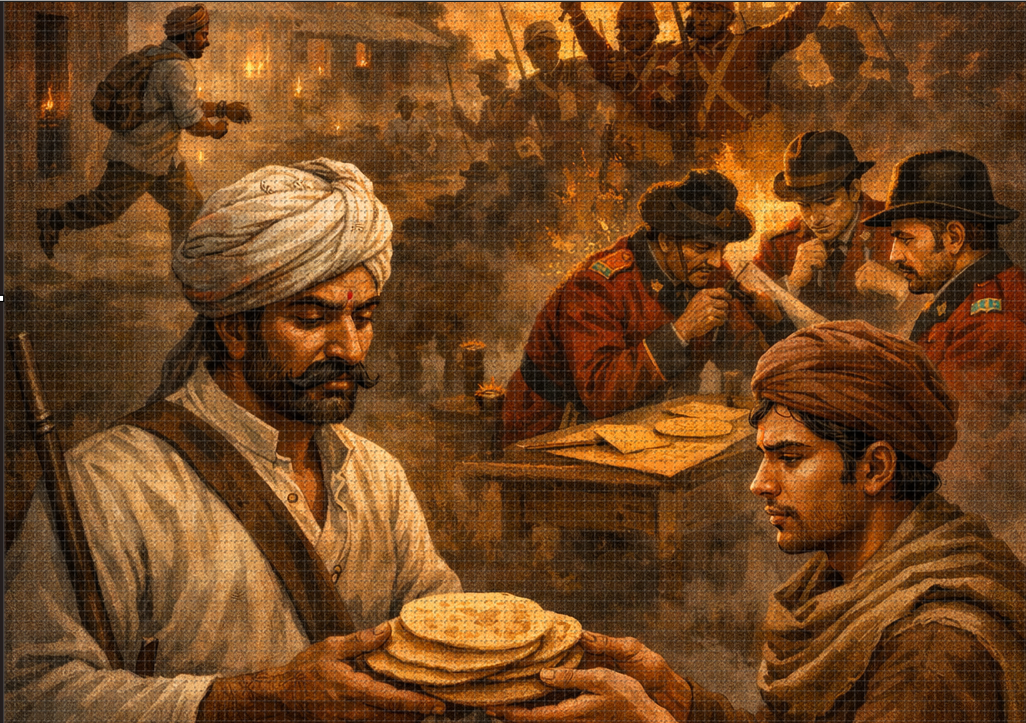
This image is AI-generated
In the early months of 1857, when the rule of the British East India Company hung heavy over much of North India, a mysterious event suddenly shook the foundations of British power. Plain, everyday chapatis (flatbreads) began emerging from the jungle and landing in the hands of village watchmen. There was no written message, no secret code—just bread and an unknown instruction: “Make four more and send them to the neighboring villages!” The British officials were so alarmed by this that sleep deserted them. Was this witchcraft? Some kind of incantation or conspiracy? Was it a warning against a coming plague, or a covert signal for the first war of independence? This was the Chapati Movement, the strange and unique episode that quietly stitched North India together on an invisible thread just before the First War of Independence. So let us see how all of this began, how it spread so rapidly, how it unnerved the British rulers, how it tied in with the revolt, and what lessons it left behind.
Everything started in February 1857 in the Mathura region. Magistrate Mark Thornhill received a report that a stranger had come out of the jungle, handed chapatis to the village chowkidar, and told him to make four more and pass them on to the watchmen of neighboring villages. These chapatis were simple, unleavened rotis, about twenty grams each, made of wheat or barley. The watchmen, without question, would slip them into their turbans and carry them through the dark night to the next village. At first, some people thought it was a local custom meant to ward off cholera, since the disease was spreading through central India. But soon the chain ran from Awadh and Rohilkhand to Delhi, Farrukhabad, and even as far as Gurgaon. The chowkidars themselves did not know why they were running, yet fear and curiosity kept the chain alive. To the British, these early incidents became the first serious warning sign. Thornhill even crushed chapatis to inspect them, but no hidden message turned up.
After this, the Chapati Movement began to spread rapidly, like a chain reaction engulfing the entire region. On reaching each village, the watchmen made fresh chapatis, hid them in their turbans or cloth bags, and sent them on to five or seven nearby villages. The process was so simple and fast that it needed neither written notes nor a single central leader. Astonishingly, in one night chapatis could travel 160 to 200 miles—an astonishing speed, far quicker than the British postal system of that time. The stream flowed uninterrupted from the banks of the Narmada up to the border of Nepal and from Rohilkhand all the way to Delhi. Sometimes a lotus flower was also included in the bundle. Villagers were baffled, but out of fear of some unknown power the process kept on going. By the time the British officials could grasp what was happening, thousands of chapatis had already criss‑crossed hundreds of kilometers. In this way, a small, odd incident transformed into a vast, mysterious network.
As the Chapati Movement spread so quickly, panic spread among the British officials, who were left thoroughly confused. In March 1857, military surgeon Dr. Gilbert Hadow wrote to his sister that throughout India a very mysterious affair was underway, known as the Chapati Movement. ‘The Friend of India’ newspaper wrote that chapatis arriving at every police station filled the officers with fright and bewilderment. The British suspected that Nana Sahib or the court of Lucknow might be chasing it, while many Indians tended to believe it was some British conspiracy. The incident exposed the real weakness of British rule.
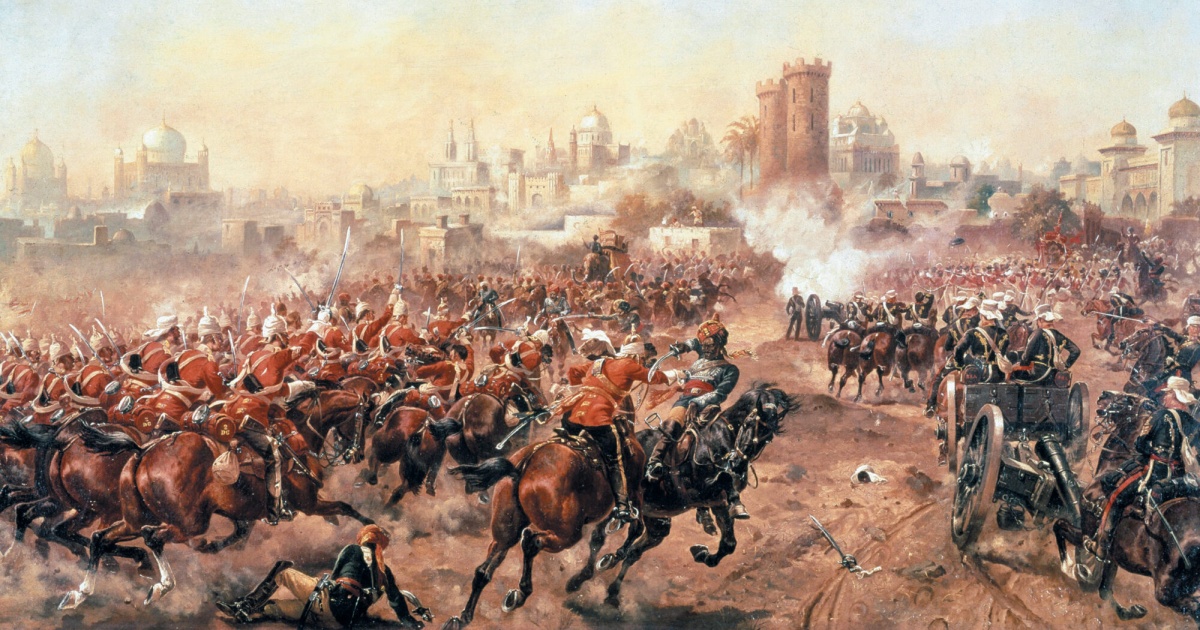
The most dramatic and crucial turn came on 10 May 1857, when the sepoys at Meerut became rebellious, and the Chapati Movement abruptly stopped. Many historians believe that the chapatis had been a secret signal, preparing the ground for the uprising. What had at first been seen as a measure to ward off cholera gradually became an unseen weapon of the freedom struggle. A humble roti had shaken the foundations of the British Empire and stirred the spirit of revolt among the sepoys. In Britisher’s perspective, it was a perfect example of psychological warfare.
From this Chapati Movement, we learnt that the fight for freedom need not always be fought with swords or guns, but can also be waged through everyday things. It shows that ordinary people, even without any big leader or formal organization, can unite and challenge an empire. It stands as an immortal example of Indian resistance, revealing how weak the British Empire was in understanding Indian culture and the subtle ways in which that culture could rebel. Ultimately, it teaches us that no power can endure for long against the force of unity and unwavering resolve