A Book That Shook The Empire: How Did a Book Written by Savarkar in 1857 Turn Out to be Threat for British Empire?
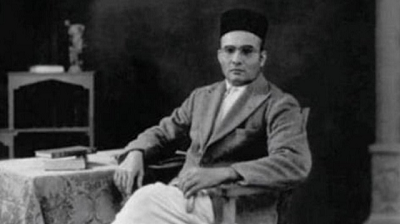
The story begins in 1906, when Savarkar went to England to study law. There, he joined the famous revolutionary hub, India House, in London.

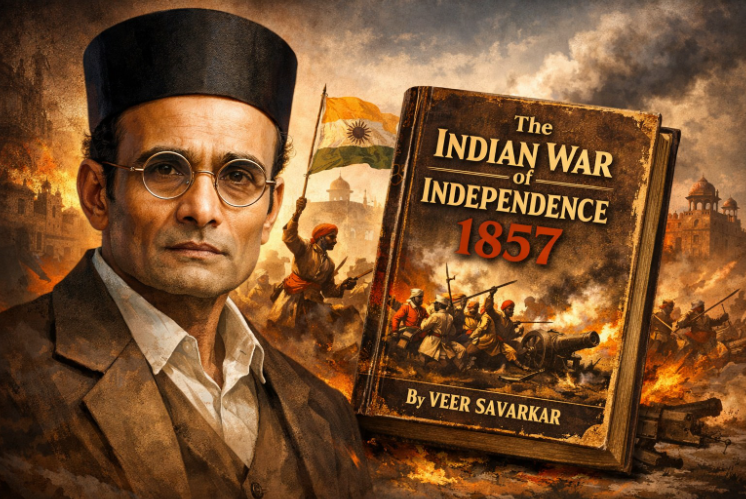
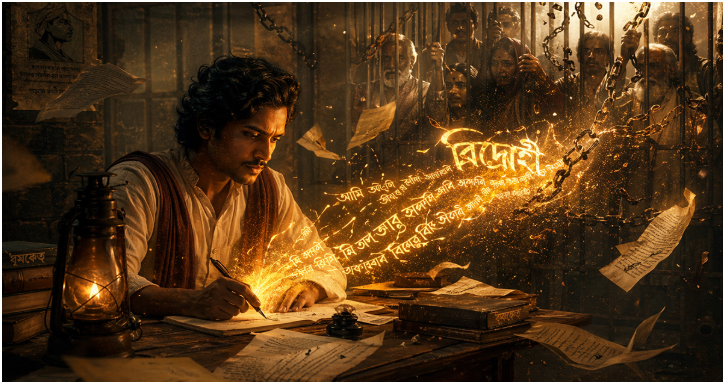
This image is AI-generated
Throughout history, several books have made governments uncomfortable, but there was one book that was declared dangerous even before it could be published. This book was written by Vinayak Damodar Savarkar (May 28, 1883 – February 26, 1966), known as Veer Savarkar or Swatantraya Veer Savarkar. He was a prominent revolutionary, thinker, writer, poet, and proponent of Hindutva ideology in India's freedom struggle. The book was titled The Indian War of Independence: 1857 (1857 ka Bharatiya Swatantraya Samar). The British government feared that if this book reached the people, it would ignite the spark of independence in the minds of Indians. So, the British banned it even before publication. But the question is: how did a single book become so dangerous that the British Empire began to fear it? This story is not just about one book, but about the power of ideas that could challenge imperial rule. In this article, we'll step by step understand how Savarkar wrote this book, why the British government panicked over it, and how it ultimately reached the revolutionaries. Let's know the answers to all these questions.
The story begins in 1906, when Savarkar went to England to study law. There, he joined the famous revolutionary hub, India House, in London. This place was full of Indian students and nationalist thinkers at that time. Discussions on India's future freedom and strategies against British rule took place here. In this environment, Savarkar began a deep study of the 1857 revolt. At that time, British historians dismissed 1857 as the ‘Sepoy Mutiny,' but Savarkar believed it was a full-scale national revolution. By studying British archives, military reports, and historical documents, he concluded that in 1857, not just soldiers, but peasants, kings, and common people had risen against the British.
After this study, Savarkar began writing a book on a topic around 1908. Its first secret edition was printed in English in London on May 10, 1909, titled The Indian War of Independence of 1857. Instead of the author's name, it mentioned "An Indian Nationalist." In the preface, Savarkar clarified that his research was primarily based on British government records from the India House Library and National Museum Library, as well as books by British authors. These showed clear British bias, but from them, he understood that what the British called the "Sepoy Mutiny" was actually an expression of a planned independence movement.
Notably, exactly one year earlier, on the anniversary of the 1857 revolt on May 10, 1908, Savarkar prepared a secret four-page leaflet titled "O Martyrs" and distributed it covertly. It stated that the war began on May 10, 1857, and did not end on May 10, 1908—it would not stop until another May 10 approaches to achieve its goal. In this way, Savarkar struck at the narrative that portrayed 1857 merely as a sepoy revolt. British intelligence knew that Savarkar had been immersed in deep library research for two years. Meanwhile, efforts to seize the manuscript and prevent its printing began in both India and London. Despite nine months of intense effort from November 6, 1908, to July 23, 1909, British investigators and the Indian government couldn't pinpoint the book's language, title, printing location, or the author's listed name. Ultimately, it was banned even before publication. The British administration deemed it "seditious literature" and issued strict orders to stop its circulation. But this is where the most fascinating part of the story begins, as revolutionaries decided to bring the book to the world despite the ban.
After the ban, plans were made to print it secretly. Historians say the first edition was printed in Europe, particularly at a secret press in the Netherlands. It was then smuggled to India via revolutionary networks. Often, it was hidden under the covers of other books to avoid suspicion from British police. Some copies even had the title of another book written on them. Gradually, the book spread among Indian revolutionaries and became an inspirational document. It's believed that many young revolutionaries drew inspiration from it, including names like Bhagat Singh and Subhas Chandra Bose. Thus, the book that the British wanted to suppress became a key inspiration in the battle for freedom.
After India's independence in 1947, the ban on the book was lifted, and it began to be published openly. Today, historians acknowledge that Savarkar's book offered a new perspective on the events of 1857. It popularized the idea that 1857 was not just a military revolt, but India's first war of independence. This story teaches an important lesson: the power of ideas is often more potent than the sword. A book that the British deemed dangerous even before printing ultimately became a pivotal inspiration in the history of India's freedom struggle.